


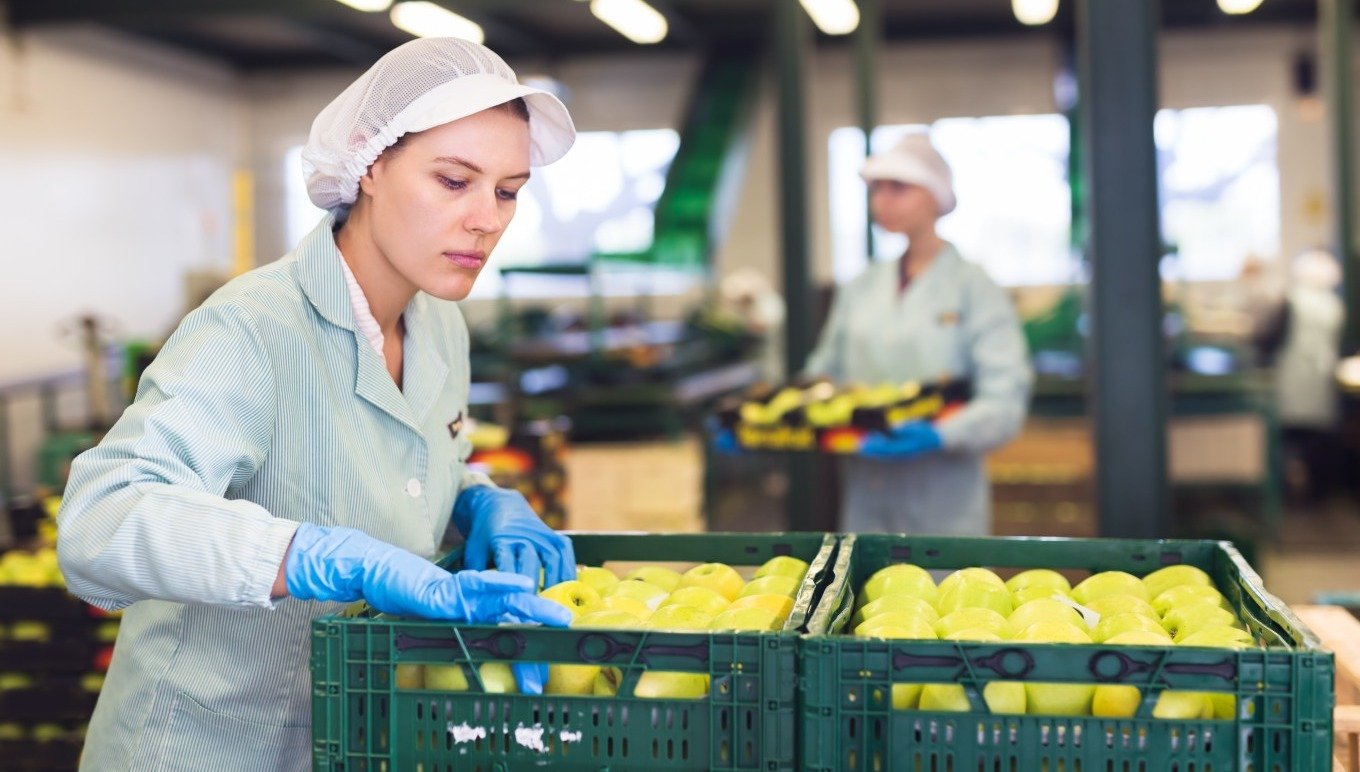
Food manufacturers have always operated under pressure. Tight margins, perishable inventory, strict regulatory requirements, and supply chains that span multiple countries and dozens of supplier relationships. For years, many companies managed all of this through disconnected systems, spreadsheets, and manual processes that worked well enough until they didn’t.
That calculus has shifted. The regulatory environment has grown more demanding, supply chain disruptions have become more frequent, and retailers are now setting their own traceability requirements that often exceed what the FDA mandates. The gap between companies with modern food ERP software and those still patching together legacy tools is widening in measurable ways.
This article looks at how AI capabilities within food ERP systems are changing the way manufacturers handle compliance and supply chain management in 2026, and why the timing matters more than most companies realize.
The Compliance Problem Has Not Gone Away
The FDA’s Food Traceability Rule under FSMA Section 204 was originally set for a January 2026 enforcement deadline. In March 2025, the FDA extended that deadline to July 2028, citing the complexity of coordinating traceability requirements across a fragmented, global supply chain. For companies that were already building toward compliance, the extension offered breathing room. For those still waiting, it has created a false sense of security.
The FDA made its position clear: the extension only shifts the enforcement date. The requirements themselves are unchanged. Every company handling foods on the Food Traceability List, including leafy greens, cheeses, shell eggs, nut butters, and certain seafood products, must eventually meet full traceability standards. That means documenting Critical Tracking Events and Key Data Elements at every step of the supply chain, from harvest through final distribution.
What makes this challenging at scale is not the concept of traceability. Most food manufacturers understand what they need to track. The problem is the infrastructure required to actually do it. Tracking lot codes, supplier documentation, temperatures, and custody transfers across dozens of simultaneous SKUs and multiple production lines is not something a spreadsheet handles gracefully. Nor is producing that documentation within the 24-hour request windows that major retailers already require from their suppliers, deadlines that predate any FDA mandate and are written into contracts right now.
Meanwhile, approximately 48 million people in the United States experience foodborne illness each year. Recalls have become more frequent. The FDA’s own data showed a 125% increase in food recalls over the past decade. Every recall event traces back to a failure somewhere in either production, ingredient sourcing, labeling, or storage. The companies that contain those failures quickly are the ones with complete, accessible records built into their systems rather than scattered across email threads and filing cabinets.
What AI Actually Does in a Food ERP Context
The phrase “AI-powered” gets attached to almost every category of software right now. In the food manufacturing context, it is worth being specific about what that actually means, because the practical applications are narrower and more useful than the marketing language suggests.
Demand Forecasting That Accounts for Food-Specific Variables
Generic demand forecasting models were built for discrete manufacturing. They handle seasonal demand well enough when the variables are predictable. Food manufacturing adds complexity that generic systems struggle with: ingredient price volatility, short shelf lives, recipe substitutions when primary ingredients are unavailable, and consumer trend shifts that can make last quarter’s forecast useless.
AI forecasting within food-specific ERP systems trains on food industry data. That includes crop yield patterns, weather-related supply disruptions, promotional event impacts, and the shelf-life constraints that make over-forecasting as costly as under-forecasting. According to Gartner’s 2025 manufacturing forecasts, 70% of food manufacturers are moving toward AI-based forecasting tools to improve operational efficiency. That number reflects a practical recognition that manual demand planning cannot keep pace with the variables food businesses now face.
The result, in operational terms, is purchasing teams that are not constantly correcting for surprises. When an ERP system can identify that a primary ingredient is likely to face supply pressure three weeks out and flag substitute sourcing options automatically, procurement can act before the production floor ever feels the disruption.
Traceability That Runs in the Background, Not Just During Audits
Traditional traceability in food manufacturing often meant someone spending hours reconstructing a batch record during an audit or recall event. Lot numbers were tracked, but pulling the full picture of where a specific ingredient came from, which production batches it touched, and where those finished goods went required manual work that took days under the best conditions.
AI-powered food ERP systems build traceability continuously. Every receiving event, every production step, every quality check, and every shipping transaction updates the trace record automatically. When a recall scenario occurs or an auditor requests documentation, the system runs a query rather than someone scrambling through paper logs.
The practical difference shows up in mock recall exercises required under FSMA. Companies with modern food ERP infrastructure complete those exercises within hours. Companies without it routinely take multiple days. That gap is not theoretical. It is the difference between a targeted product withdrawal affecting specific lots and a full category recall affecting everything in distribution.
Quality Monitoring That Catches Deviations Early
Food safety incidents rarely appear suddenly. They tend to develop from patterns: a supplier’s ingredient quality drifting slightly out of spec over several batches, a production temperature running marginally warm over a period of days, an allergen cross-contact risk that gets flagged in one location but missed in another.
AI monitoring within food ERP systems watches these patterns across data that no human team is positioned to review manually at the volume modern facilities generate. When statistical process control detects that a batch parameter is trending toward an out-of-spec result before it crosses the threshold, production teams receive a notification. That early warning changes the outcome from a failed batch requiring disposal to an adjustment that costs far less. Modern food quality management platforms have reduced audit preparation time by as much as 70% through this kind of embedded, continuous monitoring.
Supply Chain Visibility Beyond the First Tier
Most food manufacturers have reasonable visibility into their direct suppliers. Fewer have clear visibility into their suppliers’ suppliers. That matters because ingredient quality problems and supply disruptions typically originate two or three tiers deep in the chain, well outside the direct relationship.
FSMA 204’s chain-of-custody requirements push traceability expectations upstream in exactly this direction. Ingredient origin documentation, handling history, and supplier certification status all need to be accessible and current. Doing this manually, with periodic supplier questionnaires and PDF certificates emailed back and forth, does not produce documentation that survives regulatory scrutiny at speed.
AI-enabled food ERP systems manage supplier data actively. Automated checks verify that certifications are current. When a supplier’s organic certification or food safety audit lapses, the system can block new purchase orders automatically rather than relying on someone to catch the expiration date in a spreadsheet. Supplier performance tracking gives procurement teams data on delivery reliability, specification adherence, and quality metrics over time, which turns supplier reviews from annual events into ongoing operational management.
Regulatory compliance in 2026 is also about sustainability documentation. Major retailers are now requiring Scope 3 emissions data and water usage reporting from their suppliers as conditions of doing business. Food-specific software collects this data as a byproduct of normal operations rather than requiring separate reporting processes bolted on afterward.
Why Generic ERP Systems Fall Short for Food Manufacturers
Food manufacturing creates operational requirements that general-purpose ERP systems treat as edge cases rather than core functions. Catch weight management, where the actual weight of a product varies and needs to be reconciled against invoiced and produced quantities, is a basic food industry requirement that generic ERP systems often handle poorly or require significant customization to handle at all.
The same applies to recipe management at scale. Production recipes are not static. Ingredient substitutions happen when a primary supplier cannot deliver. Batch scaling needs to account for yield variability. Allergen declarations need to update automatically when a recipe changes. These are not optional features for food manufacturers. They are daily operational realities.
The 65% of food and beverage suppliers who cite regulatory compliance as the primary driver behind their software modernization decisions are not upgrading because they want better dashboards. They are upgrading because their existing systems generate compliance documentation that requires substantial manual verification to be accurate, and that manual verification introduces the exact kind of human error that creates liability.
A purpose-built food ERP system treats compliance as an operational function rather than a reporting function. The documentation is accurate because the underlying data is accurate. Audits become routine because nothing needs to be reconstructed.
The Cost of Waiting
The FDA’s deadline extension to July 2028 has given some companies permission to pause. That is a reasonable short-term reading of the situation and a poor long-term strategy.
Major grocery chains and quick-service restaurant operators are not waiting for 2028. The leading retailers already require suppliers to provide lot-level traceability data within two hours of a request in some cases. Suppliers who cannot meet that standard risk losing contracts, regardless of what the FDA enforcement calendar says.
Beyond regulatory and commercial risk, there is an operational cost to running on inadequate systems. Production teams making purchasing decisions with incomplete demand data buy too much of some ingredients and too little of others. Quality issues that an automated system would catch in process become customer complaints or recalled product. Supplier problems that a connected system would flag early become production shutdowns.
These costs are real and ongoing, even for companies not currently facing a compliance audit.
How Folio3 FoodTech Approaches This
Folio3 FoodTech has spent over 20 years building software specifically for the food and beverage industry. Their food ERP system covers the full operational picture: production planning, quality control with HACCP and CAPA workflows, lot traceability from supplier receipt through final distribution, demand forecasting, procurement, and compliance documentation.
The system is built for food manufacturers, processors, and distributors rather than adapted from a generic manufacturing template. That distinction matters operationally. Catch weight management, allergen tracking, recipe versioning, and multi-site inventory consolidation are native functions rather than add-on modules.
For companies working through FSMA readiness, building supplier traceability depth, or trying to reduce the manual burden on their quality teams, Folio3 FoodTech offers the kind of infrastructure that makes compliance a system function rather than an emergency exercise.
Closing Thoughts
The food industry’s regulatory requirements are not getting simpler. Retailer expectations around traceability and sustainability documentation are moving faster than FDA enforcement timelines. Supply chains are more complex and more fragile than they were five years ago.
The companies that handle this well are not doing so through effort alone. They have systems that generate accurate data continuously, surface problems before they become crises, and produce audit documentation as a routine output of normal operations.
That is what modern, AI-capable food ERP software does in practice. Not in theory, and not as a future promise, but as the operational reality for manufacturers that have made the investment and built their workflows around it.