


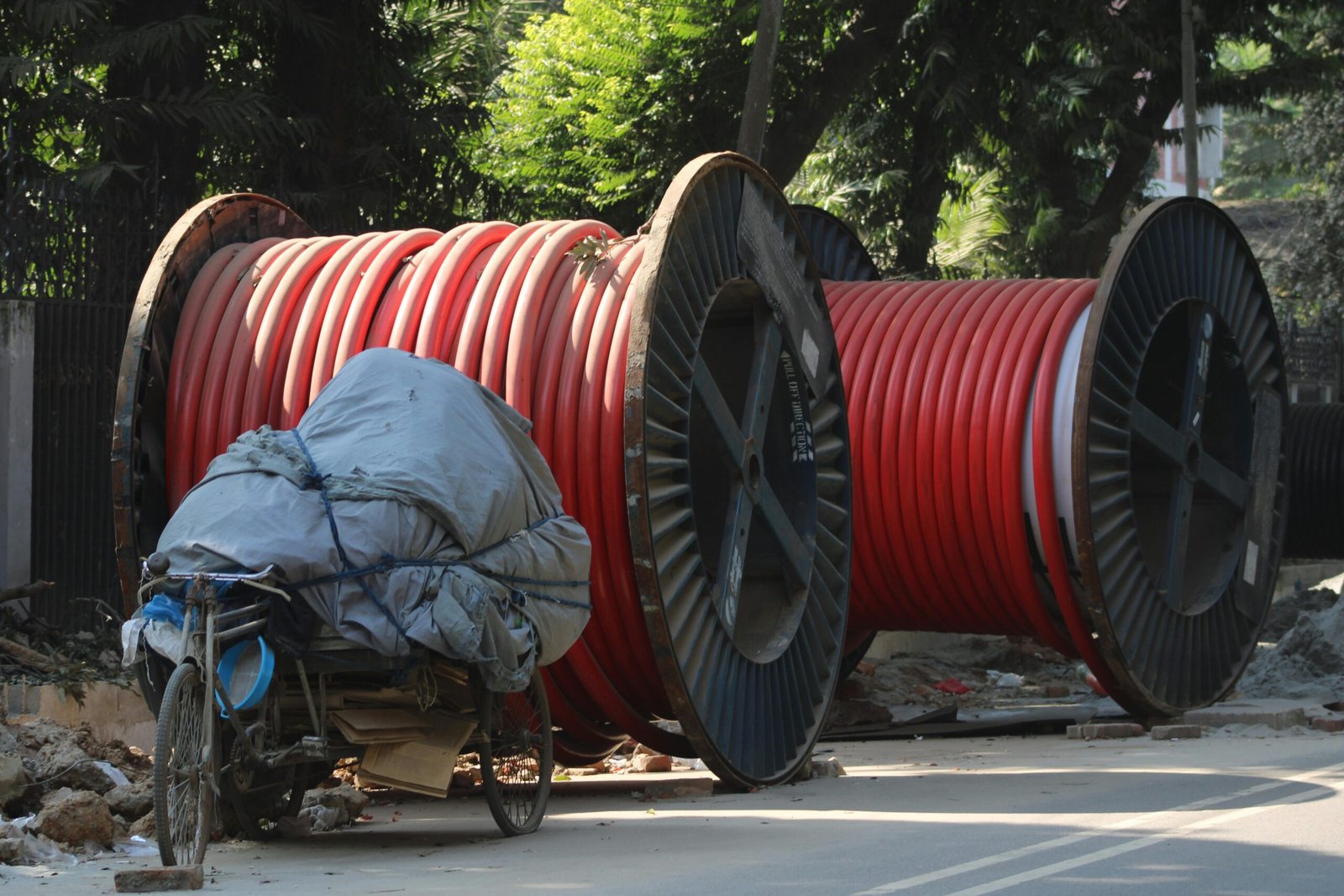
Commercial construction projects demand cable solutions that align precisely with NEC requirements and engineering specifications. Undersized conductors, incorrect insulation ratings, or overlooked ampacity derating factors can halt work, trigger costly rework, and delay occupancy permits. Yet many electrical contractors still rely on outdated sizing methods or unverified supplier claims when selecting power distribution and control cables. The disconnect between specification requirements and field installations creates measurable risks that three critical cable specifications consistently address.
The 3 Cable Specs That Prevent Commercial Project Delays
Cable specification errors account for approximately 30% of electrical-related delays in commercial construction projects. Three critical specifications must align with project requirements to maintain schedules.
First, cable insulation types including THHN, XHHW, and USE must match environmental conditions and installation methods per NEC Article 310. Selecting inappropriate insulation for wet locations or direct burial applications necessitates complete replacement.
Second, voltage ratings must correspond to system requirements, with common commercial applications requiring 600V, 1000V, or 2000V rated cables. Undersized voltage ratings create immediate code violations and safety hazards.
Third, ampacity calculations must account for conductor size, ambient temperature, and conduit fill. Miscalculations requiring cable upgrades impact critical path activities, material procurement cycles, and labor scheduling.
Proper specification verification during design phases eliminates these preventable delays.
How to Calculate Power Distribution Cable Requirements
Accurate power distribution calculations begin with determining total connected load across all branch circuits, feeders, and service equipment within the commercial facility. Engineers must account for demand factors specified in NEC Article 220 to establish realistic power load requirements rather than simple connected loads.
Cable sizing depends on continuous versus non-continuous loads, with conductors rated at 125% capacity for continuous operation.
Voltage drop calculations require precise cable length measurements from distribution panels to endpoints, ensuring drops remain within 3% for branch circuits and 5% total system drop.
Ambient temperature corrections and conductor bundling derating factors modify ampacity ratings per NEC Tables 310.15(B)(2)(a) and 310.15(B)(3)(a).
Protection coordination analysis verifies overcurrent devices properly safeguard selected cable sizes under fault conditions, preventing equipment damage and ensuring code compliance throughout the distribution system.
Commercial Building Data and Communication Cable Standards
Modern commercial facilities rely on structured cabling systems that comply with TIA-568.0-D and ISO/IEC 11801 standards to establish performance benchmarks for horizontal, backbone, and entrance facility pathways.
Category 6A copper cables support 10GBASE-T data transmission over 100-meter channels, while Category 8 specifications accommodate 25GBASE-T and 40GBASE-T applications in data centers.
Fiber optic installations utilize OM3, OM4, and OM5 multimode cables for campus backbones, with OS2 singlemode cables deployed for extended-distance requirements.
Cable performance verification requires field testing to ANSI/TIA-1152-A parameters, measuring insertion loss, return loss, and alien crosstalk.
Installation practices must maintain minimum bend radius specifications such as four times cable diameter for unloaded conditions, and observe maximum pulling tensions to preserve transmission characteristics.
Proper termination hardware, pathway fill ratios, and separation from electromagnetic interference sources guarantee system reliability throughout the facility’s operational lifecycle.
HVAC and Mechanical System Cable Sizing Guide
When specifying conductors for HVAC and mechanical equipment, engineers must calculate wire gauge based on motor full-load ampacity per NEC Article 430, applying 125% multiplication factors for continuous-duty loads.
Proper cable sizing directly impacts HVAC efficiency by minimizing voltage drop across circuit lengths, particularly for variable frequency drives and compressor units. Mechanical load calculations must account for ambient temperature correction factors and conductor bundling derating per NEC Tables 310.15(B)(2)(a) and 310.15(B)(3)(a).
Control circuits require separate analysis using Class 1 or Class 2 wiring methods per Article 725. Oversized conductors prevent thermal degradation while maintaining peak equipment performance.
Protection devices must coordinate with conductor ampacity ratings, ensuring both equipment longevity and system reliability throughout the building’s operational lifecycle.
Fire-Rated Cables for Commercial Life Safety Systems
Fire-rated cables form the critical backbone of commercial life safety systems, requiring specific classifications under NEC Article 760 for fire alarm circuits and Article 728 for emergency communications.
These cable types must demonstrate survivability through rigorous performance testing, including ASTM E119 flame exposure and UL 2196 circuit integrity standards. Installation standards mandate dedicated pathways, separation from power conductors, and proper support intervals to maintain fire safety integrity throughout project timelines.
Compliance regulations specify FPLP (plenum), FPLR (riser), and FPL (general purpose) ratings based on building zones. System integration requires coordinated routing with sprinkler, HVAC, and egress lighting networks.
Documentation of cable specifications, test certifications, and maintenance practices guarantees long-term operational reliability while meeting authority having jurisdiction requirements for commercial occupancies.
Industrial and Outdoor Cable Environmental Ratings
Industrial and outdoor cable installations demand environmental ratings that address exposure to moisture, temperature extremes, UV radiation, chemical contaminants, and mechanical stress beyond standard commercial interior specifications.
Cable insulation materials must provide adequate temperature resistance, typically ranging from -40°C to 90°C for outdoor applications, with specialized formulations extending these limits for extreme climates.
Sunlight-resistant jackets incorporate UV inhibitors preventing degradation from prolonged exposure. Water-resistant and submersible ratings (W-2, W-3) protect against moisture ingress in wet locations.
Direct burial cables feature enhanced mechanical protection and corrosion-resistant barriers. Chemical-resistant constructions utilize specialized polymers withstanding oils, solvents, and industrial compounds.
Outdoor-rated cables require proper marking indicating environmental suitability, including designations for wet locations, direct burial, and exposure conditions per NEC Article 310.
The Biggest Commercial Construction Cable Spec Mistakes
Commercial construction cables used for projects frequently result from inadequate attention to installation environment requirements, ampacity calculations, and regulatory compliance parameters.
Material mismatches occur when conductors lack proper temperature ratings for their intended applications, particularly in high-heat environments or where derating factors apply. Specification errors commonly involve incorrect voltage classifications, insufficient insulation thickness, or non-compliant jacket materials for specific installation methods.
Failure to account for conduit fill ratios, bending radius requirements, and pull tension limits creates installation complications and potential code violations. Projects suffer delays when specified cables cannot accommodate actual load demands or environmental conditions.
Proper specification requires thorough analysis of NEC Article 310 tables, environmental factors, and project-specific parameters.
Documentation must clearly define conductor size, insulation type, voltage rating, and installation method to prevent costly material procurement errors.
3 Red Flags When Vetting Cable Suppliers
When evaluating potential cable suppliers for commercial construction projects, procurement teams must scrutinize several critical indicators that signal quality control deficiencies or operational instability.
Inadequate industry certifications, particularly UL or ETL listings, immediately disqualify suppliers from consideration. Vague pricing transparency suggests hidden costs that compromise budget integrity. Inconsistent delivery timelines indicate supply chain vulnerabilities that jeopardize project schedules.
Limited warranty policies reveal manufacturers’ lack of confidence in product longevity. Absent technical support infrastructure prevents rapid resolution of field installation issues. Negative customer feedback patterns across multiple projects demonstrate systemic performance failures.