


Most commercial building owners think about their elevators only when something goes wrong. The phone rings, a tenant is frustrated, the elevator is out of service, and suddenly elevator maintenance becomes the most urgent item on the day’s agenda. Then the problem is fixed, the elevator is back in service, and the topic recedes into the background until the next breakdown. This reactive cycle is exhausting, expensive, and entirely preventable.
The alternative is a properly structured maintenance schedule that anticipates problems before they happen, distributes the work evenly throughout the year, and keeps the elevator running reliably without the drama of constant emergencies. Building this schedule is not complicated, but it does require a deliberate approach and an understanding of what elevator maintenance actually involves.
A commercial elevator is a complex piece of mechanical equipment with hundreds of moving parts, electrical systems, hydraulic or traction components, and safety devices that all need to function together correctly. Each of these components has a service interval that, if respected, keeps the system running smoothly. When intervals are missed or stretched, components wear faster, fail sooner, and often take other components down with them when they go. The maintenance schedule is the tool that ensures every component receives attention at the right time. Without one, maintenance becomes a series of guesses and reactions rather than a structured program with predictable outcomes.
Understanding the Components of a Maintenance Schedule
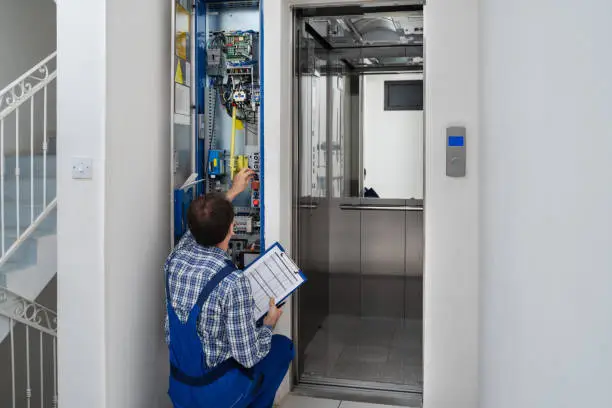
A complete commercial elevator maintenance schedule includes work at several different intervals, each addressing different categories of tasks. Monthly preventative maintenance is the foundation of the program, and it should include inspection and lubrication of moving parts, verification of door operator function, testing of leveling accuracy at each floor, evaluation of brake operation, and a general assessment of the controller and safety circuits.
These visits are relatively brief but they catch the small issues that, left unaddressed, develop into expensive problems. Skipping or shortchanging the monthly visits is the most common reason elevators fall into disrepair, because the issues that get missed compound silently until they become breakdowns.
Quarterly maintenance builds on the monthly work by adding more detailed inspections of components that do not need monthly attention but should not go six months without evaluation. This typically includes inspection of door interlocks, examination of hoistway equipment, testing of emergency communication devices, and verification of safety device function. Quarterly visits also provide an opportunity to evaluate trends across the previous three months, looking at whether any components are degrading faster than expected and whether adjustments to the maintenance approach are warranted. A technician who has serviced the same elevator for several quarters develops an intuitive understanding of how the equipment is performing over time, which is one of the most valuable benefits of consistent service relationships.
Semi-annual and annual maintenance involves the most thorough work and includes tasks that only need to be performed once or twice per year. This typically includes detailed inspection of wire ropes or hydraulic cylinders, evaluation of the machine and motor, testing of overspeed governors and safety devices under simulated conditions, and verification that all components meet TSSA requirements for the upcoming inspection cycle.
The annual visit is also when maintenance contractors typically generate a comprehensive condition report that documents the state of the equipment and identifies any components approaching the end of their service life. Building owners who receive these reports and review them carefully are in a much better position to plan capital expenditures and avoid surprise breakdowns.
Aligning the Schedule with TSSA Requirements
In Ontario, commercial elevators are regulated by the Technical Standards and Safety Authority under the CAN/CSA B44 Safety Code, and the maintenance schedule needs to align with TSSA requirements rather than treating compliance as a separate concern. TSSA periodic inspections occur on a regular cycle, and the maintenance program should be structured to ensure that the elevator is in compliant condition well before each inspection.
This means scheduling thorough preventative work in the weeks leading up to a periodic inspection, addressing any deficiencies identified in the previous inspection, and documenting the maintenance history in a way that demonstrates ongoing attention to safety and reliability. Working with an experienced elevator modernization company that understands TSSA requirements and integrates them into the maintenance program produces dramatically better inspection outcomes than treating maintenance and compliance as separate workstreams.
The TSSA inspection process can result in deficiency orders that require the building owner to correct issues within a specified timeframe, and the cost of these remediations is borne by the building owner separately from the maintenance contract. A well-designed maintenance schedule reduces the frequency of deficiency orders by addressing issues proactively rather than waiting for the inspector to find them. Top-performing elevator contractors achieve TSSA inspection follow-up rates that are a fraction of the industry average, and the difference is almost entirely attributable to the thoroughness and discipline of their maintenance programs.
Documenting the Schedule and Tracking Compliance
A maintenance schedule that exists only in someone’s head is not a schedule. It is a wish. To be effective, the schedule needs to be documented in a way that everyone involved can reference and that provides a clear record of what work was performed, when it was performed, and what the results were.
At minimum, this documentation should include a calendar of scheduled visits for the year, a checklist of tasks to be performed at each visit, a record of completed work signed by the technician, and a log of any deficiencies identified and the actions taken to address them. Many maintenance contractors provide this documentation through digital systems that allow building owners to access service history at any time, which is significantly more useful than paper records that get filed and forgotten.
The documentation also serves an important purpose during contract reviews and contractor evaluations. When building owners can see exactly what work has been performed over the past year, how many breakdown calls occurred, how quickly emergencies were resolved, and what the inspection outcomes were, they have the information they need to evaluate whether their current contractor is delivering the value they are paying for.
Without this documentation, evaluations become subjective and based on impressions rather than evidence. Building owners who insist on thorough documentation as a condition of their maintenance contract are protecting themselves from contractors who would otherwise cut corners and rely on the building owner’s lack of visibility to avoid accountability.
Adjusting the Schedule for Building-Specific Factors
A standardized maintenance schedule provides a solid baseline, but the optimal schedule for any specific building depends on factors unique to that property. High-traffic elevators in office towers, hospitals, and shopping centres need more frequent attention than low-traffic elevators in smaller commercial buildings, simply because the equipment is being used more heavily and components wear faster.
Buildings in coastal or industrial environments may face accelerated corrosion from salt air or contaminants, requiring more frequent inspection of mechanical components. Older elevators with legacy equipment generally need more attention than newer systems because the components are closer to the end of their service life and the failure modes are more variable.
The age and configuration of the equipment also affects the schedule. Hydraulic systems have different maintenance requirements than traction systems, machine-room-less designs have different requirements than traditional configurations, and older controllers require different attention than modern microprocessor-based systems. A maintenance contractor who understands these differences will customize the schedule to match the specific needs of each building rather than applying a generic template.
When building owners are evaluating contractors, asking how they tailor maintenance schedules to specific equipment and building conditions reveals a great deal about whether they are dealing with a thoughtful service provider or a transactional one. Companies like Alcor Elevator that have built their reputation on customized maintenance programs typically deliver significantly better outcomes than contractors who treat every building the same.
Managing the Schedule Year After Year
Creating a maintenance schedule is the first step. Maintaining it consistently year after year is what produces the long-term reliability that building owners want. This requires a system for tracking what work has been done, what is coming up, and what adjustments need to be made based on the equipment’s performance.
For property managers responsible for multiple buildings, the complexity increases significantly, and digital tools that integrate maintenance scheduling with other facility management functions become essential. For owners of single buildings, a simple shared calendar with the maintenance contractor may be sufficient as long as both parties commit to keeping it current.
The most important factor in long-term maintenance success is the quality of the relationship between the building owner and the maintenance contractor. A schedule that exists on paper but is not respected by either party produces no value. A schedule that is treated as a serious commitment by both sides, with regular communication, transparent reporting, and mutual accountability, produces elevators that run reliably for decades with predictable costs and minimal disruption.
Building owners who invest in this relationship and choose contractors who share their commitment to disciplined maintenance consistently enjoy the best outcomes, both in terms of equipment reliability and total cost of ownership over the lifecycle of the elevator.