

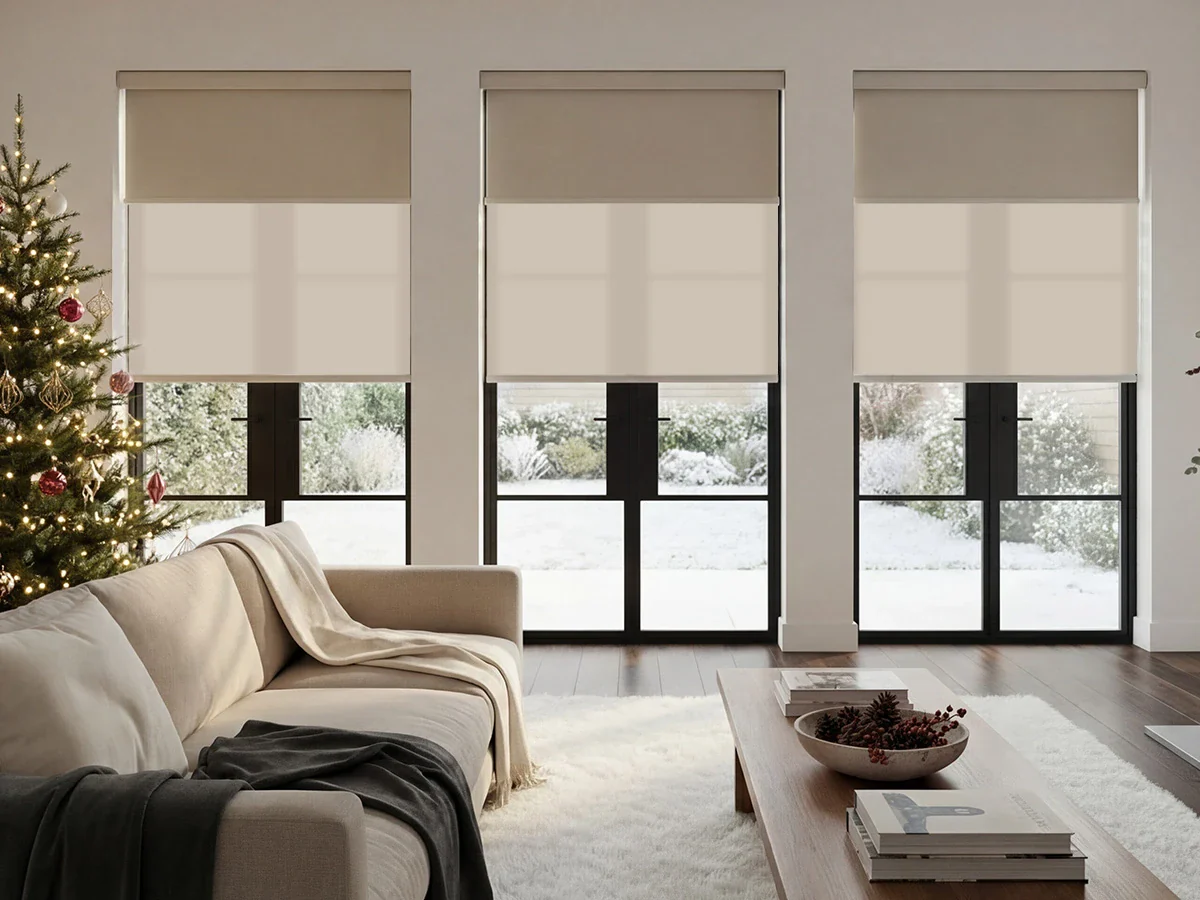
Smart window shades use light sensors, temperature data, and automated control logic to adjust window coverage throughout the day. By responding to sunlight intensity, indoor heat buildup, and time-based schedules, automated shades reduce glare, limit heat gain, and improve energy efficiency. In dense urban environments like New York City, this automation helps maintain comfort without constant manual adjustment.
The Problem Smart Shades Are Solving
Modern buildings receive fluctuating sunlight throughout the day. Direct sun causes glare, raises indoor temperatures, and increases cooling demand. Manual window coverings react too slowly and inconsistently to these changes. Smart window shades solve this by using sensors and automation to respond in real time, adjusting shade position before discomfort or energy waste occurs.
How Light Sensors Drive Automated Shade Movement
Light sensors measure the intensity and angle of incoming sunlight. When brightness crosses a predefined threshold, the system automatically lowers the shade to reduce glare. As light softens later in the day, the shade retracts to restore natural illumination.
In NYC apartments with large windows or south-facing exposure, this automation prevents harsh afternoon sun while preserving daylight during morning and evening hours.
Temperature-Based Automation and Heat Control
Some motorized shading systems integrate temperature sensors or connect to smart thermostats. When indoor temperature rises beyond a set range, shades deploy to block solar heat gain. This reduces the load on air conditioning systems and stabilizes indoor comfort.
In high-rise buildings, where heat buildup can be intense, automated shading becomes a passive cooling layer that operates without user input.
Time, Location, and Sun-Tracking Logic
Advanced systems combine time schedules with geographic sun positioning. Instead of reacting only after sunlight becomes disruptive, shades move proactively based on the sun’s path.
For example:
- Morning: shades stay open for daylight
- Midday: shades partially lower on sun-facing windows
- Evening: shades rise again to restore views
This logic is especially effective for motorized shades in New York City, where neighboring buildings and variable sun angles complicate manual light control.
Automation Without Constant User Interaction
One of the main benefits of smart shades is reducing decision fatigue. Once automation rules are configured, the system handles daily adjustments automatically. Users can still override settings manually, but most interaction happens in the background.
This makes automated shades ideal for work-from-home setups, bedrooms, and living spaces where lighting needs change throughout the day.
Integration With Smart Home Systems
Motorized shades often integrate with broader smart home platforms, allowing them to work alongside thermostats, lighting systems, and occupancy sensors. When a room is unoccupied, shades may adjust differently than when someone is present.
This coordination improves energy efficiency while maintaining comfort without requiring multiple manual controls.
Why Automation Matters in Urban Living
Urban apartments face unique challenges. Windows are often large, buildings are closely spaced, and sunlight can shift dramatically between seasons. Automated shading adapts to these variables far more effectively than static window treatments.
For residents seeking reliable performance and precise control, professionally designed automation ensures sensors, motors, and control logic work together seamlessly. This is where Professional Shades Services play a critical role by matching technology to real-world living conditions.
When Professional Setup Makes the Difference
Sensor placement, calibration, and automation rules determine how effective a smart shading system will be. Poor configuration can lead to over-darkening, delayed response, or unnecessary movement. Professional planning ensures automation enhances comfort instead of creating friction.