



Let’s be real: running a small or medium-sized business (SMB) is a juggling act. You’re wearing all the hats, from operations to sales, and often, marketing feels like another plate spinning precariously. It’s easy to get caught up in the day-to-day, making marketing decisions based on gut feelings or what your competitor is doing. But here’s the kicker: the most successful SMBs, the ones truly breaking through the noise, aren’t just guessing. They’re leveraging data, often with the help of a savvy digital marketing agency for small business, to make incredibly smart, informed choices.
Gone are the days when only enterprise-level companies could afford sophisticated analytics. Today, data is accessible, and the real magic happens when you know how to interpret it. This isn’t about being a data scientist; it’s about understanding what key metrics tell you about your customers and your campaigns. It’s how `top digital marketing agencies` consistently deliver data-backed wins.
Customer Insights
Think about your ideal customer. Do you really know them, or do you just have a general idea? Top digital marketing agencies dig deep into customer data to paint a vivid, actionable picture. They’re not just looking at demographics; they’re uncovering psychographics, pain points, desires, and even their preferred communication channels. This isn’t just a nice-to-have; it’s foundational.
By analyzing existing customer data, website interactions, and social media engagement, agencies can identify patterns. This might reveal that your core audience isn’t who you thought they were, or that a specific product resonates with a niche you hadn’t considered. Understanding these nuances allows for incredibly precise targeting, ensuring your marketing budget isn’t wasted on broad, ineffective campaigns.
HubSpot often emphasizes that a deep understanding of your customer journey is paramount for effective marketing. Data helps map that journey, highlighting touchpoints where customers engage, hesitate, or convert. It’s about getting inside their heads, without being creepy, of course.
Behavior & intent signals
Beyond who your customers are, it’s crucial to understand what they *do* and what they *want*. This is where behavior and intent signals come into play. These are the digital breadcrumbs people leave behind as they navigate the internet, and they’re gold for marketers.
Website analytics, for instance, can show you which pages visitors spend the most time on, where they drop off, and what search terms led them to your site. Are they looking for solutions to a problem you solve? Are they comparing prices? Are they reading reviews? Each click, scroll, and search query is a signal.
Social media interactions also offer a wealth of intent data. Likes, shares, comments, and even the types of content people engage with can tell you a lot about their interests and needs. Are they asking questions? Expressing frustrations? Celebrating successes? A skilled digital marketing agency for small business can sift through this noise and identify clear opportunities to connect and convert.
By understanding these signals, agencies can craft highly relevant content, build targeted ad campaigns, and even optimize your website’s user experience. It’s about being proactive and meeting your customers where they are, with exactly what they need, often before they even explicitly ask for it.
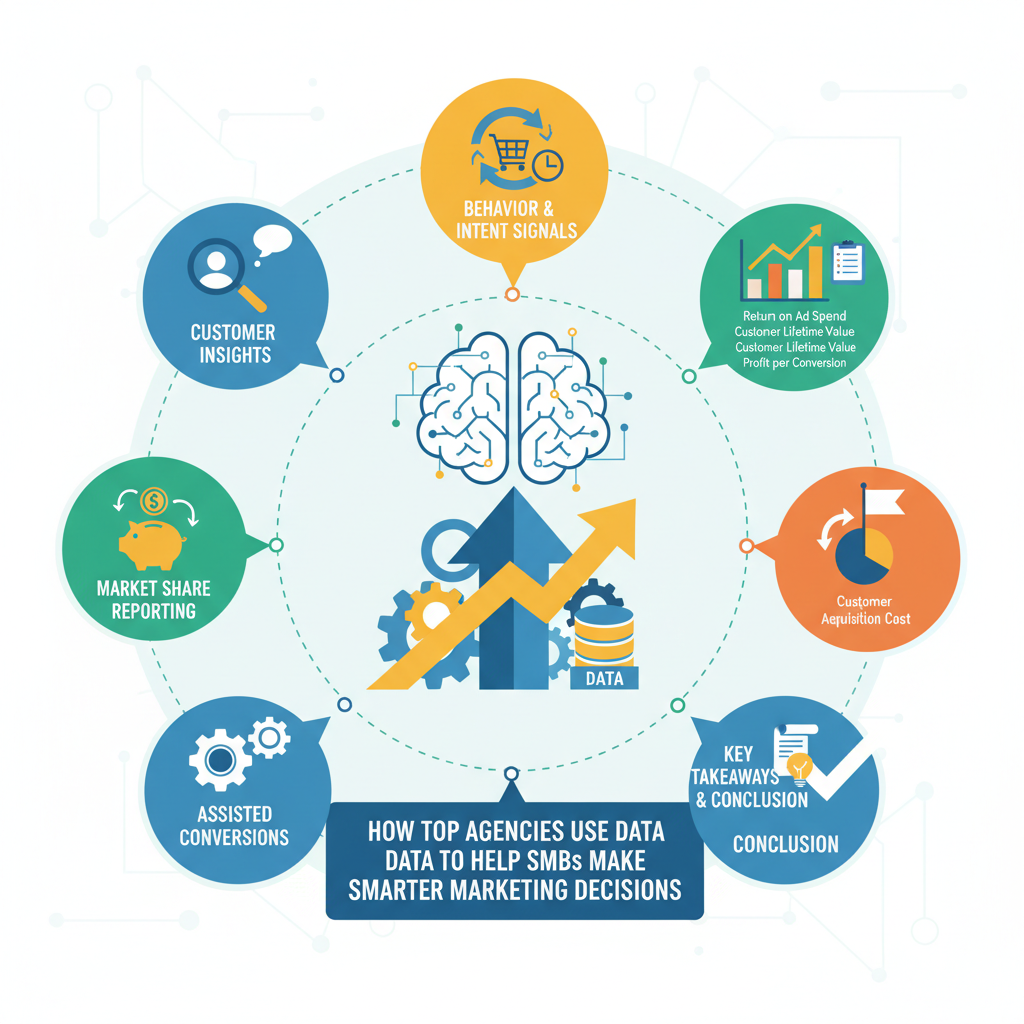
Performance Reporting
So, you’ve launched a campaign. Now what? This is where data truly proves its worth. Performance reporting isn’t just about pretty graphs; it’s about a data-driven framework that provides clear answers to critical questions: Is this working? Why or why not? How can we make it better?
Top agencies establish clear Key Performance Indicators (KPIs) from the outset, aligning them with your business goals. Whether it’s website traffic, lead generation, conversion rates, or return on ad spend (ROAS), every metric tells a story. And these stories aren’t just for quarterly reviews; they’re for real-time optimization.
Consider a scenario where an ad campaign is generating a lot of clicks but few conversions. Data allows an agency to quickly identify the bottleneck. Is the landing page confusing? Is the offer unclear? Is the targeting off? Without data, you’d be left guessing, potentially throwing good money after bad. With data, you can pinpoint the issue and pivot your strategy effectively.
Think with Google often highlights the importance of continuous measurement and iteration in digital marketing.
It’s not a set-it-and-forget-it game. The market changes, consumer behavior evolves, and your competitors are always adapting. A robust reporting framework ensures you’re always one step ahead, making adjustments based on tangible results, not just assumptions.
This iterative process of testing, measuring, and refining is what separates the merely good from the truly exceptional. It ensures that every marketing dollar you spend is working as hard as possible, continuously improving your ROI. It’s about turning raw data into actionable intelligence that directly impacts your bottom line.
Key Takeaways
- Data isn’t just for big businesses; it’s an accessible tool for SMBs to make smarter marketing decisions and achieve significant growth.
- Understanding customer insights, beyond basic demographics, allows for incredibly precise targeting and personalized marketing efforts.
- Behavioral and intent signals from website analytics and social media reveal what customers want, enabling proactive and relevant outreach.
- Robust performance reporting provides a data-driven framework for continuous optimization, ensuring marketing spend is effective and delivers clear ROI.
- Top digital marketing agencies leverage data to transform guesswork into strategic, results-driven campaigns for their clients.
Conclusion
In today’s fast-paced digital landscape, relying on intuition alone just won’t cut it. The businesses that thrive are the ones embracing data to understand their customers, refine their strategies, and measure their success with precision. By partnering with experts who know how to harness this power, SMBs can move beyond simply marketing and start making truly intelligent, impactful business decisions that drive sustainable growth. The future of marketing isn’t just digital; it’s data-driven, and it’s an exciting time to be an SMB with the right insights in hand.