


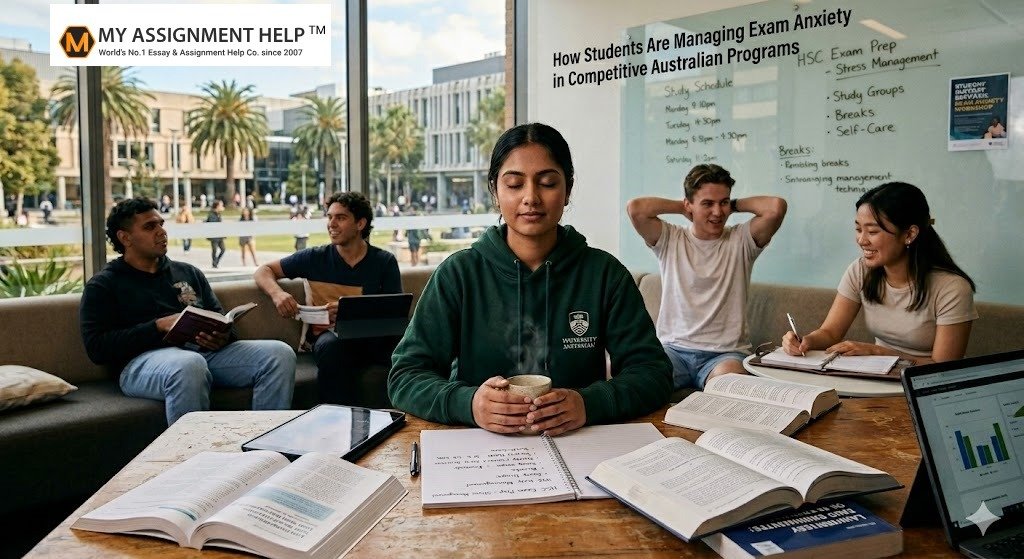
In the high-pressure corridors of Australian education, from the intensive Year 12 ATAR grind in Perth to the competitive medical and law programs at the University of Sydney or UniMelb, a common shadow looms: exam anxiety.
For many Australian students, the stakes have never felt higher. With university entrance ranks (ATAR) determining future pathways and the rising cost of living making academic performance feel like a financial imperative, “exam stress” has evolved into a significant mental health challenge. However, a new trend is emerging. Instead of succumbing to the pressure, Australian students are pioneering sophisticated, holistic, and tech-driven strategies to manage anxiety.
Here is an in-depth look at how students across the country are reclaiming their mental well-being while maintaining academic excellence.
1. Understanding the Australian Academic Pressure Cooker
The Australian education system is unique. In high school, the final two years are focused almost entirely on a single rank. In higher education, the shift toward “authentic assessment” and heavy-weight final exams means one three-hour window can dictate a semester’s grade.
Anxiety isn’t just “nervousness”; it’s a physiological response. When a student sits in a Melbourne exhibition hall for a VCE exam, their “fight or flight” response can trigger, leading to memory blocks and “brain fog.” Recognizing this is the first step Australian students are taking to combat it.
2. What is Active Stress Management for Students?
Gone are the days when “just study harder” was the only advice given. Students are now adopting active stress management (ASM). This involves identifying triggers early and implementing cognitive behavioral techniques rather than reacting only when panic sets in. Often, the heaviest triggers are multifaceted projects; in these cases, seeking coursework help can provide the breathing room needed to apply these management techniques effectively.
The Power of Micro-Breaks and the Pomodoro Technique
Students at top-tier institutions like ANU and UNSW are increasingly moving away from “marathon” study sessions. Instead, they utilize the Pomodoro Technique—25 minutes of intense focus followed by a 5-minute break. This prevents the cognitive overload that often leads to a late-night panic attack. By breaking the day into manageable intervals, the brain remains agile and less prone to the fatigue that mimics anxiety symptoms.
Mindfulness and the “Box Breathing” Method
Walk into any library during STUVAC (Study Vacation), and you’ll likely see students practicing mindfulness. Box breathing—inhaling, holding, exhaling, and holding for four seconds each—is a favorite among Australian medical students to lower heart rates before entering an exam room. It is a physiological “hack” that signals to the nervous system that the body is safe, allowing the prefrontal cortex to remain online for complex problem-solving.
3. Reimagining the Study Environment for Better Focus
The physical space where a student studies in Australia has changed significantly. With the rise of hybrid learning, students are no longer confined to cramped bedrooms.
- Co-working Spaces: Many students now treat study like a 9-to-5 job, using community libraries or university hubs to separate “home life” from “stress life.” This physical separation is vital for mental hygiene; it ensures that the bedroom remains a place of rest rather than a place of rumination.
- Digital Minimalism: “Focus modes” on iPhones and apps like Forest (where a digital tree grows while you stay off your phone) are becoming essential tools for the Gen Z student. By reducing the anxiety caused by social media comparison and the constant ping of notifications, students can enter a “Flow State” more easily.
4. Why Do Students Use Academic Assistance as a Strategy?
Perhaps the most significant shift in the Australian landscape is the destigmatization of seeking help. In a competitive environment, students realize that they don’t have to do it all alone. Whether it is mental health counseling through platforms like Beyond Blue or academic support to manage an overwhelming workload, seeking help is now seen as a strategic move rather than a weakness.
When the workload becomes the primary source of anxiety, many students turn to professional services. For instance, managing multiple deadlines while preparing for finals can be paralyzing. Students juggling technical degrees often find that operations management assignment help allows them to delegate specific, time-consuming tasks—such as data modeling or literature reviews—ensuring they can focus their mental energy on high-priority exam preparation. .
This balanced approach—blending self-study with professional academic guidance—is a hallmark of the modern, successful Australian student. It isn’t about avoiding work; it’s about strategic delegation to preserve mental health during peak assessment periods.
5. Physical Health as a Mental Shield
The “Aussie” lifestyle has always valued the outdoors, and students are leveraging this to fight exam burnout.
The “Green Time” Rule
Research from Australian universities suggests that just 20 minutes of exposure to nature can significantly lower cortisol levels. Students in coastal cities like Brisbane or Sydney are increasingly incorporating a morning surf or a walk through the botanical gardens as a non-negotiable part of their study timetable. This “biophilia” effect acts as a reset button for a stressed brain.
Nutrition and Sleep Hygiene
The “all-nighter” is officially out of fashion. Australian students are becoming more educated on sleep hygiene—maintaining a consistent sleep-wake cycle to ensure the brain can consolidate memories. Coupled with a diet rich in Omega-3s and low in excessive caffeine, students are fueling their bodies to handle the chemical toll of stress.
6. Peer Support and Study Groups
In the competitive Australian landscape, “collaborative competition” is the new norm. Students are forming study groups not just to share notes, but to share the emotional burden. Knowing that your peers are feeling the same “ATAR anxiety” or “Thesis terror” provides a sense of communal resilience.
Discord servers and WhatsApp groups dedicated to specific units of study have become virtual “war rooms” where students provide real-time emotional support and clarification on complex topics. This peer-to-peer connection reduces the isolation that often fuels academic dread.
7. Summary of Tactical Exam-Day Techniques
Managing anxiety doesn’t stop when the exam begins. Successful students employ a “first 10-minute” protocol to stabilize their performance:
| Technique | Description | Benefit |
| The “Dump” Method | Writing down memorized formulas or dates on scrap paper immediately. | Clears “Mental RAM” and reduces fear of forgetting. |
| Strategic Skipping | Answering the easiest questions first. | Builds “Dopamine Momentum” and confidence. |
| Positive Reframing | Labeling a racing heart as “excitement” or “readiness.” | Shifts the brain from threat-mode to performance-mode. |
| The 2-Minute Reset | Closing eyes and taking three deep breaths if panic strikes. | Resets the vagus nerve and stops the “blank out.” |
8. The Role of Universities and Schools in Support
Australian institutions are also stepping up. Many high schools now offer “Special Consideration” for students with documented anxiety, and universities provide “Alternative Exam Arrangements” (AEAs). These can include extra time, smaller rooms, or rest breaks. Students are encouraged to engage with their school’s wellbeing coordinator or university’s disability service early in the semester to access these supports. Engaging with these systems is a proactive way to level the playing field.
9. Breaking the Perfectionism Myth
Perhaps the most vital way students are managing anxiety is by redefining success. While the ATAR or a GPA is important, there is a growing movement in Australia acknowledging that there are “multiple pathways” to a career.
VET (Vocational Education and Training), bridging courses, and mature-age entry mean that a single exam is no longer a “make or break” moment for one’s entire life. This perspective shift is the ultimate “anxiety killer.” When the “all or nothing” stakes are removed, the brain is free to perform at its peak.
10. Conclusion: A Holistic Path to Success
Managing exam anxiety in Australia’s competitive programs isn’t about eliminating stress—it’s about managing it. By combining traditional study methods with modern technology, physical health, and professional support services, Australian students are proving that they can thrive under pressure.
If you find yourself overwhelmed by the sheer volume of work, remember that you don’t have to carry the load alone. Whether it’s through mindfulness, a walk on the beach, or getting a helping hand from Myassignment.services , your mental health is the most important asset you bring to the exam room.
Stay focused, stay healthy, and remember: an exam is a test of your knowledge, not a reflection of your worth.
Frequently Asked Questions
Q.1 How can I manage ATAR anxiety during Year 12?
Managing ATAR anxiety requires a mix of structured study and mental downtime. Experts suggest using the Pomodoro Technique to prevent burnout and incorporating “Green Time”—at least 20 minutes of outdoor activity—to lower cortisol levels. Remember that the ATAR is just one pathway; Australia offers numerous bridging courses and vocational entries into university.
Q.2 What are the best study techniques for Australian university exams?
In 2026, students are moving toward Active Recall and Spaced Repetition. Instead of re-reading notes, use flashcards or practice papers from previous years (often found in uni library archives). Pairing these with Active Stress Management techniques like box breathing can help maintain focus during high-pressure finals.
Q.3 Can I get extra time for exams due to anxiety?
Yes. Most Australian high schools and universities (like USYD, UniMelb, and Curtin) offer Alternative Exam Arrangements (AEAs) or Special Consideration. If you have documented anxiety, you may be eligible for extra reading time, rest breaks, or a smaller, quieter exam room. Contact your institution’s student wellbeing or disability service early in the semester.
Q.4 How do I stop my mind from going blank during an exam?
“Brain fog” is a common symptom of the fight-or-flight response. To counter this, use the “Dump Method”: as soon as the exam starts, write down all formulas, dates, and key quotes on your scrap paper. This offloads the pressure from your working memory and provides a “safety net” you can refer back to if you feel panicked.
Q.5 Is it okay to use academic support services during finals?
Absolutely. Seeking academic assistance is a strategic way to manage an overwhelming workload. Myassignment.services can help with time-consuming tasks like research and formatting, allowing you to dedicate your peak mental energy to studying for high-weightage exams. It is about working smarter, not harder.
About the Author – Drake Miller
I am a dedicated blog author associated with Myassignment.services, known for creating insightful and engaging content on education, student success and academic support. With a passion for research and writing, he delivers practical guidance through well-crafted blogs that help students navigate academic challenges.