


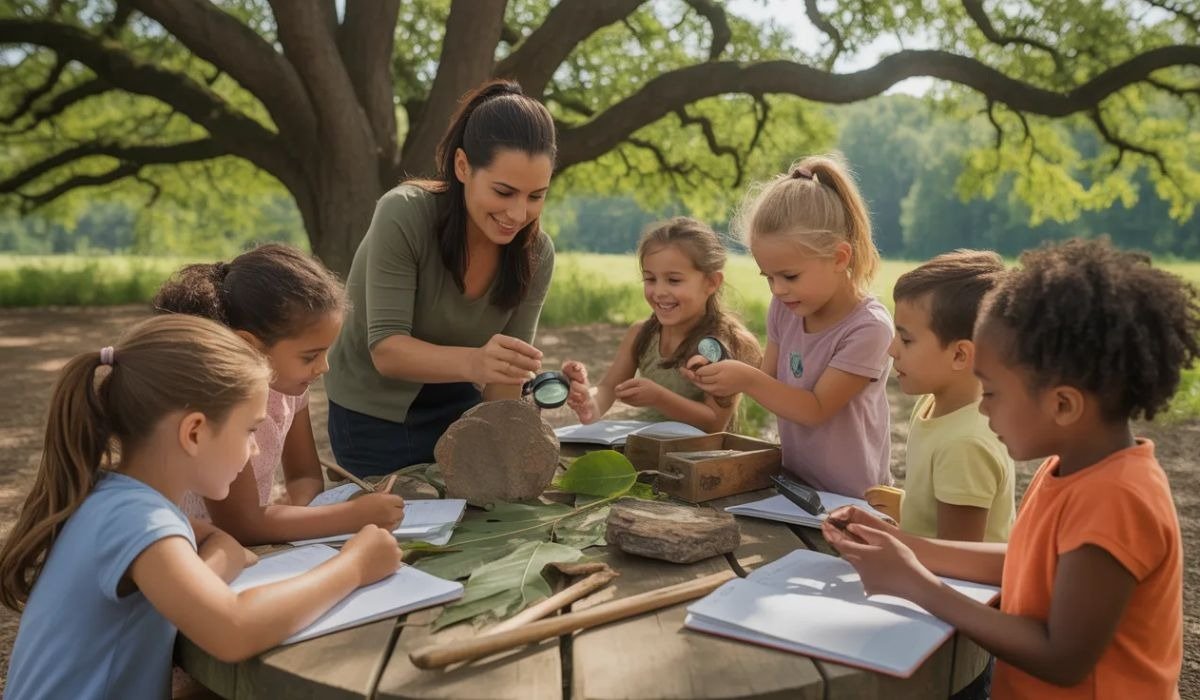
Outdoor education refers to a deliberate form of education that occurs beyond the four classroom walls and involves learners in real-world experiences that build on knowledge, skills, and wellbeing. It is becoming accepted as a potent learning tool, already able to mutually complement academic education by enhancing individual growth and deeper cognitive and emotional realisation. Outdoor learning should not be about just being outdoors, but rather an organised, well-planned activity that provides exploration, resilience, and engagement with the surroundings.
This article is a comprehensive discussion of outdoor education, its advantages, different types of outdoor learning, essential principles, and ways teachers can implement these techniques in school or youth programs. It also provides real-world examples, including Outdoor Learning Activities at Caldecotte Xperience (Action4Youth), which demonstrate the practical application of outdoor education.
What Is Outdoor Education?
Outdoor education is a type of structured learning that occurs outdoors and is facilitated by an instructor, teacher, or facilitator. This is not casual outdoor play or recreation but outdoor education that is planned, curriculum-based, and aimed at developing certain skills, knowledge, and attitudes. It covers activities that involve practical experiences that help learners engage with their immediate environment as they work on them.
Why Outdoor Education Matters
Outdoor education is no longer a nice-to-have activity at the end of the school day; studies have shown it has quantifiable effects on learning and pupils’ well-being. It increases academic performance by providing concrete, real-world applications that make abstract concepts more understandable and memorable. Outdoor learning tends to help pupils develop better teamwork, communication, and critical thinking skills.
The Core Benefits of Outdoor Learning
Multidimensional learning. Outdoor learning has both academic and developmental advantages:
- Increased Curriculum interest: When classes take place outside the classroom, students tend to become more curious and better able to retain the subject matter.
- Social and Emotional Development: Cooperation, leadership, resilience, and self-esteem are inherent in outdoor activities.
- Physical Wellbeing: Breathing in fresh air and engaging in exercise help maintain better health and energy to support holistic development.
- Environmental Awareness: direct experience of the natural environment promotes environmental learning in learners by fostering a love for and care of the environment, thereby cultivating lifelong environmental stewardship.
Types of Outdoor Education Activities
Outdoor activities are diverse and depend on age, location, and learning purposes. The following are interesting and informative alternatives that are regularly utilised by schools, youth and outdoor centres:
Nature Walks and Habitat Exploration
Nature walks encourage curiosity and ecological understanding because learners can observe plant species, insects, and ecosystems. The promotion of note-taking and debates increases knowledge of the environment and awareness of the senses.
Orienteering and Navigation Challenges
Orienteering is an activity that teaches map reading, compass use, and spatial understanding. It brings together physical activity, problem-solving, and teamwork.
Environmental Science Projects
Students may do activities such as testing water, analysing soil, and taking weather measurements. These projects connect science courses to first-hand observation, critical thinking, and scientific practices.
Bushcraft and Survival Skills
Bushcraft (shelter building, fire safety, and woodland crafts) develops self-reliance, planning, and risk assessment skills. These competencies build strength and realistic ability.
Outdoor Art and Creativity
By employing natural materials such as leaves, stones, and twigs, learners will be able to create art that captures their perception of the surrounding world. This strengthens creativity and emotionality.
Scavenger Hunts
An ordered scavenger hunt promotes observation, classification, and collaboration. Giving certain lists of natural things makes one sharper and able to explore.
Outdoor Storytelling and Reflective Journalling
Students can sit outside to discuss concepts, write reflective journal notes on their experience, and develop language, observation, and analytical skills.
Integrating Outdoor Education into School Curriculum
In order to execute outdoor learning effectively, schools ought to:
- Connect Activities to Learning Objectives: Support curriculum objectives (science, geography, physical education, and wellbeing).
- Plan and Prepare in Advance: Safety, risk assessment, and clear learning outcomes should be considered before activities.
- Reflect and Assess: Have the learners reflect on their experiences and relate the outdoor lessons to classroom learning.
- Present Accessible Choices: Meaning that activities should be inclusive and allow all learners’ abilities to participate.
Safety and Best Practices
Although the advantages of outdoor education are numerous, safety must always be the number one consideration:
- Perform risk assessment of every activity.
- Provision of the right equipment and supervision.
- Educate students on outdoor safety policies and environmentalism.
- Future Trends in Outdoor Learning
Young people in the UK are increasingly reconnecting with nature through programmes, including rewilding projects funded by organisations such as the Scout Association. These initiatives include environmental rehabilitation and outdoor education to improve youths’ well-being and ecological literacy.
Conclusion
Outdoor education is a learning activity that supplements academic objectives and real-world activities. It increases interaction, physical and emotional health, and develops essential life skills. Innovative, exploratory, and organised programs such as those offered by Action4Youth in Caldecotte Xperience provide outdoor learning that offers a flexible and meaningful learning experience for every learner. Through outdoor education, incorporated into the curriculum and youth programmes, educators can instill curiosity, resilience, and a lifelong attachment to nature.