


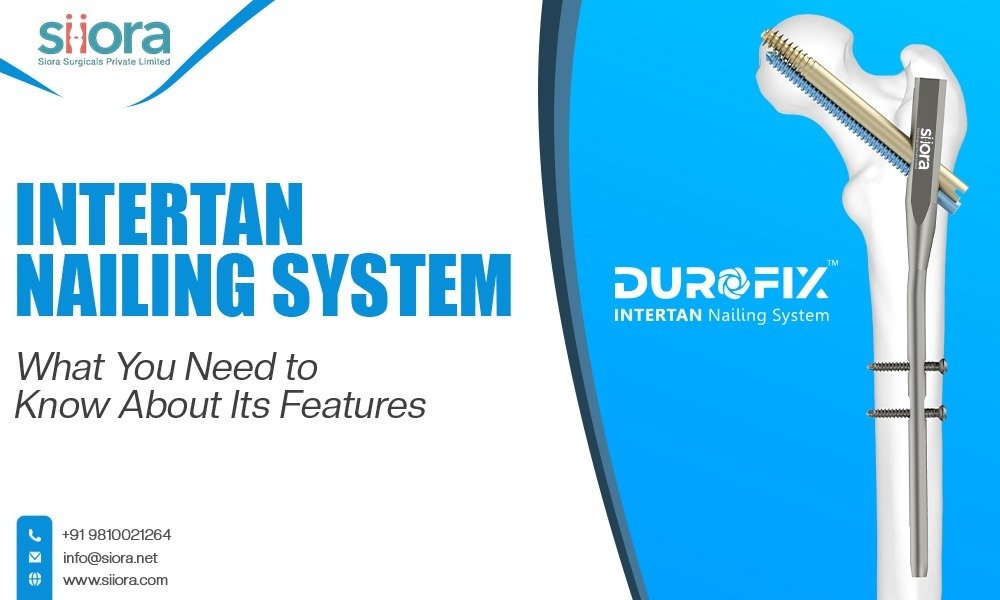
If you’ve ever discussed treatment options for intertrochanteric fractures with orthopedic surgeons, you’ll notice one name that comes up again and again—the Intertan Nailing System. It didn’t become popular overnight. Its design, the way it behaves inside the bone, and the results surgeons see in postoperative follow-ups are what built its reputation. Let’s break it down in a way that actually makes sense, without drowning you in textbook jargon.
Why Stability Matters More Than People Realize?
Before talking about the implant, it helps to understand the fracture itself. Intertrochanteric fractures are messy. There’s rotation, collapse, and often poor bone quality to deal with. A good implant has to fight all of that at the same time.
The Intertan nail does this with its paired head screws—one compression screw and one lag screw. The trick here is that the screws move together, not individually. That small difference ends up offering better control and keeping the femoral head from spinning like a loose part inside a machine. Surgeons appreciate this because once alignment is set, they want it to stay there.
Compression That Actually Helps the Bone Heal
Most people don’t think about this, but broken bones don’t magically come together. They need compression. With some implants, you’re waiting for the patient to walk before the fragments squeeze together.
The Intertan system lets the surgeon apply controlled compression right in the operating room. It’s not dramatic, but it closes the fracture gap just enough to encourage nature to do the rest. A fracture that sits snugly usually heals better and faster—and patients definitely feel the difference in the early weeks.
Thoughtful Engineering Behind the Scenes
One thing that usually goes unnoticed is load transfer. When someone starts walking after surgery, the forces traveling down the leg don’t disappear. The Intertan nail is shaped in a way that shares the load with the bone instead of taking everything on itself.
This is important because:
- It helps the bone stay active and healthy
- It lowers the risk of the implant loosening
- Patients often stand or walk earlier without that “wobbly” feeling
Orthopedic implants are not just metal; they’re careful designs learning from decades of patient outcomes.
A Solution to the Rotational Issues
Rotation is the hidden enemy in these fractures. If the femoral head spins even slightly, the reduction is gone. That’s why implants with independent screws sometimes fall short—they simply can’t prevent micro-rotation.
The Intertan’s screws lock together like a small mechanical team. Because of this:
- The femoral head stays where it should
- Collapse is less likely
- Reduction loss is significantly reduced
This is one reason many surgeons describe this system as “predictable,” a word they don’t use lightly.
Instruments That Don’t Fight the Surgeon
A lot of implants are great on paper but tricky in real surgical settings. The Intertan, however, tends to behave well under fluoroscopy, and the instrumentation is pretty straightforward.
Most surgeons mention:
- A dependable targeting guide
- Minimal adjustments during screw placement
- A smoother learning curve compared to some other designs
These small conveniences add up, especially in emergency trauma cases where time is crucial.
The Patient’s Perspective: Faster Steps Toward Recovery
At the end of the day, all of this engineering and technique matters if it helps the patient get back on their feet. And that’s where the Intertan system tends to shine. Because the fixation is stable, surgeons usually allow early mobilization.
For older adults, this makes a huge difference. Early movement can prevent complications that don’t sound dramatic on paper but are life-changing:
- Weakening muscles
- Breathing issues
- Pressure injuries
- Loss of independence
A strong, steady construct often leads to a smoother recovery.
Final Thoughts
The Intertan Nailing System isn’t just another orthopedic implant. It’s the result of addressing real problems surgeons face in unstable hip fractures. With better rotational control, controlled compression, and a design tuned to natural biomechanics, it helps both the surgeon and the patient achieve a stable, reliable recovery.