


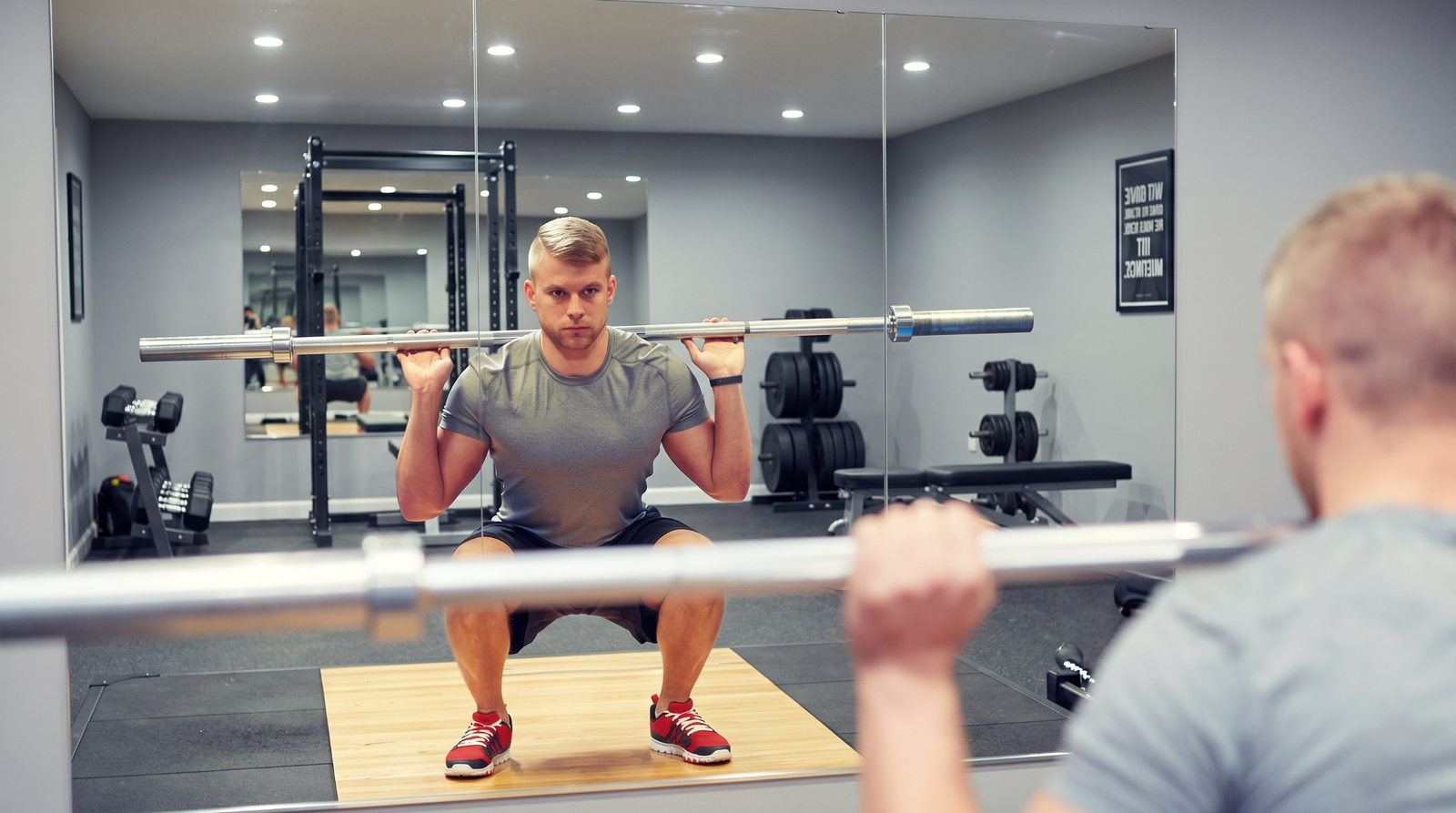
A home gym can fail or succeed based on one detail most people ignore; visual feedback. You can have expensive machines, premium flooring, and a solid training plan, yet still plateau faster than expected. The missing factor is often not equipment; it’s awareness of movement. Workout mirrors for home gym setups solve that problem in a way few other upgrades can. They don’t just make a space look bigger or more “gym-like.” They directly affect how well you train, how safely you move, and how consistently you improve.
If that sounds exaggerated, it isn’t. Athletes, dancers, physiotherapists, and strength coaches have relied on mirrors for decades for one reason: you cannot reliably correct what you cannot see. In a commercial gym, mirrors are everywhere for a reason. At home, people skip them because they think they are decorative rather than functional. That misunderstanding limits progress more than most people realize.
Why Mirrors Matter More in a Home Gym Than a Commercial Gym
In a commercial gym, you often unconsciously rely on external cues: trainers, other lifters, or even crowded reflections that force you to adjust your form. A home gym removes all of that. You are training in isolation, which sounds convenient but introduces a blind spot—literally and figuratively.
Workout mirrors for home gym environments restore that missing feedback loop. They allow you to observe posture, bar path, depth, alignment, and symmetry in real time. That real-time correction is what prevents long-term inefficiencies from forming in your movement patterns.
Most injuries in home training environments don’t come from heavy lifting alone. They come from small, repeated technical flaws that go unnoticed. A slight knee collapse during squats, uneven shoulder positioning during presses, or improper spinal alignment during deadlifts can stay hidden for months. By the time discomfort appears, the pattern is already ingrained. A mirror does not fix your form. It exposes it. That distinction is important.
Training With Visual Accountability
There is another layer people underestimate: behavior change. Training alone requires discipline, but discipline improves when feedback is immediate and unavoidable. Seeing yourself while training creates a subtle form of accountability.
When you can observe your posture, tempo, and effort, you naturally adjust. You reduce sloppy repetitions without needing external correction. This is especially important for beginners, but even advanced lifters benefit because fatigue tends to degrade form before strength fails.
In practice, mirrors also increase focus. You are less likely to rush sets or lose attention between reps. The visual presence of your movement anchors your awareness. That alone can improve training quality more than adding another piece of equipment.
Where Workout Mirrors Make the Biggest Difference
Not every exercise benefits equally from mirrors. The impact is strongest in compound and form-sensitive movements. Squats, deadlifts, lunges, overhead presses, and Olympic lifts rely heavily on alignment and symmetry. Even small deviations can change muscle activation or joint stress.
In isolation exercises like curls or triceps extensions, mirrors still help, but the effect is less critical. The real value appears when the movement involves multiple joints and balance under load.
A properly placed mirror allows you to see:
- Depth consistency in squats and lunges
- Bar or dumbbell path during presses and pulls
- Shoulder and hip alignment under load
- Symmetry between left and right sides
But more importantly, it helps you recognize fatigue breakdown early. Most lifters only notice poor form after a set is finished. A mirror brings that awareness into the set itself.
Choosing the Right Workout Mirrors for Home Gym Setup
This is where people usually make unnecessary mistakes. They either choose mirrors that are too small, poorly positioned, or not designed for exercise environments. A home gym mirror is not a decorative wall mirror. It needs to function under movement, sweat, vibration, and repeated exposure to training conditions.
The most important factors are clarity, safety, and coverage. A distorted reflection defeats the entire purpose. Similarly, fragile glass or poor mounting introduces risk in a space where weights are being moved.
A good home gym mirror setup focuses on three things: full-body visibility, minimal distortion, and secure installation. If any of these are missing, the system fails its purpose.
Instead of focusing on aesthetics alone, the real decision should revolve around how much of your training area is visible at once. A fragmented reflection forces you to constantly reposition, which breaks concentration.
Placement Strategy – Where Most People Get It Wrong
Even high-quality mirrors fail when placed incorrectly. Placement determines whether the mirror becomes a performance tool or just background decoration.
The most effective setup is usually a long, uninterrupted wall section facing your primary lifting zone. This allows full-range visibility during key movements. Side mirrors can also help, but they should not replace a main frontal view.
The biggest mistake is placing mirrors too high or too low. If your reflection cuts off mid-rep or forces neck strain to view alignment, it defeats the purpose. The mirror should match natural eye level during standing exercises, with enough vertical coverage for overhead movements.
Lighting also plays a critical role. Poor lighting creates shadows that distort form perception. Even a perfectly installed mirror loses value in a dim environment.
Safety Considerations People Ignore Until It’s Too Late
A home gym is not a controlled studio environment. Weights are dropped, equipment shifts, and movement is dynamic. That means mirror safety is not optional—it is essential.
Tempered or reinforced mirrors are strongly preferred in training environments because they reduce risk if breakage occurs. Secure mounting is equally important. A poorly anchored mirror becomes a hazard under vibration or accidental impact.
Another overlooked issue is edge protection. Sharp exposed edges increase risk during close-range movements like dumbbell presses or lateral raises. A proper installation accounts for both structural stability and user proximity. If a mirror installation feels “good enough,” it probably isn’t.
How Mirrors Improve Progress Tracking Over Time
Most people track progress through weight, reps, or body measurements. These are useful but incomplete. They do not show movement quality.
Workout mirrors for home gym use allow you to visually track technique evolution. You start to notice smoother reps, better depth control, and improved symmetry over time. This is especially useful during plateaus, where strength numbers stay the same but movement quality continues improving.
That visual feedback often reveals progress that numbers hide. For example, the same squat weight may look completely different six weeks later in terms of control and stability. Without a mirror, that improvement goes unnoticed.
Minimal Setup Guide for Effective Use
To get meaningful results, the setup does not need to be complicated. It needs to be intentional.
- Position the mirror facing your main training zone
- Ensure full-body visibility during standing movements
- Use even lighting without strong shadows
- Secure mounting with reinforced anchors
- Avoid segmented reflections across multiple broken surfaces
That’s it. Complexity does not improve performance here—clarity does.
Common Misconceptions About Home Gym Mirrors
One of the biggest misconceptions is that mirrors are for aesthetics or motivation. That mindset undervalues their actual function. Mirrors are not motivational tools; they are correction tools.
Another misconception is that only beginners need them. In reality, advanced lifters benefit even more because small technical refinements become more important at higher loads. A 2–3% improvement in form efficiency can significantly affect long-term performance and injury risk.
There is also the belief that video recording replaces mirrors. Video is useful, but it is retrospective. You fix mistakes after they happen. Mirrors allow correction during execution, which is far more effective for motor learning.
The Real Value – Control, Not Decoration
At its core, a workout mirror is not about making your gym look professional. It is about control. Control over movement, alignment, tempo, and awareness. Without that feedback, training becomes partially blind. You may still get results, but they are slower, less efficient, and more error-prone.
A home gym without mirrors is like driving without side mirrors., you can still move forward, but you are constantly guessing what you cannot see.
If you are serious about improving training quality, not just equipment collection, then mirrors are not optional. They are foundational.
Final Thought
Most home gym upgrades focus on strength output: more weight, more machines, more resistance. But real progress is not just about output. It is about precision. Workout mirrors for home gym setups introduce that precision by forcing visibility into every repetition. The truth is simple: you cannot refine what you refuse to see.