


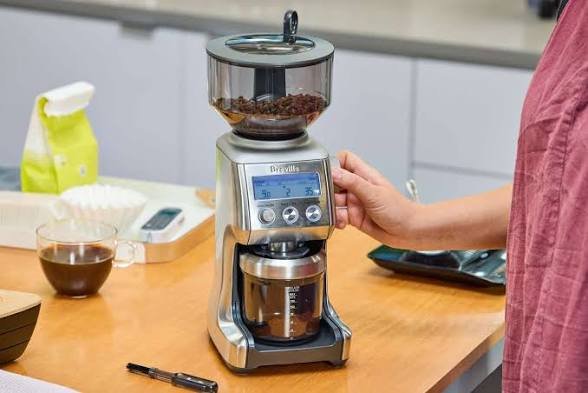
There’s something oddly satisfying about making coffee at home that actually tastes like it came from your favorite café. Not just “good for home coffee,” but smooth, balanced, aromatic coffee that makes you pause for a second sip. For many home baristas, the journey to that level of quality doesn’t start with fancy beans or expensive machines—it starts with the grinder.
It might sound surprising, but the grinder plays a bigger role in flavor than most people expect. You can buy excellent beans from a specialty roaster, but if the grind is inconsistent, the final cup can taste flat, bitter, or uneven. On the other hand, a well-ground coffee can make a modest bean taste surprisingly refined.
In industries like cafés, boutique hotels, and even high-end office spaces, grinders are treated as essential equipment rather than accessories. That same mindset is now becoming common in home kitchens too, where coffee is less of a routine and more of a small daily ritual worth getting right.
Why Grind Quality Matters More Than You Think
Imagine two people cooking pasta. One uses fresh ingredients but cooks them unevenly—some overdone, some undercooked. The other uses decent ingredients but cooks everything with precision. The second dish often tastes better, even if the raw ingredients were simpler.
Coffee works in a similar way. Grinding affects how water interacts with coffee during brewing. If particles are uneven—some too fine, some too coarse—the extraction becomes inconsistent. This is why one sip might taste sour while the next feels overly bitter.
In real-world terms, cafés rely on consistency because they serve hundreds of cups a day. A barista can’t afford a grinder that behaves differently at 8 AM compared to 2 PM. That’s why commercial environments invest heavily in equipment that delivers uniform particle size.
At home, consistency matters just as much, even if you’re only making one or two cups. Think about your morning routine: you wake up half-asleep, press a button, and expect something comforting and predictable. A good grinder makes that possible without requiring extra effort or guesswork.
Even outside coffee, this idea shows up everywhere. Bakers depend on evenly milled flour. Pharmacies rely on precise measurements for compounds. Sound engineers adjust fine levels of frequency for clarity. In each case, consistency is what creates quality—and coffee is no different.
What Makes a Grinder “Premium” in Real Life
The word “premium” gets thrown around a lot, but in coffee grinders, it actually points to a few practical differences rather than just price.
First, there’s consistency of grind size. Premium grinders are designed so that the coffee particles are closer in size to each other. This helps water extract flavor evenly. You’ll often hear this described as “uniformity,” but in everyday terms, it simply means your coffee tastes balanced instead of confusing.
Second, there’s control. Better grinders offer more precise settings, allowing you to adjust for espresso, pour-over, or French press. If you’ve ever brewed coffee that tasted fine one day and disappointing the next, it might not have been the beans—it may have been a lack of control in the grind size.
Third, durability matters more than people think. In many households, a grinder is used daily for years. Cheaper models may struggle with heat buildup or wear over time, which subtly affects flavor. Premium models are built with stronger burr materials and better motors, helping maintain performance over time.
To understand this in practical terms, think of tools in other industries. A carpenter doesn’t rely on a flimsy saw for detailed work. A photographer doesn’t use a low-quality lens for professional shoots. The tool affects the outcome, even when the skill level stays the same.
This is where many home baristas begin to notice the gap between average and high-end equipment. It’s not about luxury—it’s about removing small inconsistencies that add up in your cup.
Top Picks for Home Baristas and How They Fit Different Lifestyles
Choosing the right grinder depends less on chasing the “best” option and more on how you actually make coffee every day.
If you’re someone who enjoys slow mornings, maybe grinding beans manually is part of your routine. Manual grinders are quiet, portable, and surprisingly precise. They’re popular among travelers and minimalists who like to control every step of brewing. It’s a bit like hand-whisking matcha—slower, but intentional.
For busy professionals, electric grinders are often more practical. You press a button, and within seconds, you get consistent grounds ready for brewing. This is similar to how commercial kitchens rely on prep machines to save time during rush hours without sacrificing quality.
There are also hybrid users—people who make espresso on weekdays and experiment with pour-over on weekends. They benefit most from grinders that offer flexible settings and stable performance across different grind sizes. This kind of versatility is what separates basic equipment from truly adaptable tools.
In this space, many home baristas eventually start exploring premium coffee grinders as they notice how much difference precision makes in their daily cup. The upgrade often feels less like a luxury and more like fixing something that was missing all along.
It’s similar to upgrading from standard office chairs to ergonomic ones. At first, the old one feels fine—until you experience what better support actually feels like. Once you switch, it’s hard to go back.
Coffee shops understand this instinctively. A café doesn’t just buy a grinder for looks; it chooses one that can handle repeated use while maintaining consistency under pressure. At home, you’re not serving customers, but you are still the end user who notices every detail in flavor.
Small Improvements That Change the Entire Coffee Experience
One of the most interesting things about upgrading your grinder is how quickly your taste expectations shift. Coffee that once tasted “good enough” suddenly feels dull or uneven. This isn’t snobbery—it’s awareness.
People often describe this change as “unlocking” flavors they didn’t notice before. Fruity notes in Ethiopian beans become clearer. Chocolatey undertones in darker roasts feel smoother. Even bitterness becomes more controlled rather than overwhelming.
This kind of improvement shows up in other daily habits too. Better headphones make you notice background instruments in songs. A sharper kitchen knife changes how you prepare food. Once consistency improves, your senses naturally pick up more detail.
And that’s really the point of investing in better tools—not to complicate life, but to reduce friction. A good grinder removes one of the biggest variables in coffee brewing, making your routine more predictable and enjoyable.
It also encourages experimentation. When you trust your equipment, you’re more willing to try new beans, adjust brewing methods, or fine-tune recipes. Coffee becomes less of a fixed routine and more of a small creative process each morning.
Bringing Café Quality Into Everyday Life
At its core, making café-quality coffee at home isn’t about replicating a shop exactly. It’s about bringing that same level of care and consistency into your own space.
You don’t need a full espresso bar on your counter or a dozen brewing devices. What you really need is control over the most important step: grinding.
Once that foundation is solid, everything else becomes easier. Brewing becomes more predictable, flavors become clearer, and the entire experience feels more intentional.
For many people, that’s where the real shift happens—not in becoming a professional barista, but in turning a simple cup of coffee into a moment that consistently feels worth slowing down for.