


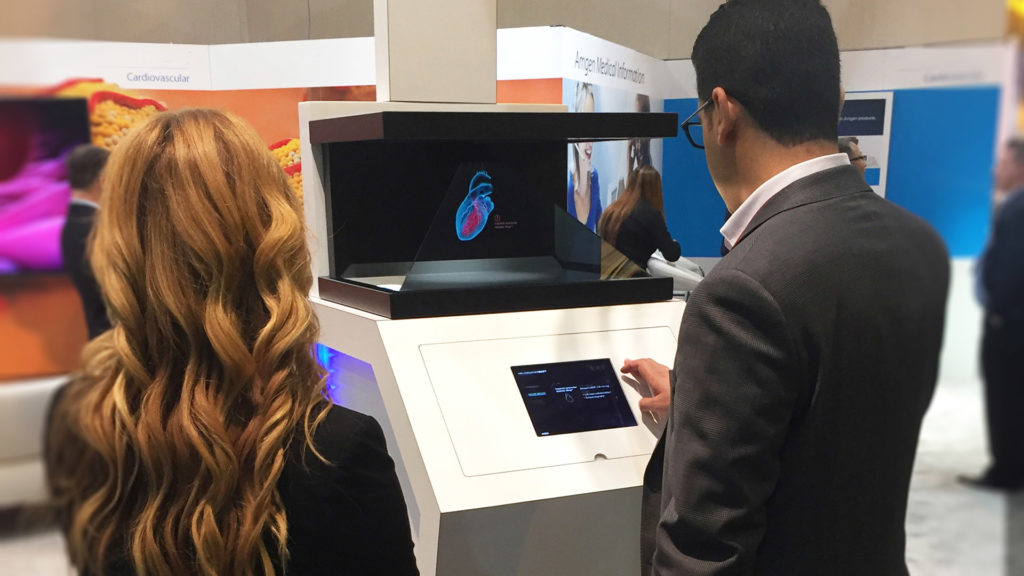
Walk the exhibition floor of a major medical conference—HIMSS, RSNA, the American Heart Association Scientific Sessions—and the visual transformation is striking. Between the familiar rows of clinical poster presentations and pharmaceutical information desks, a different kind of booth has appeared: one with VR headsets, interactive simulations, gamified education platforms, and AI-powered engagement tools. Health and pharmaceutical brands are embracing experiential marketing, and the shift is rewriting how the industry approaches professional engagement at conferences.
The Unique Challenge of Healthcare Trade Shows
Medical conferences occupy a peculiar position in the trade show landscape. The audience—physicians, researchers, hospital administrators, pharmacists—is among the most specialised and time-constrained of any industry. Healthcare professionals attending conferences are typically evaluating continuing medical education opportunities, reviewing clinical data, and assessing new technologies, all within a compressed schedule. They are not browsing. They are working.
This makes traditional trade show tactics—giveaways, flashy graphics, aggressive booth staffing—particularly ineffective in healthcare settings. The audience is resistant to overt marketing and sceptical of anything that feels like a sales pitch. At the same time, regulatory constraints from bodies like the FDA and industry codes of conduct from organisations like PhRMA limit what pharmaceutical and medical device companies can offer as incentives for booth visits.
The result has been an industry that historically relied on static product displays, printed literature, and one-on-one conversations with medical science liaisons. Effective, but limited in scale and difficult to differentiate.
VR Simulations Are Changing Product Demonstrations
Virtual reality has found a natural application in healthcare experiential marketing because it solves a genuine problem: demonstrating complex medical technologies in an exhibition setting. A surgical robot cannot be operated live on a convention floor. A diagnostic imaging platform requires clinical data that cannot be displayed publicly. A pharmaceutical mechanism of action is invisible to the naked eye.
VR eliminates these constraints. A surgeon can experience a simulated procedure using a new surgical platform. A radiologist can navigate a three-dimensional visualisation of imaging data. A clinician can observe—from inside the body, at molecular scale—how a therapeutic agent interacts with its target. These are not gimmicks. They are demonstrations that communicate product value more effectively than any brochure or slide presentation.
The deployment of these experiences at medical conferences has driven demand for specialised providers who understand both the technology and the healthcare context. Trade show entertainment providers such as Los Virtuality have expanded into healthcare industry events, adapting their VR, gamification, and interactive entertainment capabilities for the specific requirements of medical conferences—including compliance considerations, clinical accuracy standards, and the professional tone that healthcare audiences expect.
Gamified Education and Engagement
Beyond VR demonstrations, gamification has emerged as an effective engagement tool at healthcare conferences. The approach works particularly well in medical education contexts, where the audience is already primed for learning.
Interactive quiz competitions—where conference attendees test their knowledge of a therapeutic area, a disease state, or new clinical guidelines—achieve engagement rates that traditional booth interactions cannot match. Leaderboard competitions add a competitive element that healthcare professionals, many of whom have competitive academic backgrounds, respond to readily. The registration required to participate generates qualified leads, while the educational content reinforces clinical messaging.
AI photo booths and interactive installations have also found a place, particularly at health and wellness brand activations aimed at broader professional audiences. These lighter-touch experiences create shareable moments that extend the brand’s reach beyond the conference floor, while maintaining the professional tone that the setting requires.
The ROI Conversation in Healthcare Marketing
Healthcare marketing budgets are under intense scrutiny. Pharmaceutical companies face pricing pressure. Medical device firms navigate complex reimbursement landscapes. Health system vendors compete in a market where purchasing decisions involve multiple stakeholders and extended evaluation cycles.
In this environment, the ROI case for experiential marketing is compelling precisely because the alternative is expensive. The average cost per lead at a trade show sits at approximately $112, compared to $259 for a traditional field sales call. In healthcare, where the sales cycle is long and the decision-making unit is complex, leads generated through high-engagement interactions—where the prospect has spent three to five minutes actively engaging with a product demonstration—are substantially more qualified than those generated through passive booth visits.
With 81% of conference attendees holding decision-making authority, the healthcare trade show floor remains one of the most concentrated environments for reaching qualified buyers. The question is no longer whether health brands should invest in experiential approaches, but how quickly they can evolve their conference strategies to match what the rest of the B2B world has already adopted.
An Industry Catching Up
Healthcare has historically been conservative in its marketing approaches, and for understandable reasons. Regulatory requirements, ethical considerations, and the gravity of the subject matter all counsel caution. But caution should not mean stasis. The brands gaining ground at medical conferences in 2026 are the ones that have recognised a fundamental truth: healthcare professionals are still people, and people engage more deeply with experiences than with displays.
The VR simulation that lets a surgeon feel a new instrument in their hands. The gamified quiz that makes continuing education competitive and memorable. The AI installation that creates a moment of genuine surprise between sessions. These are not departures from the serious business of healthcare marketing. They are the tools that make the serious business more effective—one interaction at a time.