


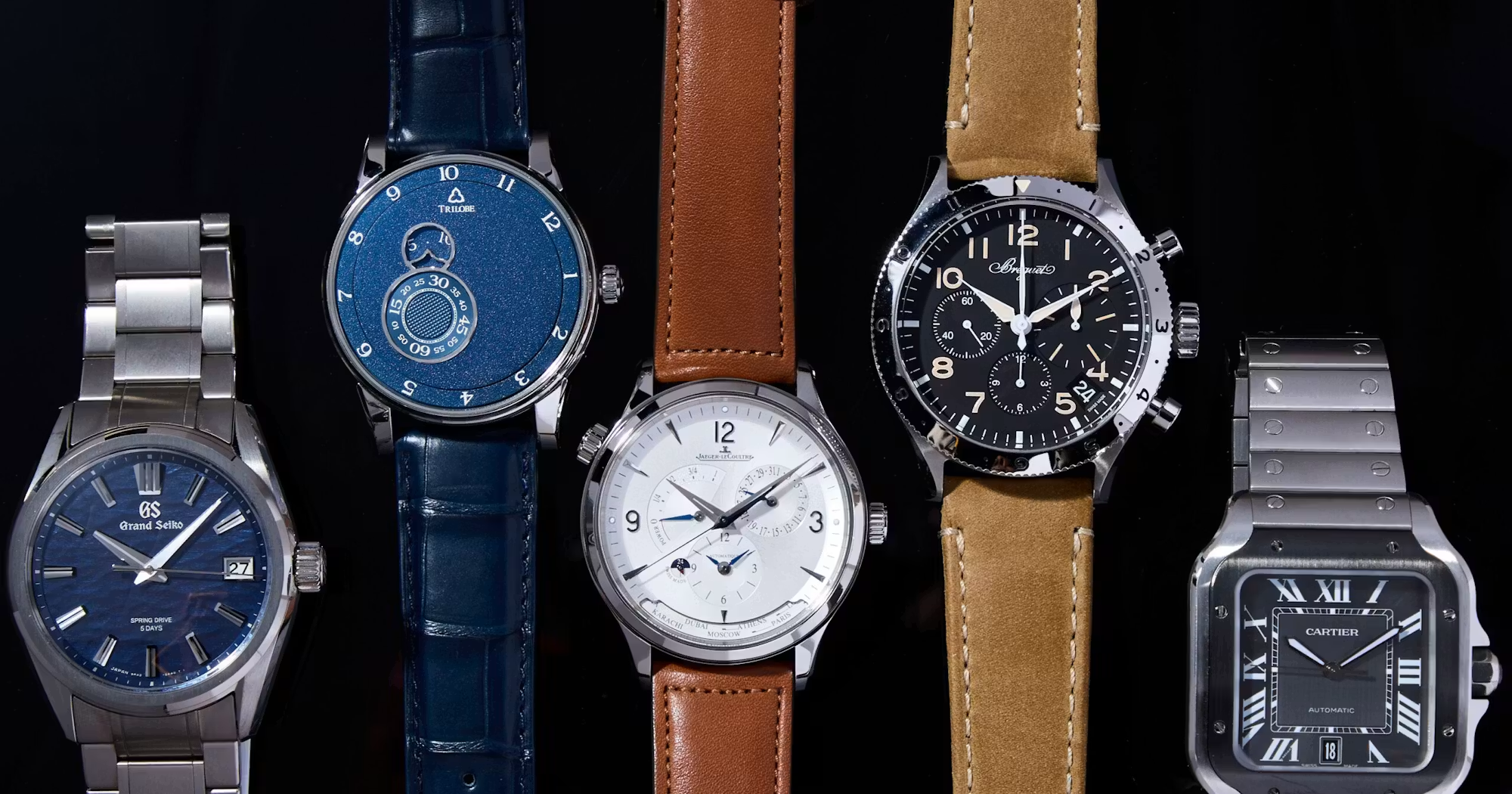
Most people don’t plan their first watch collection. They buy something they love, then buy something else they love, and five years later they have seven watches with overlapping complications, similar dial colours, and three pieces they rarely wear. That’s not a collection. That’s an accumulation.
Building intentionally from the start changes everything. It changes what you buy, when you buy it, how much you spend, and how satisfied you feel two years down the line. This guide is for the collector who wants to approach it differently.
Start With a Collection Philosophy, Not a Wishlist
Before you buy a second watch, ask yourself one question: what do I actually want this collection to do?
Some collectors build for pure personal enjoyment, prioritising pieces that resonate emotionally regardless of resale value. Others treat the collection partly as a store of value, focusing on references with proven secondary market demand. Many serious collectors balance both, which is entirely achievable with the right framework.
Your philosophy doesn’t need to be complicated, but it needs to exist. Without it, every new purchase feels justified in isolation and the collection never coheres.
A simple starting framework:
- Depth vs. breadth: Do you want five exceptional pieces from one or two houses, or fifteen pieces spanning multiple brands and eras?
- Wearability vs. display: Are these watches for daily rotation or occasional wear and long-term appreciation?
- Tradition vs. innovation: Are you drawn to classical watchmaking, modern high-complications, or avant-garde horology?
Your honest answers to these questions should filter out roughly half the watches you’d otherwise consider buying.
How to Diversify Without Buying Duplicates
This is the mistake most first-time collectors make: buying multiple watches that serve the same function in the collection.
A good collection has genuine diversity across at least three axes.
Complications
Don’t buy three time-only watches before you own a single complication. Consider anchoring your collection around distinct functions:
- A time-only piece (your foundation, daily wear anchor)
- A date or calendar complication (annual calendar, perpetual calendar, or simple date depending on budget)
- A chronograph (particularly useful if you enjoy motorsport, aviation, or vintage sports pieces)
- A dress watch or grand complication (for formal occasions and horological depth)
- A technical or avant-garde piece (where something like a tourbillon or skeletonised movement earns its place)
Once you’ve covered these bases, adding a second piece within a category becomes a purposeful choice rather than an accidental duplication.
Eras and Aesthetics
A collection that spans eras is far more interesting than one that doesn’t. Consider pairing a vintage or vintage-inspired reference, say a 1960s-style tool watch, with something thoroughly contemporary. The contrast creates a narrative.
Aesthetically, vary your dial textures, case materials, and proportions. A 36mm dress watch in yellow gold reads completely differently to a 42mm titanium sports piece. Both can belong in the same collection without competing.
Brands
Brand diversification protects you from over-exposure to one house’s pricing fluctuations while also giving your collection a broader point of view. A Patek Philippe Calatrava, a Rolex Submariner, and a piece from an independent like F.P. Journe tell a richer story than three Rolex references ever could.
When to Prioritise Resale Liquidity Versus Personal Enjoyment
This is genuinely one of the harder calls in collecting, and there’s no universal answer. But there’s a useful mental model.
Think in tiers. Early in a collection (pieces one through three), prioritise liquidity heavily. These foundational purchases should be references with strong secondary market demand, recognisable to future buyers, and unlikely to collapse in value. Think Rolex sports references, Patek Calatrava or Nautilus variants, and Audemars Piguet Royal Oak lines. These aren’t just watches; they’re positions in a market.
Once the foundation is stable, you’ve earned the freedom to take more personal risks. This is where you can bring in a vintage oddity you love, a piece from an under-the-radar independent, or a bold avant-garde watch that moves you but might not move as quickly on resale.
A practical split many collectors use: two-thirds of the collection weighted toward liquid, high-demand references; one-third toward personal expression pieces where resale is secondary.
The resale conversation also extends to condition management. Keeping boxes, papers, and service records dramatically affects what you’ll recover if you ever sell. Unpolished cases matter too. According to widely-accepted norms in the collector community, an unpolished case on a vintage Rolex or Patek can represent a meaningful premium over a polished equivalent. Treat these details as part of the investment from day one.
Where High-Complication Pieces Fit Into a Collection
Not every collector should own a high-complication piece, but every collector eventually considers one. Understanding where they fit changes how you sequence acquisitions.
High-complications, particularly tourbillons, minute repeaters, and perpetual calendars, tend to work best as statement pieces added once a collection has depth. Buying a tourbillon as your third watch is like skipping chapters in a novel. The impact lands harder when it’s placed against context.
For collectors drawn to technical horology and material innovation at the extreme end of the market, Richard Mille luxury watches represent a compelling case study. Brands like Richard Mille approach watchmaking as engineering first, with cases in TPT carbon, titanium, and NTPT materials that are genuinely unlike anything from traditional Swiss houses. A piece like the RM 011 or RM 035 isn’t just a watch; it’s a statement of where horology can go when brand convention is removed entirely.
That kind of piece deserves its own position in a collection, usually later in the sequence, and ideally alongside more classical references that give it contrast.
Sequencing Acquisitions: How Collectors Build Toward Coherence
The order in which you buy matters more than most collectors realise.
A useful sequencing model:
- The anchor: Your single most wearable, most versatile piece. Often a sports watch or robust dress watch you’d reach for three times a week. This earns the most wrist time and usually holds value well.
- The contrast: Something that deliberately differs in material, complication, or aesthetic. If your anchor is steel and sporty, make the contrast a gold dress piece or a vintage reference.
- The personal statement: Now you’ve built a platform. The third piece can reflect your specific taste more boldly, whether that’s a grand complication, an independent brand, or a piece with a deeply personal connection.
- The specialist: A watch that serves a niche function or captures a specific horological interest, a diver for the ocean enthusiast, a pilot’s watch for the aviation collector, a skeleton for the movement admirer.
- The collection-definer: The piece you’d point to as the signature of your collection. For some collectors this comes early; for most, it reveals itself over time.
At each stage, ask whether the new piece adds something genuinely new to the collection or whether it duplicates what you already own. If the answer isn’t immediately obvious, wait.
Using Expert Resources to Buy Well
Building a collection with intention also means sourcing carefully. The pre-owned market is where most serious collectors operate, particularly for sought-after references that have moved beyond authorised dealer availability.
Dealers who combine authentication rigour with deep inventory, sourcing capability, and transparent pricing are rare but worth finding. Wrist Aficionado is one example worth knowing about, particularly for collectors seeking specific references across Rolex, Patek Philippe, Audemars Piguet, and the independent brand space. Having a trusted source matters enormously when you’re making five and six-figure decisions on pieces you may have never handled in person before.
Key Takeaways
- Define your collection philosophy before your second purchase. Without it, you’re just accumulating.
- Diversify across complications, eras, and brands deliberately. Variety creates narrative; duplication creates stagnation.
- Weight your early acquisitions toward liquid, high-demand references. Personal expression pieces come after the foundation is built.
- Sequence matters. Each acquisition should add something the collection doesn’t yet have.
- Condition management, including boxes, papers, and unpolished cases, is part of the investment from day one.
Frequently Asked Questions
How many watches should a first collection include? There’s no target number, but most experienced collectors suggest that five to eight well-chosen pieces outperform fifteen rushed ones in both enjoyment and value retention. Focus on coverage and contrast, not volume.
Should a first-time collector avoid vintage watches? Not necessarily, but vintage buying carries added complexity around authenticity, condition assessment, and parts availability. If you’re drawn to vintage, start with a reputable dealer and focus on complete examples with documented provenance. It’s a more forgiving learning curve than buying privately.
When does it make sense to include a Richard Mille in a collection? Pieces like these are most coherent as later acquisitions once a collection has classical foundations to provide contrast. Their material innovation and engineering approach hit differently when placed against traditional Swiss horology. That said, if the brand genuinely speaks to your aesthetic and collecting philosophy, there’s no hard rule against building around it.
Is resale value a reliable guide to what to buy? It’s a useful input, not a blueprint. Resale data from platforms like Chrono24 and the secondary market reporting from publications like Revolution Watch and Hodinkee give reasonable visibility into what holds value. But the watches people regret selling are almost never the ones they bought purely for returns.
How do you avoid buying duplicates without realising it? Map your collection on paper or digitally before every purchase. List each piece alongside its complication, case material, diameter, and primary aesthetic. If the new piece has three or four columns that mirror something you already own, it’s likely a duplicate in function even if it looks different.
Conclusion
A great watch collection tells a story. Not loudly, not obviously, but coherently. Each piece earns its place because it adds something the others don’t. That kind of collection doesn’t happen by accident and it rarely happens fast.
The collectors whose collections age best are the ones who slowed down, asked harder questions before each purchase, and resisted the impulse to fill gaps with whatever was available. The framework matters less than the discipline to actually use it.
If you’re starting that process now, you’re already ahead of most.