


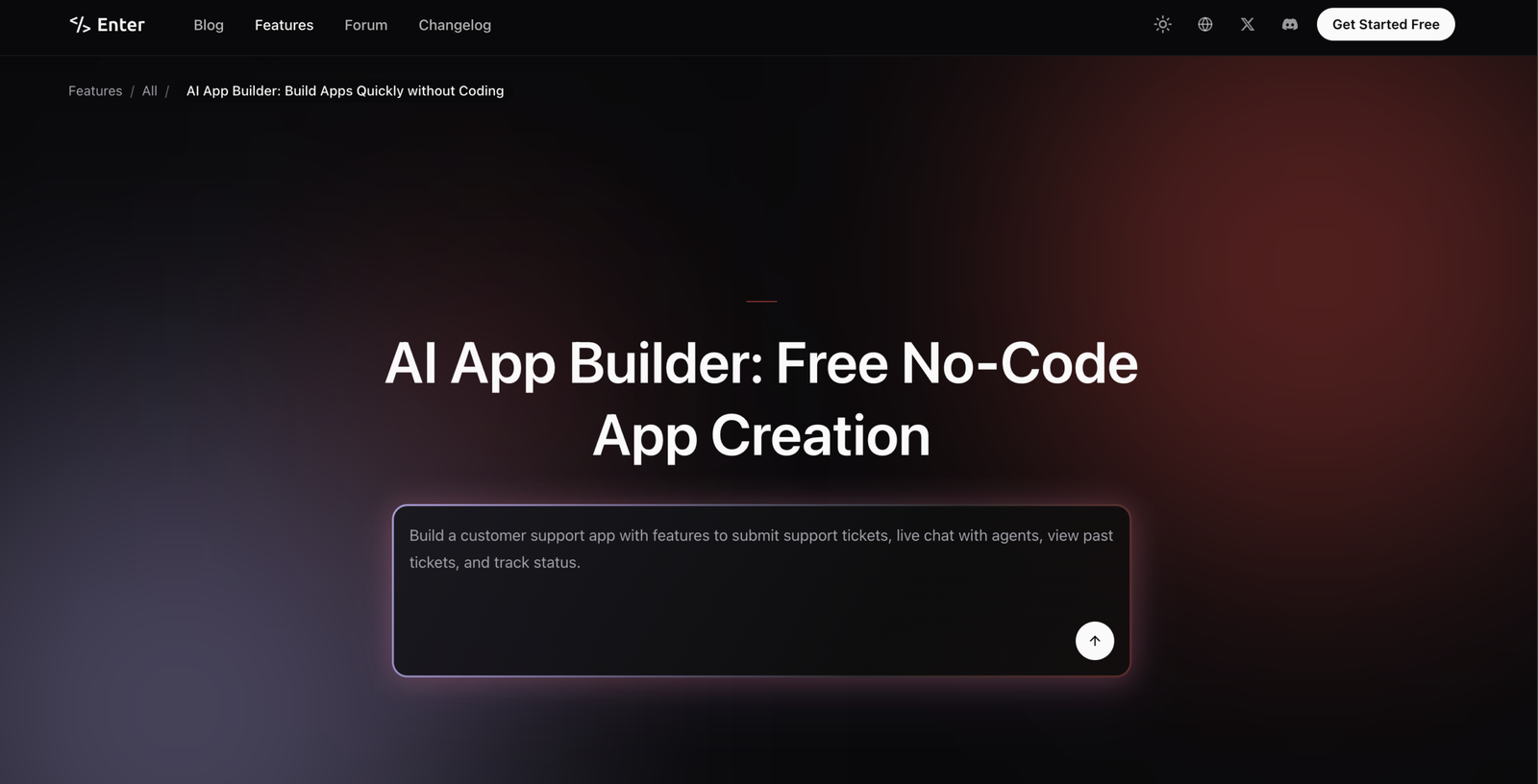
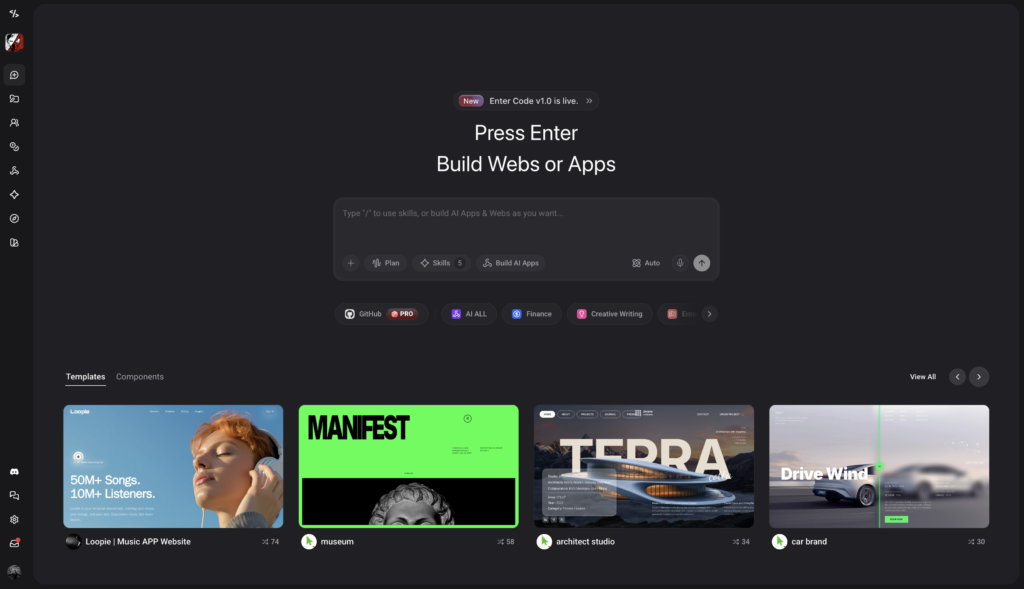
Testing a business idea used to be genuinely expensive. You hired developers, paid for infrastructure, and spent months before you had anything real to show potential customers. By the time you found out whether the idea worked, you had already spent a substantial portion of your risk capital on the experiment. The test was so costly that failing it caused real damage, and that cost made founders more likely to avoid testing and more likely to convince themselves that thorough planning was a reasonable substitute. Platforms like Enter Pro have changed this equation significantly, bringing the cost of going from idea to working product low enough that testing quickly has become more financially responsible than planning exhaustively.
This matters because the relationship between cost and learning changes how honestly you can interpret results. When you have spent six months and forty thousand dollars building something, you are not in a neutral frame of mind when you put it in front of customers. You have an enormous emotional and financial stake in their reaction. That stake shapes how you ask questions, how you interpret ambiguous responses, and how honestly you are willing to hear that a core assumption was wrong.
Why Cheap Tests Produce Better Learning
When your test costs two weeks and a modest subscription fee, you can hold the result much more loosely. You can watch a customer struggle with your core feature without feeling like your career is ending. You can hear that the problem you thought you were solving is not actually the one causing them the most pain without having to reframe everything in a way that makes the feedback feel positive.
This emotional distance is not a nice-to-have. It is one of the most important factors in whether an early product test produces accurate learning. Founders who are over-invested in being right tend to collect feedback in ways that confirm what they already believe. Founders who can afford to be wrong tend to ask sharper questions and sit more comfortably with uncomfortable answers.
Getting to a working test product in days rather than months is what creates that emotional distance. And an AI app builder is what makes getting there in days a realistic expectation rather than an optimistic fantasy. You build the functional core of your idea, not a mockup with fake buttons but an actual working product, and you put it in front of real users before you have had time to get too attached to any particular version of it.
How to Structure the Test Properly
The goal of an early product test is not to find out whether people like what you built. Liking something and paying for it are different behaviors, and the gap between them has ended many promising startups. The goal is to find out whether the people who have the problem you are solving will pay to have it solved, and whether your specific approach to solving it is compelling enough to earn that payment.
That means being thoughtful about who you test with. Friends and colleagues who want to be supportive are not the right audience for an honest early test. You need people who actually have the problem, who are currently dealing with it through whatever imperfect workaround exists, and who have no particular reason to want your product to succeed. Their honest indifference is more valuable than your network’s enthusiastic encouragement.
Watch what they do more than what they say. People are polite. They will tell you the product is interesting when they are genuinely confused by it. They will say it looks great while privately deciding they would never use it. What tells you the truth is whether they complete the core task without needing help, whether they try to use it for something you did not build it for, and whether they ask about pricing before you bring it up.
The Iterations That Follow
The first test almost never produces the result you expected. This is not a problem. It is the mechanism by which real products get built. You discover which assumptions were accurate and which were not. You find out which users are the right fit and which ones you were targeting based on a profile that turns out to be wrong. You learn which feature you thought was secondary is actually the one people respond to most.
Each of those discoveries shapes the next version of the product. And because building the next version takes days rather than months, you can run several rounds of genuine learning before you have spent what a single traditional development cycle would have cost.
The Financial Math
The financial case for testing quickly and cheaply is stronger than most founders calculate when they are in the early planning phase. A traditional development cycle might cost twenty to fifty thousand dollars before you have anything testable. At that investment level, you need the idea to be right before you start, which is exactly when you have the least information about whether it is right.
Testing with a quickly built product might cost a few thousand dollars all in, including platform costs, your time, and any early customer acquisition. If the test fails, you have lost a few thousand dollars and a few weeks. If it succeeds, you have early evidence of product-market fit that changes every subsequent conversation you have with investors, partners, and potential team members. The asymmetry in that risk profile is significant and is why the fastest path to testing is almost always the smartest financial decision in the early stages.
Conclusion
The founders who move fastest through the early validation phase are not the ones with the most resources or the most experience. They are the ones who are most willing to ship something imperfect into the hands of real users and let the resulting behavior tell them what to do next. The tools to do this exist and are genuinely accessible. The cost of running a real test is lower than it has ever been. What separates the founders who act on this from the ones who keep planning is mostly willingness, and that is something no platform can provide. It has to come from a decision to value real evidence over comfortable assumptions.