


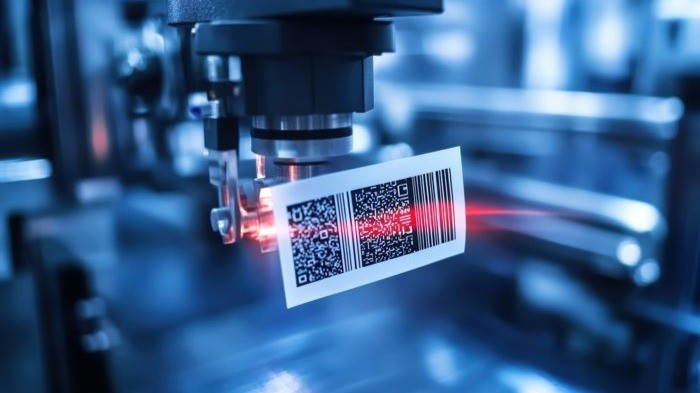
Manufacturing facilities, processing plants, and industrial operations have long depended on quality control as a frontline defense against product failure, safety incidents, and costly rework. For decades, this meant trained inspectors, standardized checklists, and periodic sampling — methods that worked well enough when production volumes were manageable and tolerance windows were wide. But production environments have changed. Lines run faster. Tolerance requirements have tightened. The cost of a defect reaching a downstream customer or a field installation has grown considerably, both financially and reputationally.
In this context, a quiet but significant shift has been underway in how industrial operations approach defect detection. Computer vision systems have moved from experimental deployments to operational infrastructure in a range of industries. At the same time, traditional quality control methods have not disappeared — they have adapted, and in many settings, they remain the default. Understanding what each approach actually delivers, and where each falls short, is a practical concern for anyone responsible for maintaining production quality at scale.
What Computer Vision for Industrial Inspection Actually Does
Computer vision for industrial inspection uses camera systems paired with image processing software and, increasingly, machine learning models to evaluate products or components as they move through a production line. Unlike a human inspector reviewing a sample, a vision system can assess every unit passing through a defined checkpoint, applying consistent evaluation criteria at machine speed. Detailed implementations of this approach — including how systems are configured for specific defect types and production environments — are covered in depth through computer vision for industrial inspection resources designed for industrial operators.
The core function is straightforward: capture an image or sequence of images, compare what is captured against a defined standard, and flag deviations that exceed acceptable parameters. What varies significantly across deployments is how that comparison is made — whether through rule-based logic, statistical thresholds, or trained neural networks that have been exposed to thousands of examples of both acceptable and defective units.
The Role of Consistency in Automated Inspection
One of the most operationally significant properties of vision-based inspection is consistency. A trained human inspector performs well under normal conditions, but performance degrades over extended shifts, in poor lighting, during high-volume runs, or when inspecting products that require sustained close attention. These are not criticisms of individual inspectors — they are documented characteristics of human attention that any realistic assessment of inspection reliability must account for.
A calibrated vision system does not experience attention fatigue. It applies the same evaluation logic to the first unit of a shift and the ten-thousandth. For operations where defect rates are low and the cost of a missed defect is high, this consistency carries real operational value. It also makes audit trails more reliable, since the system logs each evaluation decision rather than relying on manual records.
Where Vision Systems Require Careful Configuration
Automated inspection is not self-configuring. A vision system needs to be trained or programmed against the specific defect types relevant to a given product and process. Surface scratches on a coated metal panel, dimensional variation in a molded plastic part, and contamination in a food product all require different imaging setups, lighting conditions, and evaluation logic. If a system is not properly configured for the actual defect profile of the production line, it will either generate excessive false positives — flagging acceptable units — or miss real defects by applying criteria that don’t match the failure mode.
This configuration dependency means that the quality of a vision system’s output is directly tied to the quality of its setup and ongoing calibration. Systems deployed without adequate domain knowledge or without regular validation against known defect samples tend to underperform. The technology works, but it requires operational investment to work well.
Traditional Quality Control: Its Structure and Its Limits
Traditional quality control in industrial settings typically combines incoming material inspection, in-process checks at defined production stages, and final inspection before shipment or installation. Human inspectors use visual assessment, physical gauges, and standardized test procedures to evaluate whether products meet specification. Statistical process control methods are often layered in to monitor trends and identify when a process is drifting toward out-of-tolerance conditions.
This model has served industry for a long time, and it continues to function effectively in environments where production volumes are low, products are complex and irregular in shape, or defect types require judgment that cannot easily be translated into machine-readable criteria. A skilled inspector brings contextual knowledge to an evaluation — recognizing that a surface mark in one location is functionally harmless while the same mark in another location is a failure. That contextual flexibility is genuinely difficult to replicate in a rule-based automated system.
The Sampling Problem in High-Volume Production
The structural limitation of traditional inspection becomes most apparent in high-volume production. Inspecting every unit on a fast-moving line is not feasible with human inspectors alone — the throughput requirements exceed what inspection staff can realistically evaluate without either slowing the line or accepting a reduced inspection scope. The result is sampling: inspecting a defined percentage of output and using that sample to make inferences about total production quality.
Sampling works as a statistical approach, and standards bodies such as the International Organization for Standardization have established widely used frameworks for acceptance sampling in production environments. However, sampling means that defects between sample points are not directly detected — they are inferred. When defect rates are very low or defect occurrence is clustered rather than random, sampling can miss real problems that a 100% inspection approach would catch.
Human Judgment as a Quality Variable
Beyond sampling, traditional inspection introduces variability that is inherent to human judgment. Two inspectors evaluating the same product may reach different conclusions about marginal cases. The same inspector may apply criteria differently early in a shift versus late in the day. Training programs standardize practice, but they cannot eliminate individual variation entirely. In regulated industries — aerospace, medical devices, pharmaceuticals — this variability creates documentation and traceability challenges that are difficult to manage at scale.
This is not an argument for eliminating human inspectors. It is a recognition that human judgment introduces variability that matters when production quality standards are tight and when regulatory accountability requires consistent, documented decision-making across every unit inspected.
Defect Detection Performance: A Direct Comparison
Comparing defect detection performance between the two approaches requires looking at specific dimensions: detection rate, false positive rate, inspection coverage, speed, and adaptability to new defect types. Neither approach dominates across all of these dimensions — the picture is more nuanced.
On detection rate and inspection coverage, vision systems have a clear advantage in high-volume, repetitive inspection of defined defect types. When a system is properly configured and the defect presents consistently in the imaging data, detection rates can significantly exceed what sampling-based human inspection achieves. On false positive rate, the advantage depends heavily on system configuration quality — poorly tuned systems generate rejection rates that create operational disruption.
On adaptability, human inspection holds an advantage. When a new failure mode appears — one that has not been seen before — an experienced inspector can recognize and flag it without reconfiguration. A vision system trained on known defect categories may not reliably detect a novel defect type until the system is retrained on examples of that defect. This lag matters in production environments where process changes or new materials can introduce new failure modes that emerge gradually rather than all at once.
Hybrid Inspection Approaches in Current Industrial Practice
In practice, the most robust quality control programs in 2025 are not choosing between vision systems and human inspection — they are integrating both in a structured way that plays to the strengths of each. Automated vision handles 100% inspection of defined, repeatable defect categories at line speed. Human inspectors focus on audit functions, exception review, and the evaluation of complex or novel cases that the automated system flags for secondary review.
• Vision systems perform continuous screening across all units, ensuring that no section of the production run goes uninspected for the defect types within the system’s configured scope.
• Human inspectors review flagged exceptions, providing the judgment layer that prevents a misconfigured or borderline detection from causing unnecessary rejection of acceptable product.
• Periodic human audits of units that the vision system passed help validate system performance and catch configuration drift before it affects defect detection reliability.
• When a new defect type is identified through human audit, that information feeds back into system retraining, gradually expanding the vision system’s detection capability.
This structure addresses the core limitation of each approach independently. It also means that the human inspectors remaining in the quality control function are applied to work that genuinely requires human judgment, rather than being deployed on repetitive screening tasks where attention degradation is inevitable.
Operational Considerations Before Transitioning to Vision-Based Inspection
For operations evaluating a shift toward automated visual inspection, the decision involves more than comparing detection performance figures. Implementation requires investment in system design, training data collection, integration with existing line infrastructure, and validation before full deployment. These are not trivial commitments, particularly for facilities without existing experience in machine vision deployment.
The practical starting point is a realistic defect profile assessment: what defect types matter most, how frequently they occur, and whether those defects present in ways that imaging systems can reliably detect. Products with highly irregular surfaces, defects that require tactile assessment, or failure modes that manifest only under load or in use are not necessarily good candidates for vision-only inspection. Products with visible surface defects, dimensional variation, or contamination that appears in imaging are generally stronger candidates.
Conclusion: Choosing the Right Approach for Your Production Reality
The question of whether computer vision or traditional quality control delivers better defect detection in 2025 does not have a single answer that applies across all operations. What is clear is that the performance gap between the two approaches has widened in specific conditions — high-volume production, tight tolerance requirements, and defect types that present consistently in imaging data — in ways that make the status quo increasingly difficult to justify on quality grounds alone.
Traditional inspection remains valuable where human judgment, contextual assessment, and adaptability to novel failure modes matter. These are real operational requirements in many settings, and they are not going away. But for the specific function of screening large production volumes against defined defect criteria, automated vision inspection offers a consistency and coverage that sampling-based human inspection structurally cannot match.
The most defensible approach in most industrial settings is an integrated one: use vision systems to handle the inspection tasks where consistency and coverage matter most, and retain human inspectors in roles where their judgment creates genuine quality value. Getting that division of responsibility right, and investing in proper system configuration and ongoing validation, is what separates effective implementation from a technology deployment that underperforms against its potential.