


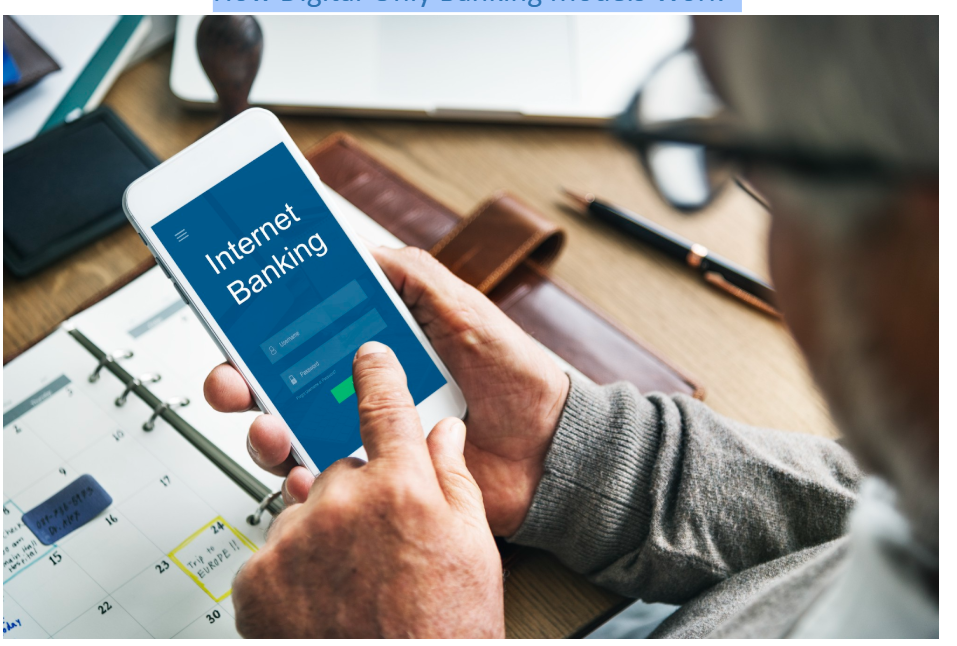
In the past, banking meant visiting a physical branch, waiting in line for your turn, and filing in stacks of paperwork. You would go to such lengths to deposit a cheque, and it would still take weeks to process.
Today, digital banking has transformed this experience, allowing people to handle their money conveniently and securely at any time and location.
That said, how exactly do digital-only banking models work? Whether you’ve been using digital banking services for years or are opening your first account, this guide will offer clarity. Let’s break it down!
Digital vs. Traditional Banking
First off, let’s unpack how digital banking differs from traditional banking. With brick-and-mortar banks, the primary mode of communication is face-to-face interaction. Comparatively, digital banks operate without physical branches. All services are available through mobile apps or websites.
Unlike traditional banks, online only banks are available 24/7. They enable instant access to services, including faster international transactions.
Core Components of Digital-only Banking
The core components of digital banking models include:
Technological infrastructure: Digital banks often use cloud computing to provide scalability, flexibility, and 24/7 availability.
User Experience: Digital-only banks leverage a mobile-first approach. Users make transactions through an intuitive mobile application. For a seamless user experience, they provide digital, paperless, and signature-less onboarding, often using facial recognition.
Security and compliance: Digital banking operations are protected by biometric authentication methods and multi-factor authentication (MFA).
Product functionality: Digital banking models offer seamless integration with digital wallets like Apple Pay and Google Pay.
What You Can Do With Digital Banking
There’s a common misconception that digital-only banks don’t offer as many services as traditional banks. If anything, online-only banks have a more detailed service portfolio.
Here’s what you can do with a digital-only bank account:
Manage finances: You can check account balance, view transaction history, download account statements, and set up account alerts.
Transfer payments: Users can transfer money to internal and external bank accounts. They can also make domestic and international wire transfers. Moreover, you can schedule future bills and payments.
Manage cards: Users can freeze or lock their debit cards within the app. They can also get fraud alerts.
Saving and budgeting: Reputable digital-only banks like SoFi let you open new savings accounts and set up budgeting tools to continuously monitor your financial health.
Advantages of Digital-only Banking
Some pros of choosing digital-only banking include:
Convenience. Visiting a physical branch for something as simple as requesting a new debit card is downright unnecessary. With a digital-only bank, you can do all the banking tasks from your phone, without visiting the bank.
Real-time monitoring. Logging in to your account lets you check your balance and review previous transactions. The result? You stay on top of your financial health at all times.
Simplified international transactions. Tired of paying hefty transaction costs when sending money abroad? Digital-only banking is designed for cost-effectiveness. They offer fast international transactions with little or no extra fees. It’s a win-win.