


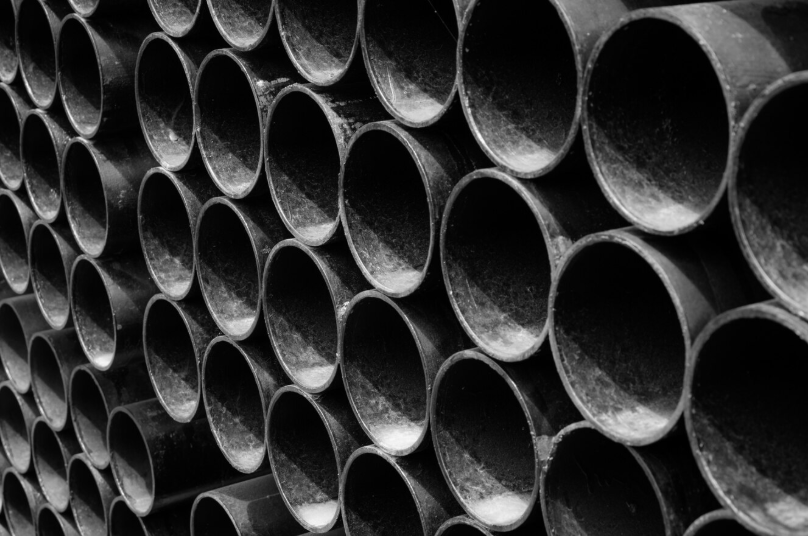
Carbon steel pipes are a go-to choice for many industries. They carry fluids, support structures, and handle pressure in oil, gas, water, and construction projects. But not all carbon steel pipes are the same. Different grades have unique chemical makeup and mechanical properties that fit specific jobs.
This article compares the most common grades from key standards: ASTM A53, ASTM A106, API 5L, and ASTM A500. We look at their chemical composition, strength, uses, and more. This helps you pick the right one for your needs.
Why Grades Matter in Carbon Steel Pipes
Grades tell you about the pipe’s strength, how it handles heat or pressure, and if it resists certain conditions. The main things that change between grades are carbon content, other elements like manganese, and tests for strength.
Higher carbon often means better strength but can make welding harder. Standards set limits to keep pipes safe and reliable.
Common grades include Grade B in many specs because it balances cost and performance.
Overview of Key Standards
ASTM A53 covers general-purpose pipes for low to medium pressure. It allows both seamless and welded types.
ASTM A106 focuses on seamless pipes for high-temperature service like boilers or steam lines.
API 5L is for line pipes in oil and gas transport. It has many grades from basic to high-strength like X42 or X60.
ASTM A500 is for structural tubing, often square or round, used in buildings and supports.
These standards set rules for chemistry and strength so pipes perform as expected.
Common Grades and Their Chemical Composition
Chemical makeup affects how the pipe behaves. Here’s a look at typical Grade B versions, which are the most used.
For ASTM A53 Grade B:
- Carbon max: 0.30%
- Manganese: 1.20% max
- Phosphorus max: 0.05%
- Sulfur max: 0.045%
It allows some flexibility for welding.
ASTM A106 Grade B (seamless only):
- Carbon max: 0.30%
- Manganese: 0.29-1.06%
- Phosphorus max: 0.035%
- Sulfur max: 0.035%
- Silicon min: 0.10%
Silicon helps with heat resistance.
API 5L Grade B (PSL1 or PSL2):
- Carbon max: around 0.28-0.30% depending on type
- Manganese higher in higher grades
- Stricter limits on phosphorus and sulfur
Higher API grades like X52 lower carbon and raise manganese to avoid cracks.
ASTM A500 Grade B:
- Carbon max: 0.26%
- Manganese max: 1.40%
- Lower impurities
It focuses on structural needs with good weldability.
Lower carbon grades are easier to form, while controlled elements improve toughness.
Mechanical Properties Comparison
Mechanical properties show how strong the pipe is.
Typical values for Grade B types:
ASTM A53 Grade B:
- Tensile strength: min 415 MPa (60,000 psi)
- Yield strength: min 240 MPa (35,000 psi)
- Elongation: around 23%
Good for general use.
ASTM A106 Grade B:
- Tensile: min 485 MPa (70,000 psi)
- Yield: min 275 MPa (40,000 psi)
- Elongation: min 30% often
Better for heat and pressure.
API 5L Grade B:
- Tensile: around 415-760 MPa depending on PSL
- Yield: min 245 MPa (35,500 psi)
Higher grades like X60 have yield up to 415 MPa or more.
ASTM A500 Grade B:
- Yield: min 46,000 psi (317 MPa) for round
- Tensile: min 58,000 psi (400 MPa)
Higher yield than A53 for structural loads.
A500 often beats A53 in strength for the same size. To understand sizing better, learn more about nominal diameter.
Higher grades in API 5L offer much more strength for long pipelines.
Manufacturing Differences
A53 allows seamless (Type S) or welded (Type E or F).
A106 is seamless only for better high-temp performance.
API 5L can be seamless or welded, with PSL2 having extra tests.
A500 is cold-formed welded or seamless for structural tubing.
Seamless pipes handle pressure better with no weld weak spots.
Typical Applications for Each Grade
ASTM A53 Grade B: Water lines, plumbing, low-pressure gas, fire sprinklers, general transport.
ASTM A106 Grade B: Boilers, refineries, high-temp process lines, steam systems.
API 5L Grade B: Oil and gas transmission pipelines, gathering lines.
Higher API grades (X42-X80): High-pressure, long-distance pipelines needing extra strength.
ASTM A500 Grade B: Building frames, columns, bridges, machinery supports.
Match the grade to your pressure, temperature, and load needs.
Temperature and Pressure Handling
A106 excels in high heat up to 750°F with good strength retention.
A53 works for lower temps and pressures.
API 5L handles wide ranges but focuses on pipeline transport.
A500 suits ambient conditions for structures.
For hot services, A106 is often the pick.
Cost and Availability Factors
Lower grades like A53 Grade B are cheapest and easy to find.
A106 costs a bit more due to seamless requirement.
API 5L varies – Grade B is common, higher X grades cost more.
A500 is affordable for structural jobs.
Bulk buys and local suppliers affect price.
How to Choose the Right Grade
Check your project specs first: pressure rating, temperature, fluid type, and if it’s structural or transport.
Look at codes – many require specific standards.
Factor in welding needs – lower carbon helps.
Test certs should match the grade.
Consult engineers for critical jobs.
Common Mistakes to Avoid
Don’t use A53 where seamless high-temp is needed – it may fail.
Avoid swapping A500 for pressure pipes – it’s structural.
Higher API grades aren’t always needed – over-spec adds cost.
Always verify mill test reports.
Wrapping It Up
Common carbon steel pipe grades like A53, A106, API 5L, and A500 each have strengths based on their chemistry and properties. A53 offers versatility and low cost. A106 handles heat well. API 5L suits pipelines with scalable strength. A500 provides solid structural performance.
Understanding these helps avoid issues and get the best results. For quality carbon steel pipes and expert advice, visit https://www.tuspipe.com/.