


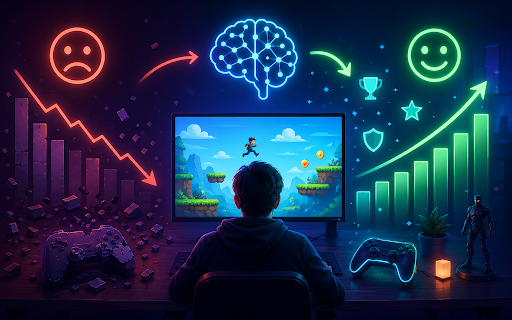
Many creators are surprised when their AI-generated game looks good but still gets almost no players. This is a very common problem, and it does not happen because the game is bad visually. It happens because players today decide within seconds whether a game is worth their time. If the experience does not feel engaging immediately, they leave without exploring further. This means success is not only about building a game but also about making sure it feels interesting from the first interaction. Many AI Social gaming platform make it easy to create games, but attracting real players requires understanding what makes people stay and play instead of just clicking and leaving.
Why Players Ignore Your Game
Players ignore games when the experience does not give them a clear reason to stay. Even if the visuals are good they will not continue if the gameplay feels confusing or slow. Most of the time the issue is not technical but related to clarity and engagement. If the game does not immediately show what the player needs to do they lose interest. Another major reason is lack of feedback because players need to feel that their actions matter. When nothing responds clearly or rewards are missing the game feels empty even if it is fully functional.
How First Impressions Decide Everything
The first few seconds of gameplay decide whether a player continues or leaves. If the game starts without a clear direction, players feel lost and exit quickly. A strong first impression comes from simple controls, clear objectives and immediate interaction just like the other games. The player should understand what is happening without needing explanation. If the game takes too long to show its purpose, it loses attention. This is why many games fail even if they are technically complete because they do not guide the player properly in the beginning.
Fixing the Core Gameplay Problem
- Make the main action simple and easy to understand
- Ensure every action gives instant feedback
- Remove unnecessary complexity from early gameplay
- Focus on one strong mechanic instead of many systems
Improving Player Retention
Retention means making players return and continue playing your game instead of leaving after one attempt. This is often missing in AI-generated games because they focus on creation rather than experience design. To improve retention you need to create a sense of progression where players feel they are improving over time. Even small rewards or increasing difficulty can create this effect. The key is to give players a reason to try again and feel that each attempt is meaningful.
Making Gameplay More Engaging
Engagement comes from how interactive and responsive your game feels. If actions feel slow or disconnected players lose interest quickly. Adding clear feedback like sound effects score updates or visual changes helps players feel involved. Another important factor is challenge balance because the game should not be too easy or too difficult. When players feel challenged but capable they stay engaged longer. This balance is what separates interesting games from forgotten ones.
Understanding Player Behavior
Players are not looking for complex systems when they first try a game. They are looking for instant enjoyment and clarity. If they do not understand the goal within seconds they move on. This is why simplicity is powerful in game design. A simple idea that is well executed performs better than a complex idea that is confusing. Understanding this behavior helps you design games that naturally attract attention instead of losing it.
Learning from Simple Game Examples
A game like Space Runner shows how a simple mechanic can create strong engagement when designed properly. The player avoids obstacles while speed increases gradually which creates natural difficulty progression. The controls are easy to understand and the gameplay loop is consistent. This makes the experience smooth and addictive without needing complicated systems. It proves that clarity and progression are more important than complexity when it comes to keeping players engaged.
Common Mistakes That Reduce Engagement
- Starting with unclear or complex game ideas
- Ignoring how the game feels during play
- Focusing only on visuals instead of gameplay flow
- Not testing how real players interact with the game
These mistakes often lead to games that look complete but fail to attract or retain players. Fixing them early improves the chances of success significantly.
How to Make Your Game More Attractive
To make your game more attractive you need to focus on how it feels rather than how it looks. Smooth movement clear objectives and instant feedback are more important than detailed graphics. Players enjoy games that respond quickly and make them feel in control. Adding small goals and simple progression systems also helps keep interest alive. The goal is to make every second of gameplay feel meaningful so players want to continue.
Testing and Improving Based on Feedback
Testing is one of the most important steps in fixing engagement problems because it helps you understand how your game feels from the player perspective. You need to play your game repeatedly and observe where players might lose interest because these moments often reveal areas that need improvement. Feedback from other users is even more valuable because they experience the game without bias and can notice issues you might miss. Each round of testing should help you identify weak areas and improve them step by step. Over time these improvements turn a low-engagement game into a more enjoyable and polished experience, as seen in games like Jujutsu Kaisen Curse Merge
Wrapping Up
Most AI-generated games fail not because they are bad but because they do not understand player behavior and engagement. Players need clarity, instant feedback and a reason to continue playing. By improving the core gameplay, fixing first impressions and balancing difficulty you can significantly increase engagement. The key is not complexity but clarity and a smooth experience. When you focus on how the game feels instead of just how it looks you create something people actually want to play. Consistent testing and small improvements can turn a forgotten game into one that attracts real players and keeps them engaged over time.