


Introduction
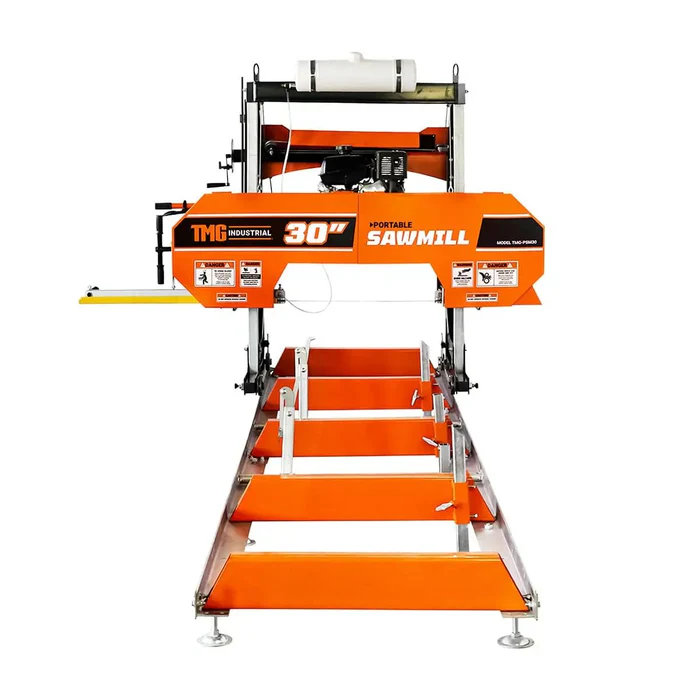
Across rural Australia, fallen trees, cleared timber, and bushfire salvage represent a valuable resource that often goes to waste for want of a way to process it. A portable bandsaw sawmill changes that, bringing the mill to the log rather than hauling heavy logs to a distant yard. With one of these machines, a landowner can turn standing or fallen timber into usable boards on the block, adding real value to a resource that would otherwise rot or burn.
How a Bandsaw Sawmill Cuts
The heart of the machine is a thin, looped steel blade that runs around two wheels, drawn through the log as the cutting head travels along a rigid track. Because the blade is thin, it removes only a narrow strip of wood with each pass, known as the kerf. A thin kerf wastes less timber as sawdust and yields more boards from each log, which is the central advantage of a band mill over older, thicker saws. The result, when the blade and feed are well matched, is a clean, flat surface ready for use.
Power and Cutting Capacity
A petrol engine drives the blade, providing the steady power needed to cut through dense Australian hardwoods as well as softer timbers. Cutting capacity describes the largest log the mill can handle, in both diameter and length, and matching that capacity to the timber on hand is the first step in choosing a mill. A robust engine and a generous capacity let a single operator work through substantial logs, though the wood itself always sets the pace, since dense species demand patience and a sharp blade.
Getting Good Results
Sound milling rests on a few habits that protect both the timber and the machine:
· Keep the blade sharp and correctly tensioned, since a dull blade wanders and burns the wood.
· Support and secure the log firmly so it cannot shift during the cut.
· Let the timber dry properly after cutting to reduce warping and cracking.
Safe Operation
A moving band blade carries real risk and deserves respect. Guards should remain in place over the wheels and the non-cutting span of the blade, and the engine must be stopped before changing or adjusting a blade. The operator should keep hands and clothing well clear of the blade path, stand out of the line of a possible break, and work at a steady, unhurried pace. On rural blocks, a clear, level working area free of trip hazards is the foundation of safe milling.
Advantages and Limitations
A portable bandsaw sawmill offers clear benefits, balanced by honest limits:
· It mills logs into timber on site with a thin kerf that wastes little wood and yields more boards.
· Its blade is a consumable that must be kept sharp and tensioned, and dense hardwoods demand patience and steady maintenance.
Choosing a Mill and the Timber
Choosing a mill begins with the timber a property is likely to process, since the diameter and length of the logs set the cutting capacity required, and a mill that cannot accept the available wood is of little use. Engine power must suit the timber too, as dense Australian hardwoods demand far more from a saw than soft, straight-grained species. Understanding the wood itself is part of milling well. Logs cut and milled while reasonably fresh are often easier to work, and how the boards are stacked and dried afterward decides whether they stay straight and sound or twist and split. Spacing boards to allow air to circulate, keeping them out of direct ground contact, and letting them dry slowly all protect the value of the timber that the mill has worked to produce. A mill matched to the available logs, paired with patience and sound drying, lets a landowner turn a fallen tree into useful, lasting material rather than waste.
Industry Outlook
As interest in local timber, self-reliance, and turning salvage and cleared trees into useful material grows across Australia, the portable sawmill has found a firm place on rural properties. It lets landowners add value to a resource at the very spot where it falls. Those who choose a well built sawmill from an established industrial equipment supplier give themselves a dependable means of producing their own timber, accurately and economically, season after season.