


In an era when email communication has taken center stage, there is an undeniable magic to a well-designed card. Whether you’re wishing someone a happy birthday, introducing yourself for business, or marketing your latest campaign, the power of a good card design should not be underestimated.
The physicality of a card helps establish a relationship that digital communication can never match, making it more memorable.
However, for your card to stand out among the rest, something beyond pleasing colors and fonts will have to come into play. Fortunately, advances in printing technology have made this possible today, unlike in previous years.
This article highlights five unique card designs you should try.
1. Lenticular Cards with Movement and Depth
One of the novelist’s ideas is the design of the lenticular cards. These cards use special lenses that allow images, animations, or visuals to shift in depth depending on the viewing angle, transforming a static card into an interactive experience that instantly captures attention. Thus, the card itself becomes active rather than standing still; it attracts immediate attention.
Indeed, such a card may contain several images, simulate animation, or even produce a 3D effect. Therefore, it will work well for advertising materials, invitations, or other cards aimed at producing maximum visual impact.
Also, a lenticular card prompts its user to turn it from side to side to see changing images.
2. Pop-Up and 3D Cards
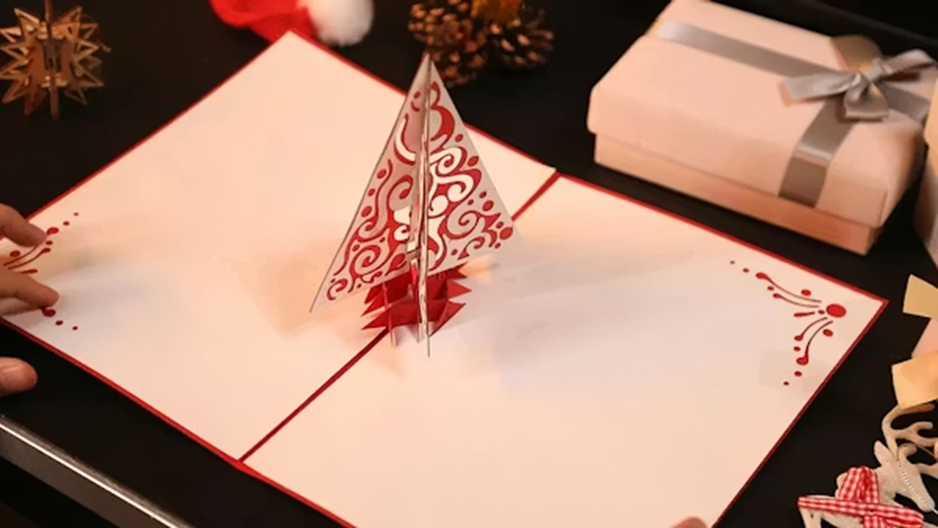
A fantastic alternative would be incorporating pop-ups and 3D features. While normal greeting cards stay two-dimensional, this choice brings them to life upon opening, offering a pleasant surprise.
For example, a birthday card can feature a three-dimensional representation of something like a flower blooming or an architectural building.
Additionally, pop-up cards offer a creative narrative. Unfolding the card reveals layers of creativity, engaging viewers visually. While it demands a higher level of technical expertise to assemble, the effort will surely pay off.
Moreover, with the development of software, designers can easily incorporate pop-ups into their projects. Overall, a pop-up card is ideal for events where one wishes to make an impressive statement.
3. Transparent and Layered Cards
While bright and dynamic images surprise and astonish viewers, transparent and layered cards bring elegance and sophistication to the design process. The use of transparent materials enables the creation of a beautiful, intricate structure that will amaze spectators without seeming overly aggressive.
Moreover, this technique can be used to design beautiful structures in collaboration with light, as several layers produce a wonderful effect. For this reason, the cards created by designers look elegant and stylish.
In addition, designers can use transparent and layered images to create different types of cards based on customer preferences. In other words, regardless of whether one wants to develop minimalist or bright cards, transparent and layered images will contribute to elegant card designs.
4. Textured and Tactile Cards
Just as significant is the texture of the card itself, something frequently overlooked in card design. The concept of the textured card is that it should be designed for its touch, not just for visual appeal. By adding embossed and raised prints and coating the material the card is made from, you will make your product more interesting to the touch.
Thus, the texture’s softness will emphasize the design’s luxury and quality, while its coarseness will convey a sense of authenticity. Simultaneously, the tactile characteristics of the card draw the recipient’s attention to certain elements of the design.
In a world where everything is increasingly digital, the ability to touch a card helps you establish a connection with the recipient of your gift.
5. Interactive Reveal Cards
Interactive reveal cards raise the bar for user engagement. With this type of design, the card itself becomes an interactive experience that requires the recipient’s participation through pull tabs, slider doors, and concealed sections.
For instance, the message inside may be concealed, requiring interaction with the card to read it. This creates an air of mystery and surprises the user. At the same time, the concept may be used along with other approaches, including visual or motion effects.
It works especially well when you need to tell a story or promote something, as it lets you present information bit by bit.
In Summary
The options for designing unique cards are practically limitless and very promising. Mentioning different methods, from animated cards with animation effects to pop-ups and clear layering effects, will inspire designers who wish to develop innovative ideas for card designs.
Touch cards will stimulate a recipient’s sense of touch, while revealing cards will encourage their interaction with the gift.
The most effective cards will use design aspects and intentions. In this case, all the components of a card will carry a message. Card design innovations are evolving rapidly; now is the right time to examine various card design techniques.