


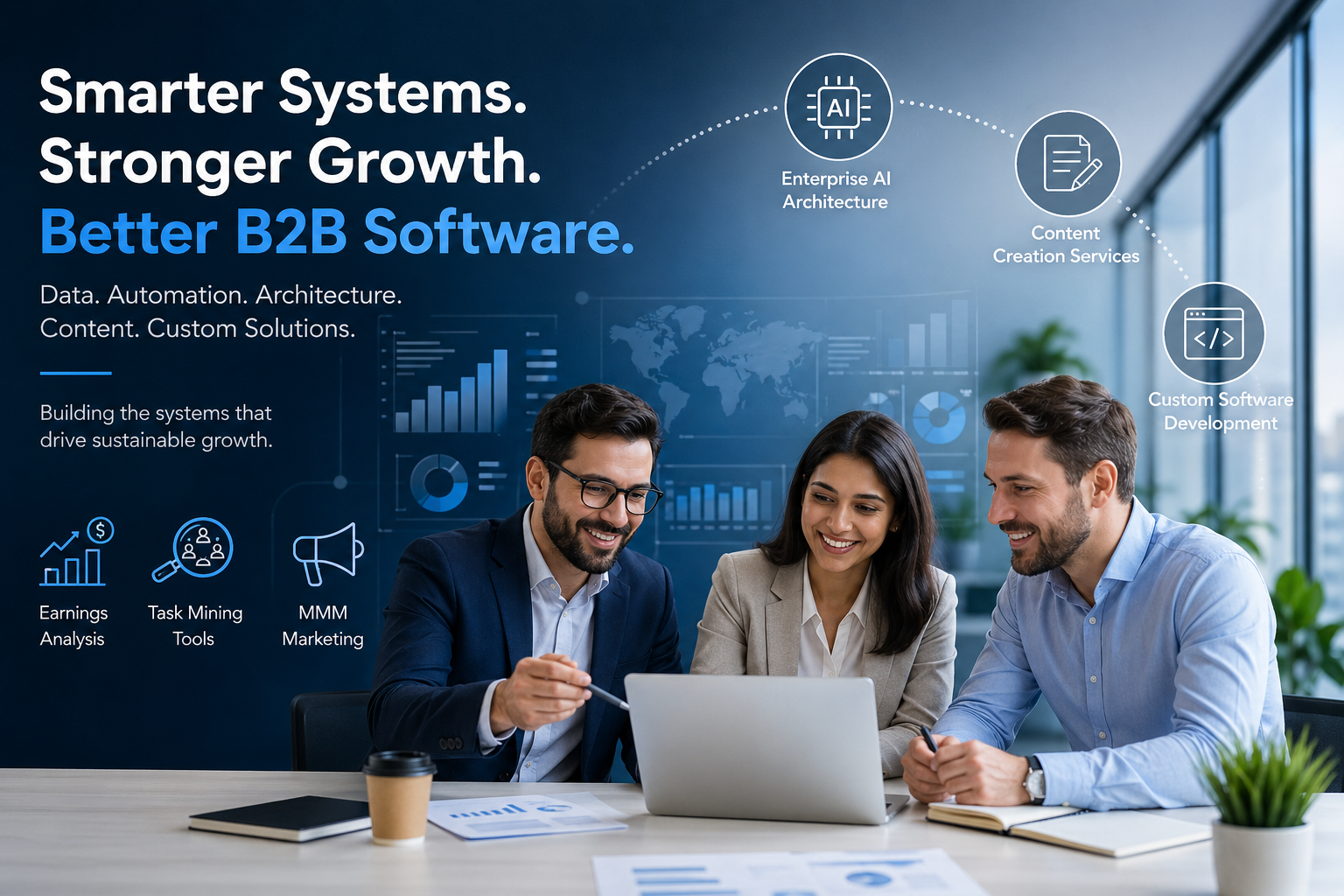
Growing a B2B software company today isn’t just about having a great product, it’s about building a system that actually works behind the scenes.
If you’ve ever felt like your growth is inconsistent, your teams are disconnected, or your decisions rely too much on guesswork, you’re not alone. Many companies hit a point where what used to work simply doesn’t scale anymore.
The good news? The companies that are pulling ahead aren’t necessarily bigger or better funded, they’re just more intentional about how they operate. They build smarter systems that connect data, teams, and tools into something cohesive.
Let’s break down what that really looks like in practice.
When Data Starts Driving Real Decisions
At some point, every growing company realizes that surface-level metrics aren’t enough. Revenue numbers alone don’t tell you why things are working or why they’re not.
That’s where earnings analysis becomes more than just a finance exercise. It turns into a strategic tool.
Instead of asking “How much did we make?”, the better question becomes:
- Which customers are actually profitable?
- Which channels bring in long-term value vs. quick wins?
- Where are we overspending without realizing it?
When you start digging into these layers, patterns emerge. Maybe one segment quietly drives most of your profit. Maybe a marketing channel looks good on paper but underperforms over time.
These insights help you make sharper decisions, not bigger ones, just smarter ones.
Fixing What’s Slowing You Down (Even If You Can’t See It)
Most operational problems don’t announce themselves. They hide in everyday work extra clicks, repeated steps, manual handoffs.
Individually, they seem small. Collectively, they cost time, money, and momentum.
This is exactly where task mining tools come into play. They don’t rely on assumptions; they show how work actually happens across your systems.
And what companies often discover is surprising:
- Teams are duplicating efforts without realizing it
- Processes that “seem fine” are unnecessarily complex
- Automation opportunities are hiding in plain sight
Once you see these patterns, improvement becomes much easier. You’re no longer guessing where the inefficiencies are, you’re fixing real, measurable issues.
The result? Faster workflows, fewer errors, and teams that can focus on meaningful work instead of repetitive tasks.
Making Sense of Marketing in a Multi-Touch World
If B2B marketing feels harder to measure than it used to, that’s because it is.
Customers don’t follow a straight path anymore. They read content, attend webinars, talk to sales, revisit your website and only then make a decision.
So when you try to assign credit to just one touchpoint, things get messy.
That’s why more companies are turning to mmm marketing to understand the bigger picture. Instead of focusing on a single interaction, it looks at how all your efforts work together over time.
This approach helps answer questions like:
- Which channels are actually driving growth, not just clicks?
- Where should we increase or reduce spending?
- What’s contributing to long-term brand impact?
It shifts the mindset from chasing quick wins to building sustainable performance. And in B2B, that shift matters a lot.
Creating a Tech Foundation That Doesn’t Hold You Back
As companies grow, their tech stack often grows with them but not always in a good way.
Tools get added quickly. Integrations become messy. Data gets scattered.
Eventually, instead of helping, your systems start slowing you down.
This is why investing in a solid enterprise ai architecture isn’t just a technical decision it’s a business one.
Think of it as the backbone that connects everything:
- Your data lives in one place instead of being fragmented
- Your tools actually talk to each other
- Your systems can scale without constant rebuilding
More importantly, it allows you to layer intelligence on top like predicting customer behavior or automating decisions.
Without that foundation, growth becomes harder than it needs to be.
Why Good Content Still Wins (When It’s Done Right)
There’s no shortage of content out there. Most of it gets ignored.
What makes the difference isn’t volume, it’s relevance.
Strong content creation services focus on producing material that actually helps your audience think, decide, or solve a problem. Not just fill space.
That might look like:
- Explaining complex ideas in a simple way
- Sharing real-world use cases instead of abstract claims
- Answering the exact questions your customers are already asking
When content does that well, it builds trust naturally. And in B2B, trust is often the deciding factor.
It’s not about pushing messages, it’s about being genuinely useful.
When Off-the-Shelf Tools Aren’t Enough
At the beginning, ready-made software is usually the right choice. It’s fast, affordable, and easy to implement.
But as your business grows, you may start noticing limitations:
- Workflows don’t quite fit your process
- Integrations feel forced
- Teams adapt to tools instead of the other way around
That’s when custom software development starts making sense.
It allows you to build systems around how your business actually operates, not how a generic platform assumes it should.
This could mean:
- A dashboard tailored to your exact KPIs
- Internal tools that match your team’s workflow
- Deeper integrations that eliminate manual work
It’s not about building everything from scratch, it’s about building the parts that truly matter.
Connecting the Dots Across the Business
What separates average companies from high-performing ones isn’t just better tools, it’s better alignment.
Data informs decisions. Operations support execution. Marketing drives demand. Technology connects everything.
When these pieces work together, something shifts:
- Decisions become faster and clearer
- Teams stop working in silos
- Growth feels more predictable
Instead of constantly reacting, you start operating with intention.
Smarter Growth Beats Faster Growth
There’s a common assumption that success comes from doing more campaigns, more tools, more hires.
But in reality, the companies that scale well focus on doing things better.
They:
- Understand their numbers beyond the surface
- Remove friction from their operations
- Measure what actually matters
- Build systems that grow with them
That’s what creates momentum that lasts.
Because in the end, growth isn’t just about speed it’s about sustainability.