


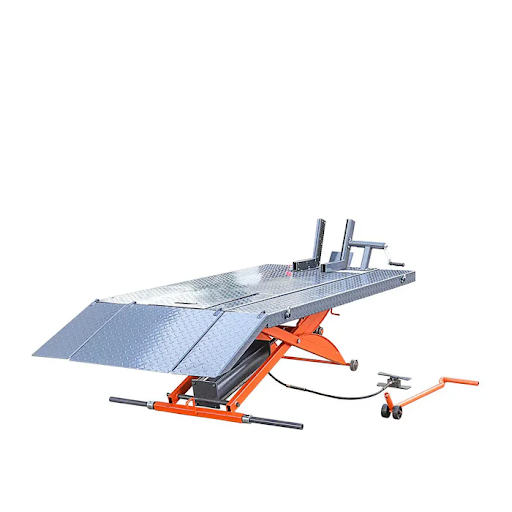
In the United States, the use of motorcycles and all terrain vehicles has grown across recreation, agriculture, and utility services. As a result, maintenance demand has increased in both professional workshops and mobile service environments. Automotive technicians and equipment operators require safe and efficient ways to access vehicle components during inspection and repair. The portable motorcycle and all terrain vehicle scissor lift has become a practical solution for lifting and stabilizing smaller vehicles in controlled and field settings.
Technology Overview and Practical Applications
A scissor lift operates through a linked support structure that expands vertically when force is applied, typically through hydraulic or mechanical systems. As the platform rises, the load is elevated in a stable and controlled manner. This design allows technicians to position vehicles at a working height without requiring permanent installation.
Typical Use Cases
· Routine maintenance such as oil changes and brake inspection
· Tire replacement and suspension work
· Cleaning and detailing of vehicle undercarriages
· Support for mobile repair services in remote locations
Portable designs allow these lifts to be transported and deployed where fixed lifting systems are not available.
Importance of Efficiency, Safety, and Productivity
Efficiency in vehicle maintenance depends on quick and safe access to components. A portable scissor lift reduces the need for manual lifting or improvised supports, which can slow down operations and increase risk.
Safety is a primary concern. Proper lifting equipment stabilizes the vehicle, reducing the likelihood of tipping or shifting during service. This supports consistent productivity and reduces workplace incidents.
Technical Requirements and Capability Considerations
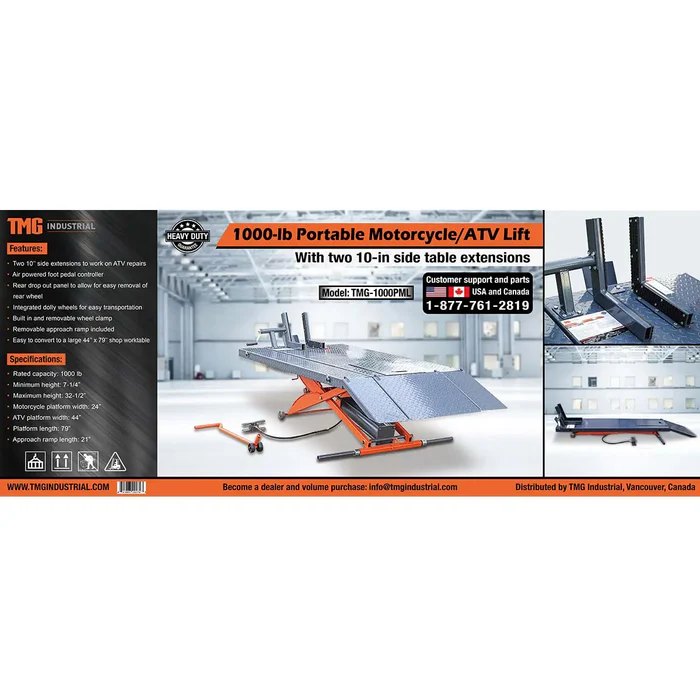
When selecting a portable motorcycle and all terrain vehicle scissor lift, several technical factors should be evaluated:
· Maximum load capacity, typically measured in pounds
· Lifting height range and platform dimensions
· Hydraulic system performance and control mechanism
· Portability features such as weight and mobility wheels
These specifications determine whether the lift can safely support the intended vehicle types and operating conditions.
Factors Affecting Performance and Effectiveness
Performance of a scissor lift depends on both equipment condition and operating environment:
· Surface stability and level ground conditions
· Even distribution of vehicle weight on the platform
· Maintenance of hydraulic components and seals
· Operator handling and positioning technique
Failure to manage these factors can reduce lifting stability and increase wear on components.
Safety Considerations and Best Practices
Safe operation requires adherence to established procedures. Lifting equipment must be used within its rated capacity and maintained regularly.
· Inspect the lift before each use for leaks or structural damage
· Ensure the vehicle is centered and secured on the platform
· Use locking mechanisms to prevent unintended lowering
· Avoid working under a lifted vehicle without proper support devices
These practices reduce the likelihood of accidents and improve long term reliability.
Equipment Types, Tools, and Accessories
Portable scissor lifts are often used alongside complementary tools and accessories to enhance functionality:
· Wheel chocks and tie down straps for securing vehicles
· Hydraulic foot pumps or electric lift systems
· Side extensions for wider vehicle platforms
· Maintenance stands for additional support
An example configuration with side extensions can be reviewed here: portable motorcycle lift reference, commonly associated with TMG Industrial setups.
Advantages and Limitations
Advantages
· Portability for flexible use in workshops and field environments
· Improved access to vehicle components
· Reduced physical strain on technicians
Limitations
· Limited lifting capacity compared to full size vehicle lifts
· Dependence on stable ground conditions
· Manual operation may require additional effort
Real World Applications
Independent repair technicians in the United States often use portable scissor lifts for servicing motorcycles and all terrain vehicles at customer locations. Agricultural operators also rely on these lifts to maintain utility vehicles directly in the field. This reduces transport time and allows maintenance to be completed without interrupting operations.
Conclusion and Future Trends
Portable motorcycle and all terrain vehicle scissor lifts provide a practical solution for safe and efficient maintenance of smaller vehicles. Their role in mobile and flexible service environments continues to expand as demand for on site repair increases.
Future developments are expected to focus on improved lifting mechanisms, enhanced safety features, and integration with electric hydraulic systems. For automotive professionals, understanding the capabilities and limitations of this equipment supports safer operations and more effective maintenance planning.