


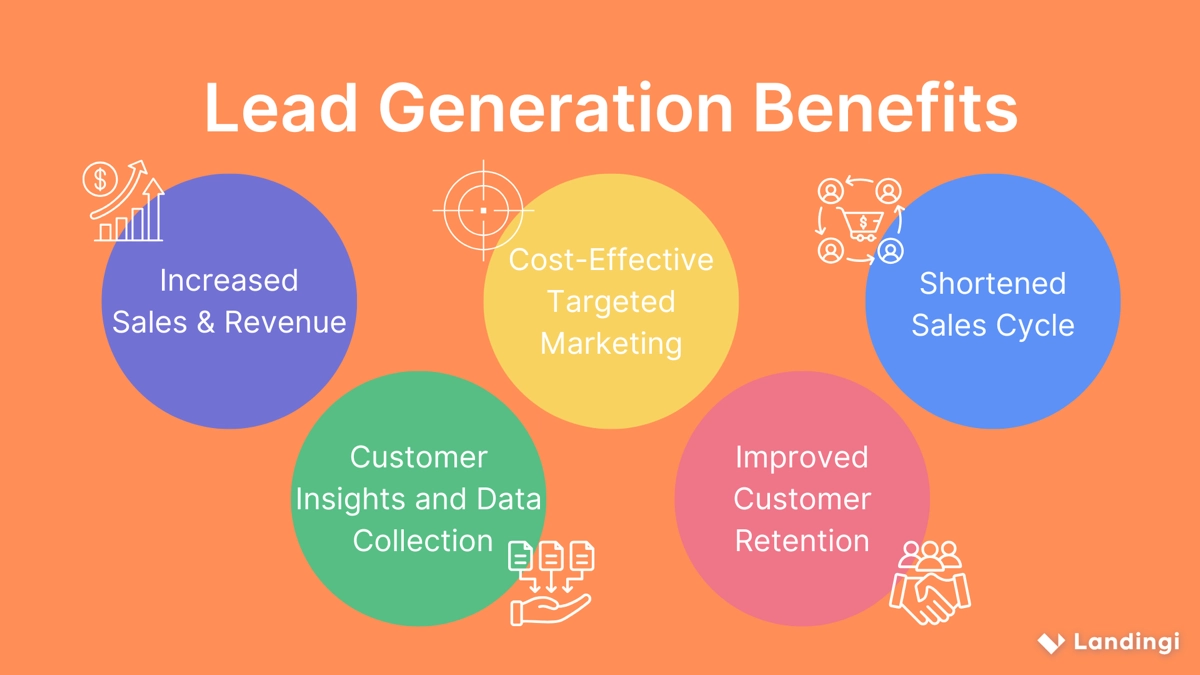
Lead generation is turning out to be a major moneymaker for businesses across the board. The smart way to get and nurture leads can skyrocket a firm’s income to a whole new level. Fundamentally, lead generation is what keeps the pipeline full with new customers who eventually become fans.
Whatever lead generation projects you decide to invest your time and money in, it is essential to gauge the profitability, and therefore the success, of your endeavors.
This, in turn, can provide business owners with vital information about their growth and untapped markets. The calculation is straightforward, and you can also look at profitability from different angles.
Lead Generation Profitability Explained
The reality of lead generation is that “inexpensive” leads are often the most expensive thing a company can buy.
Profitability in this game really comes down to one thing: the spread.
You have to look at the gap between what it costs to get someone in the door (your CAC) and what they actually worth to you over the next two or three years (their CLV). If you’re spending $500 to acquire a customer who only nets you $600 in total profit, you’re one bad month away from being underwater.

To fix this, you have to stop obsessing over your Cost Per Lead (CPL) as a standalone number.
A $50 lead that closes 20% of the time is infinitely better than a $5 lead that closes 1% of the time. It’s about “quality at the source.” You’d be surprised how much your margins improve when you intentionally tighten your targeting, even if it makes your front-end ads look “pricier.”
The real secret, though, is what happens after the first sale. Most people stop at the conversion. But if you can bake in a solid upsell or a recurring subscription model, you’re essentially getting those subsequent sales for free. That’s how you build a business that can outspend the competition and still walk away with a massive profit.
Key Metrics for Measuring Profitability
To figure out if your lead generation is profitable, you need to keep an eye on important numbers all the way through your lead generation process.
- Cost Per Lead (CPL): How much it costs to generate a lead (marketing, tools, people) divided by the total number of leads you get
- Customer Acquisition Cost (CAC): The total cost of sales and marketing divided by the total number of new customers you get. CAC tells you the real cost per paying customer
- Conversion Rate: The percentage of leads who move through your sales process and become paying customers
- Return on Investment (ROI): The money you make from your campaigns divided by the amount you first put into the campaign
- Customer Lifetime Value (CLV): The total amount of money one customer account is expected to bring in.
Drivers of Lead Generation Profitability
- Lead Quality: High-quality leads align with your ideal customer profile (ICP) and have shown strong purchase intent, resulting in higher conversion rates and shorter sales cycles
- Targeting & Personalization: By using data to target the right audience segments and tailoring communication to their specific pain points, you significantly raise the chances of engagement and conversion
- Effective Nurturing: Typically, most leads are not ready to buy right away. Having a well-organized lead-nurturing program, which usually involves marketing automation and personalized content, helps build the lead’s trust and keeps the brand top of mind until the lead is ready for sales.
- Channel Optimization: Every marketing channel (SEO, PPC, social media, events, referrals) has different CPLs and leads quality results. By continually evaluating which channels deliver the best ROI, you can allocate your budget efficiently.
- Sales and Marketing Alignment: Communication between marketing and sales teams along with shared definitions of what constitutes a “qualified lead,” makes the handover easy and thus prevents valuable leads from being lost.
- Scalability and Automation: The use of CRM systems, AI, and marketing automation, for example, can make processes more efficient, reduce the need for manual work, and enable growth without proportionally increasing costs, which then leads to higher margins.
What are the Key Factors That Determine Lead Generation Profitability?
At its core, lead generation is just like a math problem. You can’t just run after cheap leads and hope for the best. You have to make sure the money you’re drawing in from a customer over the long haul far outweighs what you spent to get their attention in the first place.

Profitability happens in the “spread”, the gap between your acquisition costs and a customer’s lifetime value. If you focus on high-quality leads that actually close and keep coming back for more, the initial cost of the lead matters much less than the total revenue they bring in.
Cost Per Lead (CPL)
Cost Per Lead (CPL) matters, but it’s definitely not the whole story. If you only look at the price of a lead, you’re missing the bigger picture. At the end of the day, making a profit is about how that initial cost balances out with everything else, like whether the person actually buys something and how much they spend with you over time.
A cheap lead that goes nowhere is just a waste of cash, whereas a more expensive, high-quality lead can be worth every penny if it turns into a long-term customer. You have to look at the entire journey, from the first click to the final sale, to see if the math actually works.
Here are the key factors that work with CPL to determine profitability.
- Lead Value and Average Customer Value (ACV)
- Conversion Rates
- Sales Cycle Length
- Attribution and ROI Calculation
Conversion Rate
Conversion rate serves as the essential lever for lead generation ROI, operating as the direct multiplier that turns lead numbers into real sales and revenue. Its importance is revealed through a few major ways.
Simply put, conversion rate is the one that measures the success of the whole sales and marketing funnel, thus making all the other factors like lead volume, cost per lead and average deal size still relevant but subordinate to it.
- Direct Impact on Revenue and ROI
- Cost Efficiency and Optimization
- Scalability
- Predictability and Forecasting
Customer Lifetime Value (LTV)
Customer Lifetime Value (LTV) is a key metric that is used to measure how profitable lead generation has been. It provides a comprehensive view of a customer’s long-term value, enabling companies to set reasonable lead acquisition expenses and optimize their return on investment (ROI).
How LTV Determines Lead Generation Profitability
Understanding LTV allows businesses to make strategic decisions about their marketing and sales efforts:
- Setting the Maximum Allowable Acquisition Cost (CPA): LTV is a way that a business can set the limit a business can spend to acquire a single new customer and still make a profit. The acquisition of leads at a cost higher than the expected LTV of the customer makes the lead generation strategy unprofitable.
- Optimizing Marketing Spend: The circle of businesses with a high average LTV can easily justify investing more in the lead generation channels that may appear as costly in the short term but deliver valuable customers in the long term. This practice always guarantees the efficient allocation of marketing budgets to channels that produce the best ROI.
- Prioritizing High-Value Leads: The identification of customer sources with higher LTV enables the firm to allocate resources towards engaging these consumers creating a cycle of concentration and retention. This strategy of focusing on the most productive leads ultimately results in increasing profits significantly.
- Improving Customer Retention Strategies: LTV is a vital ingredient in customer retention efforts. Concentrating on the retention of existing customers with high LTVs, which are most likely cheaper to serve than acquiring new customers, is the ultimate way to increase profitability.
- Forecasting and Strategic Planning: LTV is a reliable source of data for accurate financial forecasting. It helps businesses to anticipate future revenues and plan for growth that is both sustainable and profitable.
Traffic Source Control
Traffic source control plays an essential role in the profit margin of lead generation. This is because it has a direct effect on the quality of leads, cost efficiency, and the matching of acquisition channels with the target audience’s intent and business goals. Businesses can, therefore, optimize their return on investment (ROI) by tactically deciding which channels will generate their leads.
Here’s how traffic source control acts as a key determinant of lead generation profitability:
- Directly impacts lead quality and intent
- Enables cost management and optimization
- Facilitates audience targeting and alignment
- Mitigates risk and improves predictability
- Enhances data quality and compliance
Is Lead Generation Profitable for Agencies?
Lead generation can be extremely profitable for agencies, as it provides a stable income through recurring contracts, deepens relationships with clients, and opens up opportunities for cross-selling. However, the outcome depends on various factors such as the agency’s skill level, the client’s condition, the selected niche, and the effectiveness of the employed strategies (content, landing pages, automation).
Agencies that supply real value in the form of qualified leads that convert enjoy substantial growth and a high return on investment. In contrast, those who overpromise and underdeliver may lose the trust of their clients.
How Much Can You Make From Lead Generation?
Lead generation has the potential to easily earn you anywhere from a couple hundred dollars to $250, 000+ annually, or even over $10, 000 per month. Your niche will mostly determine how much you can make as lead generation in legal, finance or medical sectors use to pay more than other niches.
Besides that, your skill to generate quality leads, the pricing model and your can make method through SEO or paid ads will also influence your income. On top of that, with a few providers racking up as much as $5 to $50+ per lead in highly profitable sectors, that’s where the value of industries combine with good lead delivery to truly skyrocket earning potential.
Conclusion
To maximize ROI from your lead generation, you must focus on both quality and quantity of leads. First, refine your target audience to ensure you reach prospects who are most likely to convert. Next, use data analytics to observe and evaluate your campaigns’ performance, so you know which channels and strategies deliver the most significant returns.
You can optimize your efforts and utilize your resources more efficiently by A/B testing different approaches.