

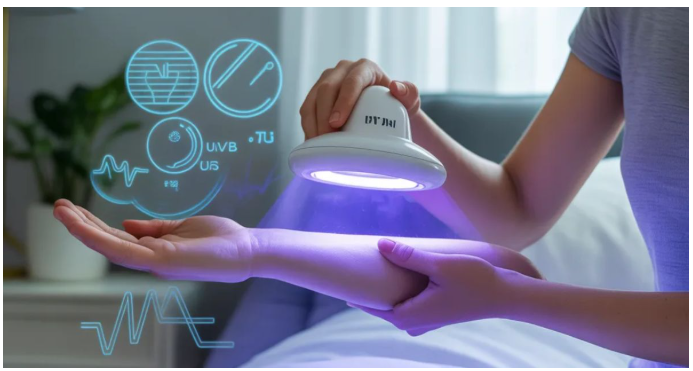
UVB light therapy is a well-known dermatological intervention used to treat structural skin diseases, including psoriasis, eczema, and vitiligo. This treatment is frequently prescribed by dermatologists and specialised clinics when there is insufficient improvement with topical creams. UVB radiation treatment helps regulate skin cell growth and reduce inflammation by exposing the skin to controlled UVB wavelengths.
The use of UVB light therapy is now a popular home treatment for many patients under the supervision of medical staff. Home phototherapy may be a viable option for maintaining healthy skin with the right equipment and expert guidance. This therapy has gained more popularity due to the fact that it is a non-invasive and clinically backed therapy to manage chronic skin disorders.
- UVB light treatment is slow to produce abnormal skin cells.
- It reduces inflammation, itching, and redness in chronic skin diseases.
- UVB light therapy has significant potential to improve skin appearance and comfort when applied appropriately.
Health experts emphasise that exposure to UV radiation should be controlled, as excessive UV radiation can cause skin damage. Effective and safe results are attained through proper supervision.
What Is UVB Light Therapy
UVB light therapy is a medical treatment that uses ultraviolet B (UVB) radiation to treat inflammatory skin diseases. It is a form of phototherapy in which the skin is exposed to controlled ultraviolet light at specific wavelengths.
This treatment is aimed at the skin surface and slows the rapid maturation of skin cells, which occurs under conditions like psoriasis. The treatment reduces the overproduction of skin cells, making the skin healthier in appearance.
Medical UVB devices, unlike natural sunlight, emit a specific wavelength with therapeutic effects. This predetermined exposure enables dermatologists to administer treatment safely and effectively.
How UVB Light Therapy Works
UVB light therapy is based on the fact that it penetrates the upper layers of the skin and affects cellular activity. The ultraviolet radiation decreases inflammation and retards unnatural cell growth of the skin. Exposure of the skin to UVB wavelengths results in a number of biological processes:
- The skin’s immune cells are suppressed.
- Inflammation associated with chronic skin disorders decreases.
- The quick production of skin cells is decelerated.
All these effects enhance the appearance and status of the affected skin. The treatments involving phototherapy are normally undertaken in a specialised light cabinet or with hand-held tools to treat specific areas.
Conditions Treated with UVB Light Therapy
UVB light therapy is usually used to treat various skin diseases. When other treatment methods have a smaller impact, dermatologists prescribe it.
The typical diseases treated are:
- Psoriasis
- Eczema (atopic dermatitis)
- Vitiligo
- Dermatitis
- Cutaneous T-cell lymphoma
Phototherapy is especially effective for inflammatory skin disorders, as it alleviates itching, redness, and scaling. Research indicates that ultraviolet light therapy is also able to greatly resolve the symptoms of psoriasis by retarding the growth of skin cells.
Types of UVB Phototherapy
The two main types of UVB light therapy in dermatology are:
Narrowband UVB (NB-UVB)
Narrowband UVB treatment consists of wavelengths of around 311 or 313 nanometres. This is the most popular form of phototherapy today, as it is very effective and minimises unnecessary exposure to ultraviolet light.
Broadband UVB
The ultraviolet light is wider in broadband UVB therapy. Despite its frequent use in the past, narrowband UVB has largely supplanted it because it is safer and more effective.
Both these forms are administerable in dermatology clinics or in authorised home phototherapy equipment.
Benefits of UVB Light Therapy
The use of UVB light therapy for persons with persistent skin problems offers many advantages. It is considered one of the most effective non-invasive, non-dermal therapies.
Key benefits include:
- Reduces skin inflammation
- Retards the overgrowth of skin cells.
- Enhances erythema and scaling.
- Reduces itching and pain.
- Improves the general look of the skin.
Patients, in most instances, see appreciable improvement after some sessions. Other people find considerable relief in six to eight visits, but this is subject to further treatment.
How to Use UVB Light Therapy at Home
A large number of dermatology providers currently offer patients the option to perform UVB light therapy at home with proper medical guidance. Home treatment is a convenient and cost-effective treatment when properly utilised.
Typical steps include:
- Consult a dermatologist: A healthcare expert can determine whether UVB light therapy is appropriate for your ailment and skin type.
- Start with short exposure sessions: The process is generally initiated with extremely short exposure durations in order to allow the skin to adjust.
- Increase exposure gradually: Skin tolerance increases with treatment duration.
- Follow a regular schedule: The sessions are normally conducted two to three times per week.
- Wear protective eyewear: Eye protection is also necessary to avoid the damaging effects of ultraviolet.
Home devices are typically smaller than clinic machines and are designed to treat a specific body part, such as the hands, scalp, or elbows.
Possible Side Effects of UVB Light Therapy
Like any medical treatment, UVB light therapy can have minor side effects. Such responses are usually short-term and manageable.
The side effects may include:
- Mild skin redness
- Dry skin
- Temporary itching
- Sunburn-like irritation
In extreme situations, prolonged exposure to ultraviolet radiation can also lead to skin ageing and other related complications. Narrowband UVB therapy is, however, safer than older forms of phototherapy because it utilises a narrower range of ultraviolet radiation.
When to Consult a Dermatologist
Although UVB light therapy is helpful to many people, not all professionals can guide an individual. Dermatologists consider a number of factors, such as:
- Skin type
- Medical history
- Current medications
- Intensity of the skin problem.
When abnormal symptoms like persistent burning on the skin, blisters, or intense irritation appear, one should seek medical consultation without delay.
Conclusion
The UVB light therapy is a proven medical treatment for many long-term skin diseases. This form of therapy treats skin ailments by applying controlled ultraviolet radiation to the skin’s surface to regulate cell growth, inflammation, and overall skin health.
Properly applied in medical care, UVB light therapy may be a safe and effective alternative to persons with psoriasis, eczema, and other inflammatory skin diseases. Clinical and home-based treatment alternatives have also emerged, allowing patients to be more flexible in caring for their skin and to do so regularly.