


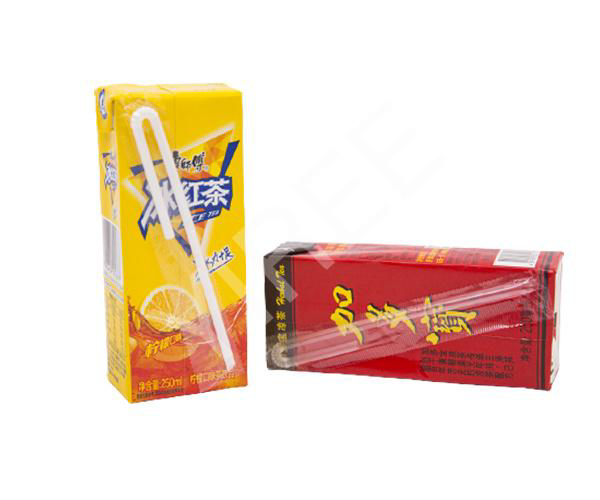
In the world of packaging, even the smallest product can demand the highest level of precision. Drinking straws may appear simple and disposable, yet the process behind their hygienic and efficient packaging is anything but basic. With increasing consumer awareness about sanitation, regulatory compliance, and brand presentation, straw manufacturers are under pressure to ensure each unit is individually wrapped with consistency and reliability. At the center of this process lies a material that has transformed flexible packaging—Heat Sealable Bopp Film.
Heat-sealable BOPP film has become a preferred choice for straw wrapping machines due to its mechanical strength, excellent clarity, sealing performance, and cost-effectiveness. It supports high-speed operations while ensuring hygienic protection and brand appeal. Understanding its role reveals how material science and machinery work together to deliver precision at scale.
Understanding Heat-Sealable BOPP Film
BOPP stands for Biaxially Oriented Polypropylene, a thermoplastic polymer that undergoes orientation in both machine and transverse directions during manufacturing. This orientation enhances its tensile strength, stiffness, transparency, and barrier properties. When engineered with a heat-sealable layer, the film can bond to itself under controlled temperature and pressure, making it ideal for automated wrapping applications.
Heat-sealable BOPP film typically features a coextruded structure. One layer provides structural integrity, while another is modified to activate at specific temperatures, enabling secure seals without distortion. This controlled sealing behavior is essential in straw wrapping machines, which operate at high speeds and require uniform seal quality.
The material’s low coefficient of friction ensures smooth unwinding and feeding through machinery, while its high clarity supports brand visibility and printed graphics. These characteristics combine to create a packaging solution that meets technical, aesthetic, and regulatory demands simultaneously.
The Mechanics of Straw Wrapping Machines
Straw wrapping machines are designed for continuous, high-speed operation. Straws are fed through a conveyor system, aligned precisely, and enveloped in film before being sealed and cut into individual units. These machines rely on accurate temperature control, tension management, and synchronized motion to maintain output efficiency.
Heat sealing jaws or rollers apply calibrated heat and pressure to the film, activating the sealable layer without damaging the straw inside. The process must be fast enough to maintain productivity while precise enough to avoid weak seals or film distortion.
Because straws are lightweight and uniform, the wrapping material must be equally consistent. Variations in film thickness or seal initiation temperature can disrupt operations, leading to downtime or product waste. Heat-sealable BOPP film addresses these challenges by providing stable sealing properties and dimensional uniformity, ensuring seamless machine performance.
Seal Integrity and Hygienic Assurance
One of the primary purposes of individually wrapped straws is hygiene. Consumers expect their straws not to have been contaminated before use. Therefore, seal integrity is critical. Even minor inconsistencies can compromise product safety and brand reputation.
Heat-sealable BOPP film forms strong, hermetic seals under appropriate conditions. Its controlled sealing range allows manufacturers to achieve reliable bonds without excessive heat that might weaken the film. This balance ensures that each straw remains protected throughout storage, transportation, and handling.
Moreover, the film’s resistance to moisture and environmental factors adds another layer of protection. While straws themselves are typically non-perishable, exposure to humidity or dust can affect their cleanliness. BOPP film acts as a protective barrier, maintaining product hygiene until use.
High-Speed Compatibility and Operational Efficiency
Efficiency is a defining factor in straw manufacturing. Production lines can process thousands of straws per minute, making downtime or inefficiencies costly. Packaging materials must therefore support high-speed performance without causing jams or misfeeds.
Heat-sealable BOPP film is engineered for machinability. Its stiffness provides excellent trackability, allowing it to move smoothly through rollers and guides without wrinkling. Its balanced tensile strength prevents tearing during rapid motion, while its controlled shrinkage ensures dimensional stability under heat.
The film’s consistent thickness and surface treatment contribute to precise registration in printed applications. For branded straw wrappers, alignment accuracy is essential to maintain a professional appearance. The ability of BOPP film to perform reliably at high speeds reduces production interruptions and enhances overall operational efficiency.
Aesthetic Appeal and Brand Communication
Packaging serves not only as a protective medium but also as a communication tool. Even a simple straw wrapper can display a brand logo, promotional message, or compliance information. Clarity and printability are therefore important attributes.
Heat-sealable BOPP film offers exceptional transparency, enabling vibrant graphics and sharp text reproduction. Surface treatments enhance ink adhesion, ensuring printed designs remain crisp and smudge-resistant. For businesses in the hospitality and food service sectors, customized straw wrappers can reinforce brand identity and professionalism.
In addition to clear variants, matte and pearlized finishes are available, offering diverse aesthetic options. This flexibility allows manufacturers to align packaging design with marketing strategies while maintaining functional performance.
Cost Efficiency and Material Optimization
In large-scale production, material costs significantly influence profitability. Straw wrappers require minimal film per unit, but when multiplied across millions of pieces, even slight cost variations can impact margins.
Heat-sealable BOPP film offers an optimal balance between performance and affordability. Its strength allows for thinner gauges without sacrificing durability, reducing material usage while maintaining integrity. Lightweight packaging also lowers transportation costs and environmental footprint.
Furthermore, the film’s compatibility with automated systems minimizes waste caused by sealing errors or machine stoppages. Reduced scrap rates contribute to cost savings and improved sustainability metrics, both of which are increasingly important in modern manufacturing.
Environmental Considerations and Sustainability Trends
Sustainability has become a central concern in packaging innovation. Although plastic materials often face scrutiny, BOPP film presents several environmentally favorable characteristics when managed responsibly.
Polypropylene is recyclable in many regions, and advancements in mono-material packaging systems support circular economy initiatives. Using thinner films without compromising performance reduces raw material consumption. Additionally, the energy-efficient processing of BOPP film contributes to a comparatively lower carbon footprint.
Manufacturers are also exploring bio-based, heat-sealable, recyclable layers to further enhance environmental performance. By integrating recyclable BOPP film into straw wrapping operations, companies can balance hygiene requirements with sustainability goals.
Quality Control and Consistency in Production
Precision in packaging requires strict quality control. Heat-sealable BOPP film is manufactured under tightly regulated conditions to ensure uniform thickness, consistent seal initiation temperature, and reliable mechanical properties.
During straw wrapping operations, quality checks monitor seal strength, visual appearance, and dimensional accuracy. The predictable behavior of BOPP film simplifies these assessments, allowing manufacturers to maintain consistent standards across production batches.
Advanced film technologies also offer anti-static properties and improved slip performance, reducing dust attraction and improving machine cleanliness. These refinements enhance overall production reliability and product quality.
Adaptability to Evolving Industry Requirements
The packaging industry is dynamic, responding to regulatory updates, consumer expectations, and technological advancements. Heat-sealable BOPP film effectively adapts to these evolving requirements.

As food safety regulations become stricter, packaging materials must comply with migration limits and certification standards. BOPP film can be produced in food-grade formulations that meet international compliance benchmarks. Additionally, the film can accommodate various sealing methods and machine configurations, ensuring compatibility with new equipment designs.
Customization options, including micro-perforation, specialty coatings, and tailored seal strengths, provide flexibility for different straw types and market needs. This adaptability positions heat-sealable BOPP film as a future-ready solution for straw packaging.
Challenges and Continuous Innovation
Despite its advantages, continuous improvement remains essential. Manufacturers must carefully control sealing temperatures to prevent film distortion or excessive energy consumption. Ongoing research focuses on expanding sealing windows, enhancing recyclability, and improving barrier properties.
Technological innovations in film extrusion and orientation processes continue to refine performance characteristics. Enhanced clarity, improved slip control, and lower seal-initiation temperatures contribute to more efficient, sustainable operations.
Collaboration between film producers and machine manufacturers also drives optimization. By aligning material specifications with machine capabilities, the industry achieves higher productivity and reduced operational complexity.
Conclusion: Precision at Every Seal
In the seemingly simple task of wrapping a straw lies a sophisticated interplay between material science and mechanical engineering. Heat-sealable BOPP film plays a central role in ensuring that each straw is hygienically protected, aesthetically presented, and efficiently packaged.
Its strength, clarity, seal reliability, and compatibility with high-speed straw wrapping machines make it an indispensable component of modern packaging systems. As sustainability, automation, and branding demands continue to evolve, heat-sealable BOPP film and BOPP Glossy Film stand poised to meet these challenges with precision and adaptability.
By combining performance, cost-effectiveness, and environmental consideration, this versatile material transforms straw wrapping from a routine process into a model of packaging precision.