


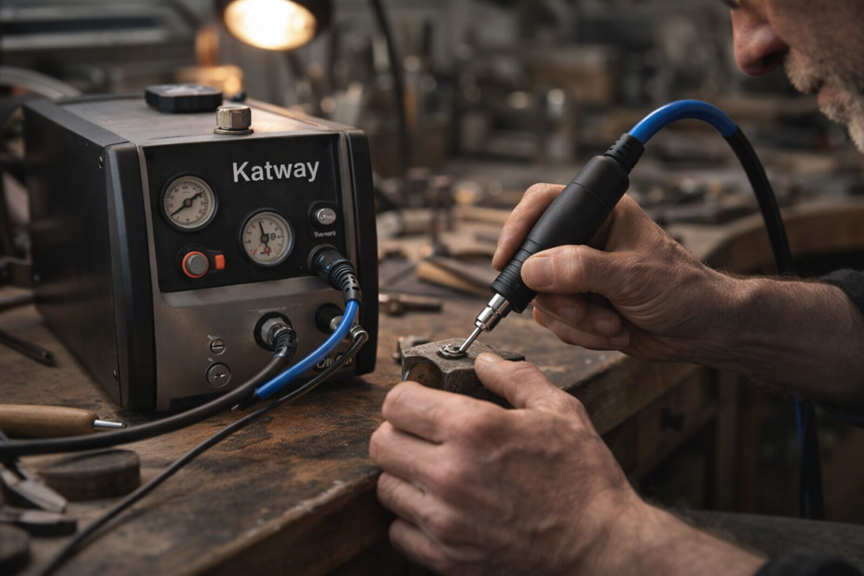
For a long time, engraving was treated as a test of patience more than a creative process. Anyone who has spent hours cutting lines into metal knows that the real challenge isn’t always the design—it’s the physical effort behind it. Hands tighten, wrists ache, and concentration fades just when precision is needed most. This is something every engraver experiences sooner or later, whether they are working on fine jewelry or industrial metal parts.
In recent years, however, engraving has begun to change. Not in a dramatic, loud way, but through small improvements that quietly reshape the way makers work. One of the most important changes is the growing use of pneumatic engraving tools. These tools do not replace skill or experience, but they remove unnecessary struggle, allowing craftsmen to focus on what truly matters: clean lines, balanced design, and creative control.
Why Traditional Engraving Methods Reach Their Limits
Hand engraving has always carried a certain romantic appeal. A simple graver, steady hands, and years of practice can produce remarkable results. But tradition often hides the physical cost behind the beauty of the finished work. Maintaining consistent depth across long lines requires constant pressure, and the slightest change in force can alter the look of a design.
Over time, this physical demand builds up. Many experienced engravers eventually feel strain in their fingers and joints, and some even shorten their working hours because of fatigue. The problem is not lack of skill, but the limits of the human body. As projects grow more complex and expectations rise, the old way of working starts to feel like an obstacle rather than a tradition worth protecting.
This is where modern tools become not a luxury, but a necessity.
What a Pneumatic Engraver Actually Does
A pneumatic engraver uses compressed air to deliver rapid, controlled impacts that drive the cutting tool forward. Instead of pushing the graver through metal with pure hand force, the engraver guides the motion while the tool supplies the energy. This shift may sound small, but in practice it changes everything.
Lines become smoother, curves feel more natural, and depth remains consistent even over long cuts. The engraver is no longer fighting the metal. Instead, the tool works with the hand, responding instantly to subtle movements. For many users, the first session with a pneumatic system feels like a moment of realization—engraving suddenly feels easier than it ever did before.
The First Real Difference You Notice Is Control
Speed is often mentioned when people talk about pneumatic tools, but control is the real advantage. When the force of the cut is handled by the tool, the engraver can focus entirely on direction, rhythm, and design. This leads to cleaner lines and fewer mistakes, especially in detailed work such as lettering, ornamental patterns, and fine shading.
The difference becomes even more noticeable on harder metals. Materials that once required excessive pressure can now be engraved smoothly, without forcing the hand or risking slips. This consistency is what separates good work from professional-level results.
Why More Professionals Are Choosing Katway Tools
In a market filled with generic equipment, Katway stands out by focusing on the real needs of workshops. Their tools are not designed for show—they are built for daily use. Compact systems, balanced handpieces, and intuitive controls make them suitable for both small studios and professional environments.
Their range of pneumatic engraver systems offers flexibility for different working styles. Some makers prefer simple, dedicated engraving units, while others choose integrated systems that combine engraving, micro motor work, and heating functions in a single compact machine. This flexibility allows users to build a setup that matches their workflow instead of adjusting their workflow to the tool.
How Integrated Systems Improve the Workshop Experience
Modern workshops are often smaller than traditional ones, especially for independent makers. Space, noise, and organization matter more than ever. Integrated engraving systems solve several problems at once by reducing the number of separate machines on the bench.
With everything running from a single unit, switching between tasks becomes faster and smoother. The workspace stays cleaner, cables are reduced, and noise levels remain manageable. This kind of setup doesn’t just save space—it improves focus. When tools are easy to access and use, the creative process becomes uninterrupted and more enjoyable.
The Long-Term Benefit: Protecting Your Hands
One of the most overlooked advantages of pneumatic engraving is how it protects the body over time. Traditional engraving places constant strain on fingers, wrists, and shoulders. While this may seem manageable early in a career, the effects accumulate year after year.
By reducing the physical effort needed for each cut, pneumatic engravers help prevent long-term injuries. Many professionals see the switch not as a technical upgrade, but as an investment in their health. Being able to work comfortably for decades is just as important as producing beautiful results today.
Where Pneumatic Engraving Makes the Biggest Difference
Pneumatic engraving tools are now used across many fields, from fine jewelry and stone setting to knife decoration, firearm engraving, and industrial marking. In each of these areas, precision is essential, but endurance is just as important. When the tool supports the engraver instead of exhausting them, quality naturally improves.
Even artists working on purely decorative metal pieces notice the difference. Details become more refined, textures more controlled, and designs more ambitious. The tool quietly expands what is possible.
Learning Engraving Has Become More Accessible
For beginners, engraving used to be intimidating. The learning curve was steep, and early mistakes could be discouraging. Pneumatic systems have changed that experience by removing the hardest part of the process: pressure control. New learners can focus on understanding movement, line flow, and design composition without fighting the tool itself.
This doesn’t make engraving easier in a superficial sense—it makes learning more efficient. Skills develop faster, confidence grows, and beginners are more likely to continue instead of giving up early.
Building a Complete Workshop with the Right Tools
Engraving is only one part of the metalworking process. A well-rounded workshop needs tools that support shaping, forming, polishing, and finishing. Katway provides equipment that fits naturally into this workflow, allowing makers to move smoothly from one stage of production to the next without changing systems or suppliers.
When tools are designed to work together, the entire process feels more coherent. Time is saved, mistakes are reduced, and the maker can focus fully on craftsmanship instead of setup.
Choosing the Right Pneumatic Engraver for Your Work
Selecting the right engraving system depends on your materials, workspace, and long-term goals. Some engravers need portability, while others prefer a fixed bench setup. Some work mainly with soft metals, while others engrave steel daily. Katway’s range of pneumatic systems allows users to start with a simple setup and expand later as their needs grow.
This flexibility is important, especially for independent makers who want tools that can evolve with their skills.
Why Pneumatic Engraving Is a Natural Step Forward
Every craft evolves. Engraving has moved from simple hand tools to foot-powered systems, and now to air-driven precision tools. Each step has made the craft more sustainable without taking away its soul. Pneumatic engraving continues this tradition by respecting the skill of the engraver while removing unnecessary hardship.
When tools work in harmony with the hand, creativity flows more freely. Designs become more expressive, work becomes more enjoyable, and the craft becomes something that can be practiced for a lifetime.
Final Thoughts: Craftsmanship Is About Longevity
Great tools do more than improve results—they make work sustainable. A pneumatic engraver allows artists to protect their hands, improve their precision, and enjoy the process again. It removes friction from creation and replaces it with confidence.
For makers who care about quality, comfort, and long-term growth, investing in the right pneumatic engraving system is not just an upgrade. It’s a step toward a better way of working, one clean, controlled line at a time.