


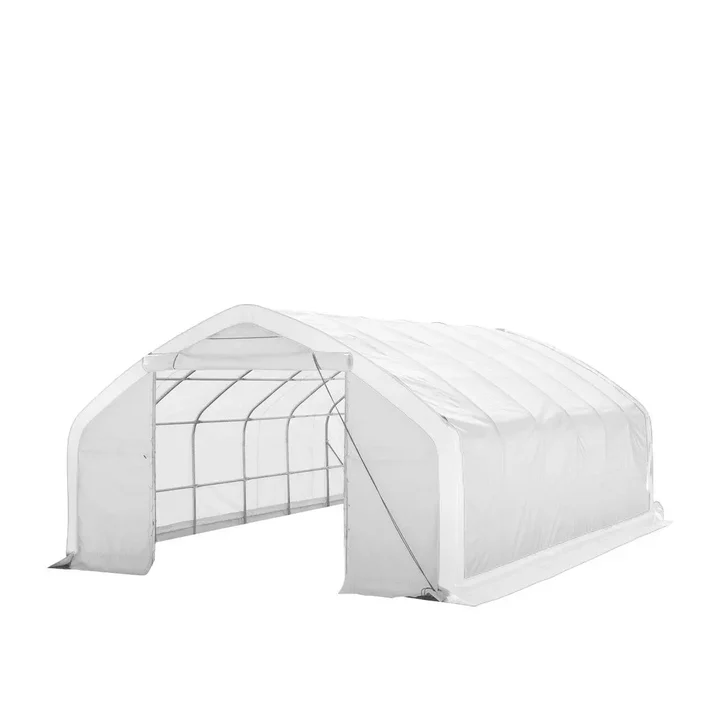
In Canada, industrial operations often need covered storage that can be deployed faster and with less site disruption than a permanent building. Warehouses, transport yards, farms, construction sites, and municipal facilities must protect equipment, palletized goods, maintenance supplies, and seasonal inventory from rain, snow, wind, and ultraviolet exposure. In this setting, a straight wall peak ceiling storage shelter can serve as a practical intermediate solution between open yard storage and conventional enclosed construction.
A product such as the Straight Wall Peak Ceiling Storage Shelter illustrates why this shelter category is relevant in daily industrial use. With about 600 square feet of covered space, a peak ceiling height of 12 feet, straight side walls, and an 11 ounce polyethylene fabric cover, this type of structure is designed to create usable enclosed volume while supporting equipment access and organized material handling.
Why This Shelter Format Matters in Canada
Canadian industrial and logistics sites operate under changing weather conditions and significant seasonal demand swings. Snow removal equipment, landscape supplies, spare parts, and fleet support materials may need sheltered storage for only part of the year, while some sites need an all-season cover for machinery or work areas. A fabric cover shelter with straight walls is useful because it increases edge-to-edge usable space and supports flexible deployment where a full building may not be necessary.
Common applications include:
· Outdoor storage for forklifts, compact machinery, and utility vehicles
· Covered staging for palletized materials and maintenance stock
· Seasonal storage for agricultural and municipal equipment
· Temporary support space near warehouse or yard operations
Core Methods and Industrial Use Cases
Decentralized Yard Storage
One effective method is to position the shelter close to loading, service, or dispatch zones. This reduces travel distance between the main warehouse and outdoor work areas and improves access to frequently used supplies.
Equipment Protection and Workflow Support
Straight wall designs are especially useful for machines and pallet loads because the side clearance is more usable than that of strongly curved shelters. This can simplify parking, stacking, and movement planning.
Why Efficiency, Safety, and Productivity Matter
Outdoor storage affects more than asset protection. It influences retrieval time, traffic flow, housekeeping, and worker exposure to weather. When storage is disorganized or unprotected, teams often spend more time searching, repositioning equipment, and replacing damaged materials. A covered shelter can improve task speed and reduce avoidable exposure-related interruptions.
Technical Basics and Capability Considerations
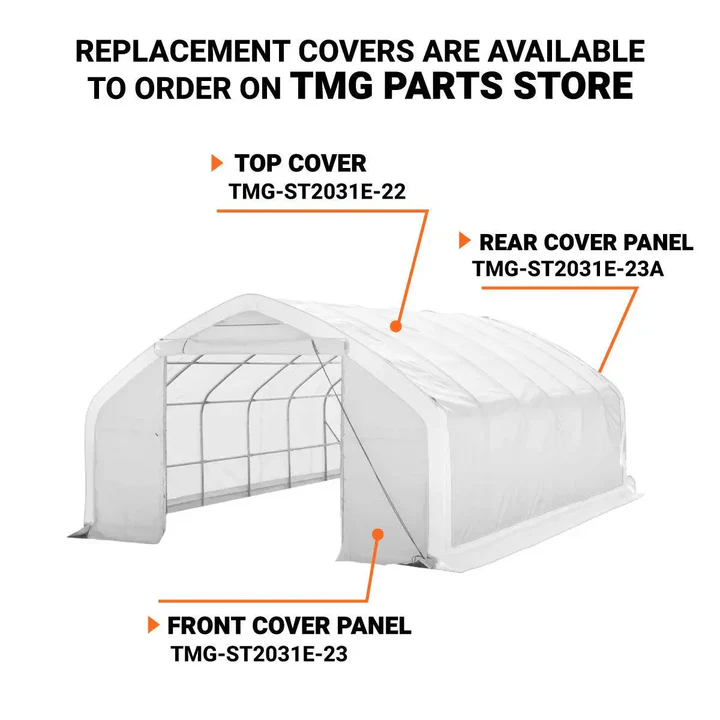
Buyers should review structural tube gauge, truss spacing, roof height, side-wall height, fabric weight, anchoring provisions, and door clearance. In this product class, the cited model uses approximately 1.9 inch 15 gauge truss tubes, 1.65 inch 17 gauge purlin tubes, 59 inch truss spacing, and pre-drilled footplates. It also provides about 10 feet of door clearance and an 11 ounce polyethylene cover. These figures help determine suitability for light industrial storage, service access, and site layout planning.
Factors That Influence Performance and Effectiveness
Actual performance depends on site preparation and operating practice. Important factors include foundation quality, drainage, wind exposure, snow load management, anchoring, door use, and inspection frequency. A shelter installed on an uneven or poorly drained base may experience reduced fabric life, frame stress, and operational inconvenience.
Safety Considerations and Best Practices
· Install on a level and well-drained foundation that matches the required footprint
· Use appropriate anchors because anchor bolts may not be included
· Keep entry paths clear for vehicles and pedestrians
· Inspect fabric tension, frame joints, and door components on a scheduled basis
· Remove accumulated snow when site conditions require it
· Do not treat the shelter as a substitute for code-specific hazardous storage
Equipment, Accessories, Advantages, Limitations, and a Real Example
Common related items include anchor systems, ground base materials, shelving, pallet racks, lighting, carts, tarps, and moisture control products. The main advantages are faster deployment, flexible outdoor coverage, useful straight-wall storage volume, and natural internal light transmission through the fabric cover. Limitations include dependence on site conditions, ongoing inspection needs, and lower security and environmental control than a fully enclosed permanent structure.
A realistic example is a Canadian transport yard using this shelter type to store palletized spare parts, winter accessories, and service tools beside a fleet lane. The shelter reduces exposure damage, shortens travel distance for technicians, and creates a defined covered work zone without expanding the main warehouse.
Conclusion: Main Takeaways and Future Industry Direction
TMG Industrial straight wall peak ceiling storage shelter is a practical option for Canadian operations that need flexible covered space for equipment, materials, and yard support functions. Its value comes from usable interior volume, easier access, weather protection, and faster deployment than many permanent alternatives. The best results come from careful siting, correct anchoring, routine inspection, and clear operating rules.
Looking ahead, industrial users are likely to continue adopting modular shelter systems as part of broader yard optimization strategies. As sites focus more on asset protection, seasonal flexibility, and safer outdoor workflows, fabric cover storage shelters will remain relevant where practical coverage and operational efficiency are higher priorities than permanent enclosure.