


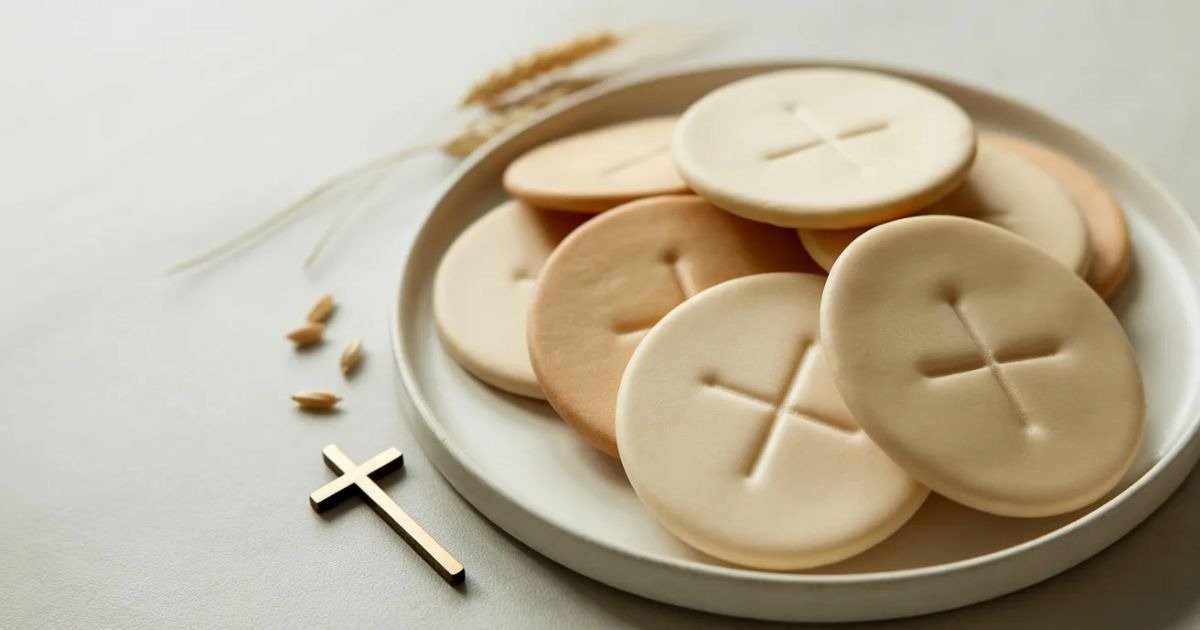
The communion hosts, or altar breads or communion wafers, are unleavened pieces of bread that are used by Christians in the celebration of the Eucharist in memory of the body of Christ. The special breads used in the Holy Communion of Catholics, Anglicans, and most other Christians are carefully selected for their purity, size, and suitability for the liturgies. The Communion hosts are highly essential during the Eucharist, where they are consecrated and given to the faithful to enable a significant sacramental experience.
Traditionally, in the liturgical context, the breads used on the altar are prepared using solely wheat flour and water, and so meet longstanding ecclesiastical prescriptions. The differences in size, edge style, gluten, and design ensure that clergy and congregations can find the variables that suit particular sacramental and dietary requirements. This guide will help you understand the fundamental forms of communion hosts available, how to select the appropriate ones, and the importance of quality in worship.
Understanding Altar Breads in Christian Worship
The altar breads are plain, unbaked waffles, which are employed in the Mass or Communion service in order to symbolise the body of Christ. They are not ordinary bread in terms of purpose and composition, but rather it is bread that focuses on spiritual importance and liturgical standards. They were used as far back as the Last Supper and remain an important component of the Eucharist in most denominations.
Core Types of Communion Hosts
In choosing communion hosts, it is helpful to know the predominant types offered to churches and religious centres.
People’s Altar Breads
They are smaller communion hosts that are meant to be distributed to the congregation. They are usually sold in wholesale quantities, like 1000 boxes.
Priests’ Communion Hosts
Priests’ hosts are slightly larger, typically around 2 ¾″ in diameter, and are used by ordained ministers during the Eucharistic liturgy. These often feature a single cross stamped into the surface and a sealed edge to minimise crumbling during consecration.
Concelebration Hosts
Concelebration breads are larger wafers, which are not served when one person is celebrating Mass by himself or herself, but when two or more clergy are celebrating Mass.
Gluten Free Altar Breads
Congregants who may have special diets like coeliac conditions can have gluten-free communion hosts. They are made to pass the low-gluten test and remain liturgically acceptable.
How Communion Hosts Are Made
Simple in ingredients, true communion hosts are made of pure wheat flour and water. No raising agent is used, and the bread is therefore unleavened and can be used during the liturgy. They are cooked thin and flat, and may be in a pressed shape, e.g., a cross. This simple form makes them valid to use in sacramental purposes without the need of other additives that may interfere with theological or dietary requirements.
Why the Right Size Matters
The size of the communion host used determines the practicality and the flow of worship. Smaller hosts are used effectively in large congregations, whereas larger hosts are used when priests are concerned or in celebratory services, where the breaking of the bread is included in the rite. Other suppliers, like Hayes and Finch, offer explicit size choices, ranging from ordinary people’s wafers to larger celebration bread, and therefore it is easier to choose when required by the parishes.
Edge Styles & Sealing Techniques
Most communion hosts are sealed in an edge, bonded with a very hard rim to minimise the crunching and crumbly texture of the substance in use. This assists in the neatness of distribution and reverence on the altar. This aspect is usually emphasised in merchandise such as the single cross priests’ altar breads and the single cross people’s altar breads sold through Hayes and Finch.
Material Choices and Special Dietary Considerations
The conventional altar breads contain gluten from wheat flour. Nonetheless, the current congregations usually contain gluten-intolerant people. As a result, numerous church supply firms are beginning to stock gluten-free communion hosts that fall below low-gluten levels and still meet ritualistic needs. These alternatives are more inclusive without losing the sacramental integrity.
Choosing Communion Hosts for Your Church
Looking to find communion or minister hosts in your parish or ministry, you can count on the following major factors:
- Congregation Size: Bigger communities might want to buy boxes of people’s wafers, so it is convenient.
- Clergy Preferences: Priests and concelebrants tend to select hosts bearing seals and crosses for use in the rituals.
- Food Rules: Gluten-free foods are more accessible to more worshippers.
- Liturgical Tradition: Different denominations or rituals may prefer certain styles or sizes.
Maintaining Reverence and Quality
Quality hosts of communion increase the holiness of the Eucharist. They must be delivered untouched, without unwarranted embellishments, and prepared with the required ingredients. The church supply specialists advise keeping hosts in a clean, dry place until the moment of consecration, when they should be fit for use in the sacrificial ceremony.
Where to Source Communion Hosts
Suppliers such as Hayes and Finch focus on altar breads and communion wafers with broad liturgical use. Their collection includes:
- Single Cross Peoples Master Breads – large box of communion breads, perfect for distributing to the congregation.
- Single cross Priests Altar Breads– cross design hosts are sealed with a cross design and are used by clergy.
- Gluten Free Altar Breads – low-gluten dietary products.
Concelebration Alter Breads – the bigger communion breads that can be used on the concelebrated Masses.
These products depict the most popular types in the contemporary liturgical context and provide accurate choices and quality for parishes of different sizes.
Conclusion: Choosing the Best Communion Hosts
Hosts in Communion are not mere wafers; they represent an important part of Christian worship and sacramental life. The choice of appropriate altar breads is based on size, dietary demands, ceremony requirements, and regard for the custom. In a small parish or a big cathedral community, you will never go wrong with the choices as provided by Hayes and Finch to make your Holy Communion services dignified, inclusive, and fitting for your congregation.
The more you get to know the various variations in hosts, communion materials, and features, the better position you are to make informed decisions that will strengthen worship and inclusivity within the community.